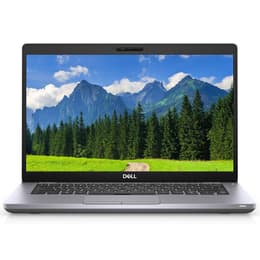
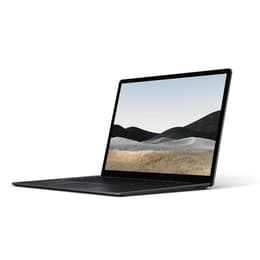


Dell Latitude 5410 14" Vs Microsoft Surface Laptop 4 13"

Dell Latitude 5410 14"
Starting at

Refurbished price:312.12

Versus €1,167.40 new

See options
Microsoft Surface Laptop 4 13"
Starting at

Refurbished price:370.00

Versus €754.00 new

See options

Ratings

The Dell Latitude 5410 14, released in 2020, and the Microsoft Surface Laptop 4 13, launched in 2021, are both Windows-based laptops designed for productivity and everyday use. While the Latitude 5410 emphasizes business-oriented features and upgradeability, the Surface Laptop 4 focuses on a premium user experience with a distinctive design and a high-resolution display. Both devices run on the Windows operating system, offering a familiar environment for many users.

Scores

Durability

When considering the long-term usability of these laptops, their release timelines and design philosophies play a significant role.

  • Release and Software Support: The Dell Latitude 5410, released in June 2020, precedes the Microsoft Surface Laptop 4 13-inch, which launched in April 2021. This means the Surface Laptop 4 will likely receive operating system updates for approximately one year longer than the Latitude 5410, extending its software longevity. Both devices are designed to run Windows, with the Surface Laptop 4 initially shipping with Windows 10 and being upgradeable to Windows 11.
  • Repairability and Practical Lifespan: Dell's Latitude series is known for its business-friendly design, often featuring good upgradeability and readily available repair manuals, which can contribute to a longer practical lifespan through component replacement. The Surface Laptop 4, while showing improved repairability in later Surface models, has soldered RAM, limiting upgrade options. However, its SSD storage is removable, though replacing it on the 13.5-inch model may void the warranty.
  • Build Durability: The Latitude 5410 features a chassis primarily constructed from reinforced plastic with carbon fiber and magnesium, designed for business environments. The Surface Laptop 4 utilizes an aluminum chassis, with some configurations offering an Alcantara fabric finish, providing a premium feel.

Year of Release

2020

2021

Last Os Compatibility

Yes

Yes

OS

Windows 11

Windows 11

Performance

The performance capabilities of these laptops cater to different user needs, primarily influenced by their internal components and design philosophies.

  • Processor Capabilities: The Dell Latitude 5410 is equipped with 10th Generation Intel Core processors, offering reliable performance for everyday office applications and multitasking. The Microsoft Surface Laptop 4 13 offers a choice between 11th Gen Intel Core processors or custom AMD Ryzen Microsoft Surface Edition processors, providing flexibility for diverse performance demands. The 11th Gen Intel chips in the Surface Laptop 4 bring faster speeds compared to its predecessor.
  • RAM and Storage: The Latitude 5410 supports DDR4 memory, configurable from 4 GB up to 64 GB across two SODIMM slots, allowing for easy upgrades. It features M.2 PCIe NVMe SSD storage, with options up to 1TB. The Surface Laptop 4 comes with soldered RAM configurations up to 32GB, which cannot be upgraded post-purchase. Its SSD storage is available up to 1TB and is removable.
  • Battery Behavior: The Latitude 5410 offers various battery capacities, with the larger 68Wh option providing extended usage, reportedly up to 19.5 hours for web browsing in some tests, and users often report exceptional battery life. The Surface Laptop 4, with its 47.4Wh battery, is rated for up to 17 hours (Intel) or 19 hours (AMD) of typical usage, though real-world use often sees around 7-10 hours depending on workload and brightness.

Memory (GB)

16 GB

16 GB

Processor

Core i5 - Gen 10 (U)

Ryzen 5 4680U

Graphic card

Integrated Graphics

Integrated Graphics

Screen quality

The visual experience on these laptops differs significantly due to their display technologies and specifications.

  • Display Technology and Resolution: The Dell Latitude 5410 typically features a 14-inch anti-glare Full HD (1920 x 1080) IPS LCD panel, with some configurations offering touch functionality. The Microsoft Surface Laptop 4 13-inch boasts a 13.5-inch PixelSense Touchscreen with a higher resolution of 2256 x 1504 pixels and a 3:2 aspect ratio, providing a sharper image and more vertical screen real estate.
  • Brightness and Clarity: The Latitude 5410's display options include 220 nits (standard) and 300 nits (low-power or privacy screen). It has been noted as having a budget-quality IPS panel that covers barely half of the sRGB gamut and uses aggressive PWM for all brightness levels except the maximum. The Surface Laptop 4's display offers up to 390-427 nits brightness, with excellent subjective picture impression and accurate colors, covering 95% of the sRGB color gamut.
  • Viewing Experience: The Surface Laptop 4's 3:2 aspect ratio is often preferred for productivity tasks like document viewing and web browsing, offering more vertical space. The Latitude 5410's 16:9 aspect ratio is more common for media consumption. The Surface Laptop 4's display also features good viewing angles.

Resolution

1920 x 1080

2256 x 1504

Screen type

LCD

LED

Audiovisual

Both laptops include integrated cameras and audio systems suitable for communication and media consumption, though with differing specifications and user experiences.

  • Camera Capabilities: The Dell Latitude 5410 features a 0.9-megapixel (720p) webcam, which includes a privacy shutter for enhanced security. The Microsoft Surface Laptop 4 13 also comes with a 720p HD f2.0 front-facing camera, which supports Windows Hello for facial authentication. Neither device includes a rear-facing camera.
  • Audio Output: The Latitude 5410 is equipped with dual 2W speakers and a universal audio jack. The Surface Laptop 4 features Omnisonic Speakers with Dolby Audio and dual far-field Studio Mics. While the Surface Laptop 4's audio is generally well-regarded, some users have reported issues with sound quality, describing it as "hissing zzz" or "crap" on certain models.
  • Microphone Quality: Both laptops include integrated microphones for video conferencing and voice commands. The Surface Laptop 4's dual far-field Studio Mics are designed to capture clear audio from a distance.

Miscellaneous

Beyond core performance and display, several practical elements differentiate these two laptops, impacting their usability in various scenarios.

  • Connectivity Options: The Dell Latitude 5410 offers a wide range of ports, including three USB 3.2 Gen 1 Type-A ports (one with PowerShare), one USB 3.2 Gen 2 Type-C port with DisplayPort Alt Mode, Power Delivery, and optional Thunderbolt 3 support. It also includes an HDMI 1.4b port, an RJ45 Ethernet port, Wi-Fi 6, Bluetooth 5.1, and a microSD card reader. The Surface Laptop 4 13 has a more limited selection, featuring one USB-C (USB 3.2 Gen 2 with Power Delivery), one USB-A (USB 3.2 Gen 2), a 3.5mm headphone jack, and a Surface Connect port for charging and docking. It supports Wi-Fi 6 and Bluetooth 5.0, but notably lacks Thunderbolt 4.
  • Security and Sensors: Both devices offer modern security features. The Latitude 5410 can include an optional fingerprint reader embedded in the power button and an IR face recognition camera. The Surface Laptop 4 features Windows Hello face authentication via its front-facing camera.
  • Portability and Design: The Latitude 5410 has a starting weight of approximately 1.47 kg (3.26 lb) and dimensions of 20.26-21.18 mm thickness. The Surface Laptop 4 13 is slightly lighter and thinner, weighing between 1.265-1.288 kg (2.79-2.84 lbs) and measuring 14.5 mm thick, making it highly portable. The Surface Laptop 4's design is often praised for its sleek, minimalist aesthetic and premium feel.

Weight

1520 g

1288 g

Screen size

14

13

The Dell Latitude 5410 14 and the Microsoft Surface Laptop 4 13 cater to distinct user preferences, each offering a compelling set of features.

Users frequently praise the Dell Latitude 5410 for its robust build quality, extensive port selection, and upgradeability, making it a practical choice for business and productivity-focused individuals who value longevity and customization. Its keyboard is often highlighted for a comfortable typing experience. However, some users note that its display quality, particularly in terms of color accuracy and PWM usage, can be a drawback.

Conversely, the Microsoft Surface Laptop 4 13 receives acclaim for its premium design, high-resolution PixelSense touchscreen with a productivity-friendly 3:2 aspect ratio, and excellent keyboard and trackpad. Its performance is generally considered solid for everyday tasks and moderate workloads, with good real-world battery life, though not always matching manufacturer claims. Criticisms sometimes point to its more limited port selection and the non-upgradeable RAM.

Users prioritizing extensive connectivity, internal upgrade options, and a traditional business laptop feel may find the Dell Latitude 5410 14 more aligned with their needs. On the other hand, those who value a sleek, modern design, a superior display for visual tasks, and a highly portable form factor, along with a premium user experience, might lean towards the Microsoft Surface Laptop 4 13. Both devices offer a quality-assured refurbished option, providing an eco-friendly alternative for consumers seeking reliable technology.

See all articles

Our recent comparisons