

Dell Latitude 5310 13" Vs Dell Latitude 7390 13"

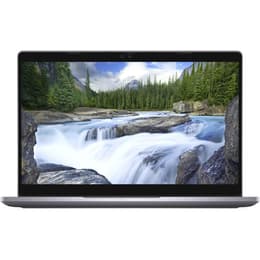
Dell Latitude 5310 13"
Starting at

Refurbished price:240.00

Versus €1,099.00 new

See options
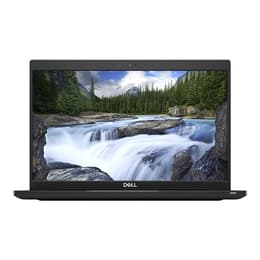
Dell Latitude 7390 13"
Starting at

Refurbished price:395.00

Versus €733.00 new

See options

The Dell Latitude 5310 13 (released in 2020) and the Dell Latitude 7390 13 (released in 2018) are both compact business-oriented laptops designed for productivity and portability. While they share a similar form factor and target audience, the 5310 introduces a newer generation of internal components and updated connectivity options, offering a more modern computing experience compared to its predecessor. Both devices run on the Windows operating system, providing a familiar environment for most users.

Scores

Durability

When considering the practical lifespan of these laptops, several factors come into play, including their release dates, operating system support, and physical construction.

  • Release Timeline: The Latitude 5310, released in 2020, benefits from being two years newer than the Latitude 7390, which debuted in 2018. This difference in release year typically translates to a longer period of official software and security updates for the 5310.
  • Software Longevity: Both models are capable of running Windows 10 and Windows 11, but the 5310, with its newer processor generation, is likely to receive optimal support for future Windows updates for a longer duration.
  • Build Quality: The Latitude 5310 features a durable chassis, with some configurations utilizing a metal case and incorporating recycled carbon fiber, contributing to its robust feel. The Latitude 7390 boasts MIL-STD 810G certification, indicating its resilience against various environmental stresses, though some users have noted its design feels less contemporary.

Year of Release

2020

2017

Last Os Compatibility

Yes

Yes

OS

Windows 11

Windows 11

Performance

The performance of these laptops is primarily influenced by their internal processing capabilities and memory configurations, impacting how smoothly they handle daily tasks and multitasking.

  • Processing Power: The Latitude 5310 is equipped with 10th-generation Intel Core processors, which generally offer improved efficiency and responsiveness for everyday applications and moderate workloads. The Latitude 7390, featuring 8th-generation Intel Core processors, provides solid performance for general office tasks and web browsing.
  • Multitasking Capability: The 5310 supports a higher maximum RAM capacity, up to 64GB across two slots, which is notable for a 13-inch laptop and allows for extensive multitasking and handling of more demanding applications. The 7390 typically supports up to 16GB of RAM, which is sufficient for most business and educational uses.
  • Storage Options: Both models utilize fast NVMe SSDs for storage, ensuring quick boot times and rapid application loading. The 5310 offers configurations up to 1TB, while the 7390 commonly comes with up to 256GB or 512GB options.

Memory (GB)

8 GB

8 GB

Processor

Core i5 - Gen 10 (U)

Core i7 - Gen 8 (U)

Graphic card

Integrated Graphics

Integrated Graphics

Screen quality

The visual experience on these laptops is delivered through their 13.3-inch displays, with specific characteristics influencing clarity, brightness, and color reproduction.

  • Display Technology and Resolution: Both the Latitude 5310 and 7390 feature 13.3-inch Full HD (1920x1080) IPS panels, providing wide viewing angles and clear images suitable for productivity and media consumption.
  • Brightness and Color: The 5310's display typically offers around 300 nits of brightness and covers approximately 91% of the sRGB color gamut, delivering vibrant colors. The 7390's screen often reaches similar brightness levels (286-307 nits) but boasts a higher sRGB coverage of about 98%, resulting in a slightly richer color presentation.
  • User Comfort: A key difference is that the 5310's display does not use Pulse Width Modulation (PWM) for brightness adjustment, which can be beneficial for users sensitive to screen flickering. The 7390 does use PWM at lower brightness settings, though at a high frequency that may be less noticeable to most.

Resolution

1920 x 1080

1920 x 1080

Screen type

IPS

IPS

Camera

Audiovisual

For communication and media, the audio and visual components of these laptops provide essential functionality for virtual meetings and content playback.

  • Webcam Performance: Both laptops include a 720p webcam, suitable for standard video conferencing. User feedback for the 7390 suggests its camera provides average brightness and slightly soft-focus images.
  • Microphone and Speakers: The Latitude 7390 features dual microphones for clearer audio input during calls. However, some users have noted that the speaker output on the 7390 can be underwhelming. The 5310 comes with standard stereo speakers.
  • Video Recording: Both devices are capable of standard video recording quality for their class, primarily for communication purposes rather than high-fidelity content creation.

Miscellaneous

Beyond core performance, several practical features contribute to the overall user experience, including connectivity, physical design, and security elements.

  • Connectivity Standards: The Latitude 5310 offers more modern wireless connectivity with Wi-Fi 6 (802.11ax) and Bluetooth 5, providing faster and more stable connections. The Latitude 7390 uses Wi-Fi 5 (802.11ac) and Bluetooth 4.2. Both offer optional LTE for mobile broadband.
  • Port Selection: Both laptops provide a comprehensive array of ports. The 5310 includes USB 3.2 Gen 2 Type-C with optional Thunderbolt 3, USB 3.2 Gen 1 Type-A, HDMI 1.4, RJ45 Ethernet, and a microSD card reader. The 7390 also features USB 3.1 Gen 1 Type-A, HDMI 1.4, RJ45 Ethernet, a microSD card reader, and optional Thunderbolt 3 over USB-C.
  • Physical Attributes: The 5310 is slightly thicker at 19.7mm but weighs around 1.22 kg. The 7390 is thinner at 16-16.5mm and weighs approximately 1.17 kg. Both include security features like fingerprint readers and facial recognition (via IR camera options).

Weight

1240 g

1500 g

Screen size

13

13

User feedback for the Dell Latitude 5310 often highlights its solid build quality, upgradability, and good display. However, some users have reported issues with fan noise, particularly when connected to AC power, though a BIOS setting can sometimes mitigate this. It is generally praised for productivity tasks and school use, but not for gaming.

The Dell Latitude 7390 is frequently commended for its strong performance, long battery life, and vivid matte display. Common criticisms include a low-travel keyboard, potentially poor speaker quality, and fans that can run frequently. Its design has also been described by some as dated.

Users prioritizing a more recent device with enhanced processing power, faster wireless connectivity (Wi-Fi 6), and greater RAM expandability for future-proofing may find the Latitude 5310 better suited to their needs. Its display also offers the advantage of no PWM flickering. Conversely, individuals who value a slightly lighter and thinner profile, along with a display that offers a wider sRGB color gamut, might lean towards the Latitude 7390, provided they are comfortable with its older generation processor and potential keyboard and speaker limitations. Both models offer a robust platform for business and educational use, and choosing a quality-assured refurbished option for either can be a sustainable choice.

See all articles

Our recent comparisons