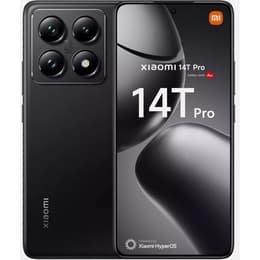



Xiaomi 14T Pro Vs Xiaomi Redmi Note 11 Pro 5G

Xiaomi 14T Pro
Xiaomi 14T Pro
Starting at

Refurbished price:372.00

Versus €799.00 new

See options
Xiaomi Redmi Note 11 Pro 5G
Starting at

Refurbished price:126.00

Versus €699.00 new

See options

Ratings

The Xiaomi 14T Pro, released in late 2024, and the Xiaomi Redmi Note 11 Pro 5G, launched in early 2022, represent different generations and tiers within Xiaomi's smartphone lineup. While both devices offer a large display and 5G connectivity, the 14T Pro introduces significant advancements in processing power, camera capabilities, and overall user experience compared to its predecessor. Both operate on Android-based systems, with the 14T Pro featuring the newer HyperOS and the Redmi Note 11 Pro 5G running MIUI 13, based on an earlier Android version.

Scores

Durability

When considering the long-term usability of these devices, their release timelines and software support are key factors.

  • Release Timeline: The Xiaomi 14T Pro was released in late 2024, making it a more recent device, while the Redmi Note 11 Pro 5G launched in January 2022. This age difference means the 14T Pro will likely receive software updates for a longer period.
  • Software Longevity: The 14T Pro ships with Xiaomi HyperOS based on Android 14, offering a more current software experience and a longer expected window for future Android and security updates. The Redmi Note 11 Pro 5G originally ran Android 11 with MIUI 13, though it has received updates to newer Android versions and HyperOS.
  • Physical Durability: The Xiaomi 14T Pro features an IP68 rating for water and dust resistance, indicating it can withstand submersion in water, and is protected by Corning Gorilla Glass 5. The Redmi Note 11 Pro 5G has an IP53 rating, offering splash and dust resistance, and also uses Corning Gorilla Glass 5 for screen protection.

Year of Release

2024

2022

Compatible with latest Update

Yes

No

OS

Android

Android

Foldable

No

No

Performance

The performance capabilities of these two smartphones show a notable difference, primarily due to the generational gap in their internal components.

  • Processing Power: The Xiaomi 14T Pro is equipped with a current-generation processor designed for demanding tasks, ensuring smooth operation for heavy applications, intensive gaming, and complex multitasking. The Redmi Note 11 Pro 5G utilizes a mid-range processor that handles everyday tasks and moderate usage efficiently, but may show limitations with very demanding applications or high-fidelity gaming.
  • Multitasking and Storage: The 14T Pro typically comes with 12GB of RAM and uses UFS 4.0 storage, contributing to faster app loading and seamless transitions between applications. The Redmi Note 11 Pro 5G offers 6GB or 8GB of RAM and UFS 2.2 storage, which is suitable for general multitasking but may not be as quick as the newer standard.
  • Battery Behavior: Both devices feature a 5000mAh battery capacity. The Xiaomi 14T Pro, despite its powerful components, is optimized for efficiency, with users reporting up to two days of battery life under regular use and impressive endurance during heavy tasks. The Redmi Note 11 Pro 5G also provides good battery life for a full day of typical use.

Memory (GB)

16 GB

6 GB

Screen quality

Both devices offer vibrant AMOLED displays, but the Xiaomi 14T Pro brings several enhancements in terms of visual fidelity and responsiveness.

  • Display Technology and Resolution: The Xiaomi 14T Pro features a 6.67-inch CrystalRes AMOLED display with a resolution of 1220 x 2712 pixels, providing sharp and detailed visuals. The Redmi Note 11 Pro 5G also has a 6.67-inch AMOLED display, offering a Full HD+ resolution of 1080 x 2400 pixels, which delivers clear images for most content.
  • Brightness and Refresh Rate: The 14T Pro boasts an impressive peak brightness of 4000 nits, ensuring excellent visibility even in direct sunlight, and an adaptive refresh rate of up to 144Hz for exceptionally smooth scrolling and animations. The Redmi Note 11 Pro 5G offers a peak brightness of 1200 nits, which is bright enough for outdoor use, and a 120Hz refresh rate for a fluid viewing experience.
  • Color and Clarity: Both displays support a wide color gamut, with the 14T Pro featuring Dolby Vision and HDR10+ for enhanced contrast and color accuracy in compatible content. The Redmi Note 11 Pro 5G also provides vibrant colors and good clarity, suitable for media consumption and daily tasks.

Resolution

1220 x 2712

1080 x 2400

Screen type

AMOLED

Super AMOLED

Audiovisual

The camera systems on these two phones cater to different levels of photography enthusiasm, with the Xiaomi 14T Pro offering a more advanced and versatile setup.

  • Rear Camera System: The Xiaomi 14T Pro features a Leica-tuned triple camera system, including a 50MP main sensor with optical image stabilization (OIS), a 50MP telephoto lens with 2.6x optical zoom, and a 12MP ultra-wide camera. This configuration is designed for detailed and versatile photography across various scenarios. The Redmi Note 11 Pro 5G comes with a 108MP main camera, an 8MP ultra-wide lens, and a 2MP macro sensor. While the main sensor captures high-resolution images, the auxiliary lenses offer more basic functionality.
  • Low-Light and Video Capabilities: The 14T Pro's main camera, with its larger sensor and wider aperture, excels in low-light conditions, capturing more detail and reducing noise. It also supports video recording up to 8K at 30fps and 4K at 60fps, with advanced cinematic features. The Redmi Note 11 Pro 5G performs adequately in well-lit conditions, but its low-light performance is more limited. Video recording is capped at 1080p at 30fps, lacking 4K capabilities.
  • Front Camera: For selfies and video calls, the Xiaomi 14T Pro includes a 32MP front camera. The Redmi Note 11 Pro 5G features a 16MP front camera.

Main camera

50 megapixels

108 megapixels

Front camera

32 megapixels

16 megapixels

Miscellaneous

Beyond the core specifications, several practical elements differentiate the user experience between these two Xiaomi smartphones.

  • Connectivity and Ports: The Xiaomi 14T Pro supports the latest Wi-Fi 7 standard and Bluetooth 5.4, alongside 5G connectivity, offering faster and more stable wireless connections. The Redmi Note 11 Pro 5G supports Wi-Fi 802.11 a/b/g/n/ac and Bluetooth v5, also providing 5G capabilities. Both devices feature a USB-C port for charging and data transfer. The Redmi Note 11 Pro 5G retains a 3.5mm headphone jack, which is absent on the 14T Pro.
  • Biometrics and Audio: Both phones include convenient biometric authentication. The 14T Pro features an in-display fingerprint sensor, while the Redmi Note 11 Pro 5G has a side-mounted fingerprint sensor integrated into the power button. Both devices offer stereo speakers, with the 14T Pro supporting Dolby Atmos and high-res wireless audio for an enhanced media consumption experience. The Redmi Note 11 Pro 5G also supports Dolby Atmos.
  • Design and Handling: The Xiaomi 14T Pro features a glass and aluminum alloy design with a 3D-curved back, offering a premium feel and an IP68 rating. The Redmi Note 11 Pro 5G has a glass back and a slim, flat-edge design, providing a secure grip and an IP53 rating.

Weight

209 g

202 g

Screen size (in)

6.67

6.67

Network

5G

5G

SIM card

Dual Physical SIM

Dual Physical SIM

Carrier compatibility

Unlocked

Unlocked

The Xiaomi 14T Pro and the Xiaomi Redmi Note 11 Pro 5G cater to different user expectations and priorities. User feedback for the 14T Pro often highlights its exceptional display, powerful performance for demanding applications and gaming, and its versatile, high-quality camera system co-engineered with Leica. Its fast wired and wireless charging capabilities are also frequently praised for minimizing downtime. Some users, however, have raised questions about battery drain under certain usage patterns, despite generally strong battery life reports.

For the Redmi Note 11 Pro 5G, common praise points include its bright 120Hz AMOLED display, reliable battery life, and the inclusion of features like a 3.5mm headphone jack and expandable storage. Criticisms often revolve around its camera performance, particularly the lack of 4K video recording and the quality of its auxiliary lenses, as well as occasional software glitches. Some users also note that its processor, while capable for daily use, is not suited for intensive gaming.

Users prioritizing cutting-edge performance, advanced photography features, and a longer software support window will find the Xiaomi 14T Pro well-suited to their needs. Its high refresh rate display and rapid charging make it ideal for power users and those who consume a lot of media or play games. Conversely, users seeking a dependable smartphone for everyday communication, social media, and casual content consumption, with a good display and solid battery life, may lean towards the Redmi Note 11 Pro 5G. It remains a practical choice for those who value traditional features like a headphone jack and expandable storage.

Both devices, whether new or as quality-assured refurbished options, offer distinct advantages depending on individual usage patterns and preferences, enabling informed and sustainable choices.


See all articles

Our recent comparisons