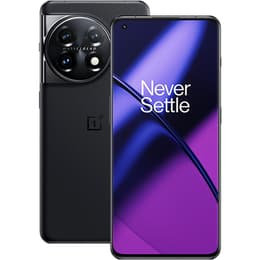


Google Pixel 7A Vs OnePlus 11

Google Pixel 7A
Google Pixel 7A
Starting at

Refurbished price:177.00

Versus €649.99 new

See options
OnePlus 11
OnePlus 11
Starting at

Refurbished price:325.00

Versus €949.00 new

See options

Ratings

The Google Pixel 7a, released in May 2023, and the OnePlus 11, launched in January 2023, are both Android smartphones that offer distinct experiences. While the Pixel 7a focuses on delivering Google's signature software and camera capabilities in a more accessible package, the OnePlus 11 aims for a high-performance flagship experience with advanced display technology and rapid charging. Both devices run on the Android operating system, providing users with a familiar and customizable software environment.

Scores

Durability

When considering the long-term usability of these devices, several factors contribute to their expected lifespan, including software support and physical durability.

  • Software Longevity: The Google Pixel 7a is expected to receive five years of major OS upgrades and security updates from its release date. The OnePlus 11 is promised four generations of Android upgrades and five years of security updates from its launch. This means both devices offer a comparable period of official software support, ensuring access to new features and security patches for several years.
  • Repairability: The Pixel 7a initially received a repairability score of 4/10 from iFixit, which was later uprated to 5/10 after Google provided service manuals. The OnePlus 11 has a repairability score of 6.75 out of 10, indicating a slightly more accessible design for repairs.
  • Build Materials: The Pixel 7a features Corning Gorilla Glass 3 for screen protection, while the OnePlus 11 uses the more advanced Corning Gorilla Glass Victus on the front and Gorilla Glass 5 on the back, along with an aluminum midframe.

Year of Release

2023

2023

OS

Android

Android

Foldable

No

No

Performance

The performance of a smartphone is crucial for daily tasks, from app usage to demanding games and multitasking.

  • Processing Power: The Google Pixel 7a is equipped with Google's Tensor G2 processor, which provides a smooth experience for everyday applications and handles advanced AI-driven features efficiently. The OnePlus 11 features a current-generation Qualcomm Snapdragon processor, offering robust performance for intensive gaming and heavy multitasking.
  • Memory and Storage: The Pixel 7a comes with 8 GB of RAM and 128 GB of non-expandable internal storage. The OnePlus 11 offers more flexibility with options for 8 GB or 16 GB of RAM and storage configurations of 128 GB (UFS 3.1) or 256 GB (UFS 4.0), which can benefit users who frequently switch between many applications or store large files.
  • Battery Behavior: The Pixel 7a has a 4385 mAh battery, with user experiences varying from acceptable for a full day of casual use to some reporting quicker drain, though updates have shown improvements. The OnePlus 11 houses a larger 5000 mAh battery, generally providing solid one-day performance for most users.

Memory (GB)

8 GB

16 GB

Screen quality

The display is a primary interface for smartphone interaction, and both devices offer distinct visual experiences.

  • Display Technology and Resolution: The Pixel 7a features a 6.1-inch OLED display with a 2400 x 1080 (FHD+) resolution, providing deep blacks and vibrant colors. The OnePlus 11 boasts a larger 6.7-inch Super Fluid AMOLED curved display with a higher 3216 x 1440 (QHD+) resolution, offering a more expansive and detailed viewing area.
  • Refresh Rate: The Pixel 7a has a 90 Hz refresh rate, contributing to smoother scrolling and a more fluid user interface. The OnePlus 11 features an adaptive refresh rate that can dynamically adjust from 1 Hz to 120 Hz, which enhances smoothness while also optimizing power consumption.
  • Brightness and Clarity: Both displays offer good brightness levels suitable for various lighting conditions. The OnePlus 11's higher resolution and advanced AMOLED panel contribute to a very clear and immersive viewing experience, particularly for media consumption.

Resolution

1080 x 2400

1440 x 3216

Audiovisual

Both smartphones offer capable camera systems, each with its own strengths in photography and videography.

  • Rear Camera System: The Pixel 7a features a dual-camera setup with a 64 MP main sensor (with optical image stabilization) and a 13 MP ultrawide lens. The OnePlus 11 comes with a triple-camera system, including a 50 MP main sensor (with OIS), a 48 MP ultrawide lens, and a 32 MP telephoto lens offering 2x optical zoom.
  • Photography Performance: The Pixel 7a is widely praised for its computational photography, delivering excellent image processing, vibrant colors, and strong low-light performance, often competing with more expensive phones. The OnePlus 11, co-developed with Hasselblad, produces balanced photos with good detail and color accuracy, performing well in low light with its main sensor.
  • Video Capabilities: The Pixel 7a can record 4K video at up to 60 frames per second from its rear camera and 4K at 30 frames per second from the front. The OnePlus 11 supports up to 8K video recording at 24 frames per second from its main camera, and 4K at 30 frames per second from its ultrawide and telephoto lenses, offering more advanced video options.

Miscellaneous

Beyond core features, several other aspects contribute to the overall user experience and practical utility of these devices.

  • Connectivity: Both devices support 5G connectivity, along with modern Wi-Fi standards (Wi-Fi 6E for Pixel 7a) and Bluetooth 5.3, ensuring fast and reliable wireless connections.
  • Biometric Security: The Pixel 7a includes an in-display fingerprint sensor and face unlock. The OnePlus 11 also features an in-display fingerprint sensor for secure access.
  • Physical Design and Handling: The Pixel 7a is a more compact device, weighing 193.5 grams and measuring 152 mm in height, making it easier for one-handed use. The OnePlus 11 is larger and slightly heavier at 205 grams and 163.1 mm in height, offering a more expansive screen but potentially requiring two hands for comfortable operation.

Weight

193 g

205 g

Screen size (in)

6.1

6.7

Network

5G

5G

SIM card

Physical SIM + eSIM

Physical SIM

Carrier compatibility

Unlocked

Unlocked

The Google Pixel 7a and OnePlus 11 cater to different user priorities, each excelling in specific areas. User feedback often highlights the Pixel 7a's exceptional camera performance and Google's clean software experience as major strengths, with some users noting mixed battery life experiences, though recent software updates have shown improvements. The OnePlus 11 is frequently praised for its powerful performance, vibrant high-resolution display, and very fast wired charging, with its camera system generally considered capable, though some users find the front camera to be average.

Users prioritizing a compact device with a strong emphasis on computational photography and a pure Android experience will find the Pixel 7a well-suited to their needs. Its consistent software updates and AI-driven features make it a compelling choice for those who value smart functionalities and a reliable camera. Conversely, users who prioritize raw performance, a larger and more immersive high-resolution display, and extremely fast wired charging for quick power-ups may lean towards the OnePlus 11. Its robust hardware makes it ideal for demanding applications and media consumption.

For consumers evaluating these options, considering refurbished models can provide an eco-friendly and quality-assured alternative, extending the life cycle of these capable smartphones.

See all articles

Our recent comparisons