


OnePlus 10 Pro Vs Xiaomi Redmi 14C

OnePlus 10 Pro
OnePlus 10 Pro
Starting at

Refurbished price:228.00

Versus €999.00 new

See options
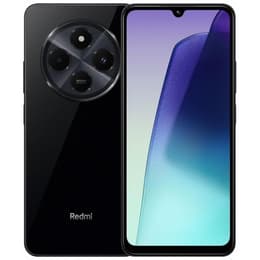
Xiaomi Redmi 14C
Xiaomi Redmi 14C
Starting at

Refurbished price:128.20

Versus €189.00 new

See options

Ratings

The OnePlus 10 Pro, released in early 2022, and the Xiaomi Redmi 14C, launched in late 2024, represent distinct segments within the smartphone market. While both devices operate on the Android platform, they cater to different user expectations, primarily differing in their processing power, display technology, and camera capabilities. The OnePlus 10 Pro initially ran on OxygenOS based on Android 12, whereas the Redmi 14C features Android 14 with Xiaomi's HyperOS.

Scores

Durability

These two smartphones offer varying expectations regarding their practical lifespan and software support.

  • Release Timeline: The OnePlus 10 Pro was introduced in early 2022, making it an older device compared to the Redmi 14C, which launched in late 2024. This age difference impacts the remaining period of official software updates.
  • Software Longevity: The OnePlus 10 Pro, having launched with Android 12, is expected to receive major Android updates up to Android 16, with security updates extending beyond that. The Redmi 14C, starting with Android 14 and HyperOS, benefits from a more current software foundation, likely ensuring a longer period of future Android version updates and security patches from its release date.
  • Physical Durability: The OnePlus 10 Pro features Gorilla Glass Victus on the front and Gorilla Glass 5 on the back, offering a degree of scratch resistance. However, some durability tests have indicated structural weaknesses, particularly in bend resistance. The Redmi 14C typically comes with a glass front and a plastic frame, with some variants offering a glass or silicone polymer back. The 5G variant of the Redmi 14C includes an IP52 rating, providing basic protection against dust and splashes.

Year of Release

2022

2024

Compatible with latest Update

Yes

Yes

OS

Android

Android

Foldable

No

No

Performance

The performance characteristics of these two devices reflect their different market positioning, with the OnePlus 10 Pro offering a more robust experience.

  • Processing Power: The OnePlus 10 Pro is equipped with a high-end processor from its release era, enabling it to handle demanding applications, complex multitasking, and graphics-intensive games with fluidity. The Redmi 14C, on the other hand, utilizes an entry-level to mid-range processor, which is suitable for everyday tasks like browsing, social media, and light gaming, though it may exhibit minor stutters during heavy multitasking or with very demanding applications.
  • Memory and Storage: The OnePlus 10 Pro typically offers 8GB or 12GB of RAM and storage options up to 512GB, contributing to smooth app switching and ample space for files. The Redmi 14C comes with 4GB, 6GB, or 8GB of RAM and storage up to 256GB, which can be expanded via a microSD card, providing flexibility for users with growing storage needs.
  • Battery Behavior: Both devices feature large battery capacities, with the OnePlus 10 Pro housing a 5000 mAh battery and the Redmi 14C a 5160 mAh battery. The OnePlus 10 Pro generally provides reliable all-day power, even with its high-resolution, high-refresh-rate display, and supports rapid wired charging at up to 80W (65W in some regions) and 50W wireless charging. The Redmi 14C's battery also offers decent longevity for its class and supports 18W wired charging.

Memory (GB)

8 GB

4 GB

Screen quality

The visual experience differs significantly between these two smartphones due to their display technologies.

  • Display Technology and Resolution: The OnePlus 10 Pro features a 6.7-inch LTPO2 Fluid AMOLED display with a QHD+ resolution (3216x1440 pixels), resulting in sharp images, deep blacks, and vibrant colors. The Redmi 14C comes with a larger 6.88-inch IPS LCD panel, offering an HD+ resolution (720x1640 pixels), which provides a clear viewing experience for general use but with less pixel density and contrast compared to the OnePlus device.
  • Refresh Rate and Brightness: Both phones support a 120Hz refresh rate, contributing to smoother scrolling and more fluid animations. The OnePlus 10 Pro's LTPO technology allows its refresh rate to dynamically adjust from 1Hz to 120Hz, optimizing power consumption. It also boasts a peak brightness of 1300 nits, ensuring good visibility in bright outdoor conditions. The Redmi 14C offers a typical brightness of 450 nits, with a High Brightness Mode (HBM) reaching 600 nits, which is sufficient for indoor use but may be less visible under direct sunlight.
  • Viewing Experience: The OnePlus 10 Pro's AMOLED panel with its high resolution and adaptive refresh rate provides an immersive viewing experience, particularly for high-quality video content and gaming. The Redmi 14C's larger screen size is beneficial for media consumption and reading, though its lower resolution and IPS LCD technology offer a more basic visual fidelity.

Resolution

1440 x 3216

720 x 1640

Screen type

LTPO2 Fluid AMOLED

IPS LCD

Audiovisual

The camera systems of the OnePlus 10 Pro and Redmi 14C are designed for different levels of photographic versatility and quality.

  • Rear Camera System: The OnePlus 10 Pro features a versatile triple camera setup co-developed with Hasselblad, including a 48 MP main sensor with optical image stabilization (OIS), a 50 MP ultrawide lens with a wide 150-degree field of view, and an 8 MP telephoto lens offering 3.3x optical zoom and OIS. This configuration allows for detailed shots across various focal lengths and improved color accuracy. The Redmi 14C typically comes with a dual-camera system, highlighted by a 50 MP main sensor, often accompanied by an auxiliary lens for depth sensing. Its camera is capable of capturing appealing pictures in good lighting conditions.
  • Photography Performance: The OnePlus 10 Pro excels in various scenarios, including low-light photography with its Nightscape mode, and offers advanced features like 10-bit color capture and a Hasselblad Pro mode for manual controls. The Redmi 14C's camera performs reliably in daylight, producing images with decent contrast and detail, and includes AI features to enhance photos.
  • Video Recording and Front Camera: The OnePlus 10 Pro supports 8K video recording and includes features like Movie Mode for manual video adjustments and strong stabilization. It has a 32 MP front camera for high-resolution selfies. The Redmi 14C records video at 1080p and features a 13 MP front camera, suitable for video calls and everyday selfies.

Main camera

48 megapixels

50 megapixels

Front camera

32 megapixels

13 megapixels

Miscellaneous

Beyond core features, several practical elements differentiate the user experience of these two smartphones.

  • Connectivity: The OnePlus 10 Pro supports 5G, Wi-Fi 6, and Bluetooth 5.2, offering fast and reliable wireless connections. The Redmi 14C supports 4G (with some variants offering 5G), Wi-Fi, and Bluetooth 5.4, providing modern connectivity options for its segment.
  • Ports and Sensors: The OnePlus 10 Pro features a USB-C 3.1 port and an in-display fingerprint sensor. It also includes dual stereo speakers for an enhanced audio experience. The Redmi 14C comes with a USB Type-C port, a side-mounted fingerprint sensor, and retains a 3.5mm headphone jack, which is convenient for users with wired audio accessories.
  • Design and Handling: The OnePlus 10 Pro has dimensions of 163 x 73.9 x 8.55 mm and weighs 200.5g, featuring a premium design with a frosted glass back and an alert slider. The Redmi 14C is slightly larger and heavier, with dimensions around 171.9 x 77.8 x 8.2 mm and a weight between 204-211g, offering a substantial in-hand feel.

Weight

201 g

207 g

Screen size (in)

6.7

6.88

Network

5G

4G

SIM card

Physical SIM

Dual Physical SIM

Carrier compatibility

Unlocked

Unlocked

Connector

USB-C

USB-C

The OnePlus 10 Pro and Xiaomi Redmi 14C cater to different user needs and budgets, reflecting their respective market positions and release timelines. Users often praise the OnePlus 10 Pro for its vibrant AMOLED display, powerful performance, and versatile camera system with Hasselblad tuning. Its fast charging capabilities are also a frequently highlighted positive. However, some users have expressed concerns regarding its structural durability in extreme bend tests.

The Redmi 14C, being a more recent entry-level to mid-range device, is generally appreciated for its large display, decent battery life, and the inclusion of a 3.5mm headphone jack. Its current software version (Android 14 with HyperOS) is also a positive for users seeking the latest Android features. Criticisms, while less prominent for a budget device, typically revolve around its lower display resolution and less powerful processor compared to higher-end phones.

Users prioritizing a premium visual experience, high-end performance for demanding applications, and advanced camera features will find the OnePlus 10 Pro well-suited to their needs. Conversely, individuals seeking a large screen for media consumption, reliable everyday performance, and a more recent software experience without the premium cost may lean toward the Redmi 14C. Both devices offer a quality-assured refurbished option, providing an eco-friendly alternative for consumers looking to make a sustainable choice.


See all articles

Our recent comparisons