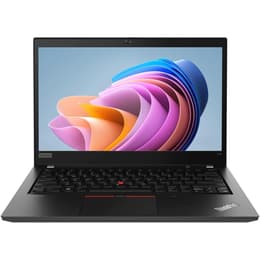
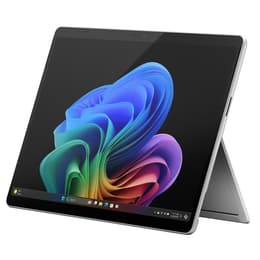


Lenovo ThinkPad T14 G1 14" Vs Microsoft Surface Pro 6 12"

Lenovo ThinkPad T14 G1 14"
Starting at

Refurbished price:262.00

Versus €612.00 new

See options
Microsoft Surface Pro 6 12"
Starting at

Refurbished price:424.00

Versus €899.00 new

See options

Ratings

The Lenovo ThinkPad T14 Gen 1, released in Q2 2020, is a traditional laptop designed for productivity, while the Microsoft Surface Pro 6, launched in October 2018, is a 2-in-1 detachable tablet. Both devices operate on the Windows platform, but they cater to different user preferences through their distinct form factors and core functionalities. The ThinkPad emphasizes robust build and extensive connectivity, whereas the Surface Pro prioritizes portability and touch-based interaction.

Scores

Durability

The expected practical lifespan and ongoing support differ between these two devices, largely due to their release timelines and design philosophies.

  • Release Timeline and Age: The Lenovo ThinkPad T14 Gen 1 was released in May 2020, making it a newer device compared to the Microsoft Surface Pro 6, which launched in October 2018. This difference in release date means the ThinkPad generally benefits from a longer period of manufacturer support and more recent hardware. [5, 6, 12, 17, 29]
  • OS Support and Longevity: Both devices run Windows and are compatible with Windows 11. However, the Surface Pro 6's official firmware and driver support from Microsoft ended on June 30, 2023, which could impact its long-term software longevity. In contrast, Lenovo typically provides 4-5 years of BIOS and driver updates for its ThinkPads, suggesting a potentially longer period of active support for the T14 Gen 1. [6, 12, 23]
  • Repairability: The ThinkPad T14 Gen 1 is known for its robust construction and is generally considered repairable, aligning with the ThinkPad series' reputation for user-serviceability. The Surface Pro 6, however, received a low repairability score of 1 out of 10 from iFixit, indicating that its complex, tightly glued construction and soldered components make repairs challenging and costly. [8, 11, 13, 16]

Year of Release

2019

2017

OS

Windows 11

Windows 11

Performance

Performance capabilities vary between the two devices, influenced by their respective processors and memory configurations, impacting how smoothly they handle various tasks.

  • Processor Capabilities: The ThinkPad T14 Gen 1 offers a choice between 10th Generation Intel Core processors or AMD Ryzen 4000 series processors, providing solid performance for everyday computing, multitasking, and even light virtualization. The AMD variants are noted for their multi-threading prowess. The Surface Pro 6 features 8th Generation Intel Core i5 or i7 quad-core processors, delivering a performance boost over its predecessors and proving suitable for demanding productivity tasks and creative work. [1, 2, 3, 4, 6, 12, 17, 20, 22, 28]
  • Memory and Storage: The ThinkPad T14 Gen 1 supports up to 48GB of DDR4 RAM, with a hybrid design of one soldered module and one SO-DIMM slot for expansion, alongside up to 2TB of M.2 PCIe NVMe SSD storage. The Surface Pro 6 comes with 8GB or 16GB of LPDDR3 RAM and SSD options up to 1TB, though its storage is not user-upgradable, and its RAM and CPU are soldered. [4, 6, 8, 11, 12, 13]
  • Real-world Responsiveness: Users of the ThinkPad T14 Gen 1 report smooth operation for productivity and development tasks. The Surface Pro 6 is described as fast and powerful for its time, handling demanding applications and multitasking effectively, though some users noted occasional Windows interface responsiveness issues. [12, 17, 22, 26]

Memory (GB)

16 GB

8 GB

Processor

Core i5 - Gen 10 (U)

Core i5 - Gen 8 (U)

Graphic card

Intel HD Graphics

Integrated Graphics

Screen quality

The display experience on these devices differs significantly in size, aspect ratio, and technology, catering to distinct usage scenarios.

  • Display Technology and Size: The Lenovo ThinkPad T14 Gen 1 features a 14-inch display, with various options including Full HD IPS panels and a 4K UHD IPS option, offering a traditional laptop viewing experience. The Microsoft Surface Pro 6 has a 12.3-inch PixelSense display, which is a high-resolution touch screen designed for both tablet and laptop use. [1, 2, 3, 4, 6, 12, 18, 22]
  • Resolution and Aspect Ratio: The ThinkPad T14 Gen 1 typically comes with a 1920x1080 resolution and a 16:9 aspect ratio, common for media consumption and standard productivity. The Surface Pro 6 boasts a higher-than-HD resolution of 2736 x 1824 pixels and a 3:2 aspect ratio, which provides more vertical screen real estate, beneficial for document work and web browsing. [1, 2, 3, 4, 6, 12, 19]
  • Brightness and Clarity: The Surface Pro 6's display is noted for being bright and vivid, with good viewing angles and a brightness of around 408 nits, covering 136% of the sRGB color gamut. The ThinkPad T14 Gen 1 offers various panel options, with some IPS displays reaching up to 500 nits, and some configurations include PrivacyGuard or low-power features. Some users found certain T14 Gen 1 displays not ideal for outdoor use. [1, 2, 3, 6, 19]

Resolution

1920 x 1080

2736 x 1824

Audiovisual

The camera and audio capabilities of these devices are designed to support communication and media consumption, with some notable differences.

  • Camera System: The Lenovo ThinkPad T14 Gen 1 includes an HD 720p webcam, often equipped with a ThinkShutter privacy cover for enhanced security. It also offers an optional IR camera for Windows Hello facial recognition. The Microsoft Surface Pro 6 features a 5MP front-facing camera and an 8MP rear-facing autofocus camera capable of 1080p Full HD video recording. It also supports Windows Hello facial recognition. [3, 6, 9, 21, 22, 23]
  • Microphone Quality: Both devices incorporate dual-array far-field microphones, designed to capture clear audio for video calls and voice commands, even from a distance. [6, 9, 22]
  • Speaker Output: The ThinkPad T14 Gen 1 is equipped with stereo speakers featuring Dolby Audio, providing a clear audio experience for video conferencing and media. The Surface Pro 6 also has stereo speakers with Dolby Audio Premium, and users generally praise their quality. [3, 6, 9, 22, 26]

Miscellaneous

Beyond core performance, several practical elements distinguish these two devices, from connectivity to physical design.

  • Connectivity Options: The ThinkPad T14 Gen 1 offers a comprehensive array of ports, including multiple USB-A and USB-C ports (with Thunderbolt 3 on Intel models), HDMI, Ethernet (RJ-45), and a microSD card reader. It also supports Wi-Fi 6 and Bluetooth 5.0/5.1. The Surface Pro 6 has a more limited selection, featuring a full-size USB 3.0 port, a Mini DisplayPort, a Surface Connect port, a headphone jack, and a MicroSDXC card reader, but notably lacks a USB-C port. [3, 4, 5, 6, 7, 9, 12, 14, 18, 19, 20, 22, 23, 24, 26, 32]
  • Weight and Dimensions: The ThinkPad T14 Gen 1 starts at 1.46 kg (3.23 lbs) and measures 329 x 227 x 17.9 mm, presenting as a standard, portable laptop. The Surface Pro 6 is significantly lighter at approximately 770g (1.7 lbs) without its Type Cover, with dimensions of 292 x 201 x 8.5 mm, emphasizing its tablet-first design and portability. [7, 12, 21, 22, 24]
  • Build Materials and Features: The ThinkPad T14 Gen 1 features a durable chassis constructed from materials like magnesium alloy and PPS, known for its robust build quality. It includes a fingerprint reader and a ThinkShutter for webcam privacy. The Surface Pro 6 has a magnesium alloy body and a distinctive built-in kickstand, offering versatile viewing angles. Its Type Cover and Surface Pen are sold separately. [1, 3, 7, 9, 18, 21, 22, 23, 24, 26, 32]

Weight

2500 g

1120 g

Screen size

14

12

User feedback for the Lenovo ThinkPad T14 Gen 1 often highlights its excellent keyboard, robust build quality, and reliable performance for business and professional use. Many appreciate its comprehensive port selection and the flexibility offered by its upgradeable RAM and storage. Some criticisms include potentially thick bezels and, in some configurations, displays that are not ideal for outdoor visibility. Users frequently praise its suitability for Linux environments and its overall dependability. [6, 17, 19]

The Microsoft Surface Pro 6 is commonly lauded for its vibrant, high-resolution PixelSense display, impressive portability, and the versatility of its 2-in-1 design with a functional kickstand. Its strong battery life for video playback and responsive touch capabilities are also frequently mentioned positives. However, common concerns revolve around its limited port selection, particularly the absence of a USB-C port, and the fact that essential accessories like the Type Cover and Surface Pen are sold separately. Its low repairability score is also a notable point of criticism. [1, 2, 3, 4, 8, 11, 12, 13, 14, 16, 18, 20, 21, 22, 23, 26, 27, 30, 32]

Users prioritizing a traditional laptop experience with extensive connectivity, a highly regarded keyboard, and greater repairability for long-term use, such as professionals or students requiring a workhorse device, may find the Lenovo ThinkPad T14 Gen 1 better suited to their needs. Conversely, individuals who value extreme portability, a high-quality touch display for creative tasks or media consumption, and the flexibility of a tablet-laptop hybrid, despite a more limited port selection and repair options, might lean towards the Microsoft Surface Pro 6. Both devices offer a quality-assured refurbished option, providing a sustainable choice for consumers.


See all articles

Our recent comparisons