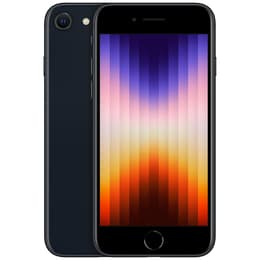

iPhone SE (2022) Vs Xiaomi Redmi Note 14 Pro

iPhone SE (2022)
iPhone SE (2022)
Starting at

Refurbished price:127.00

Versus €549.00 new

See options
Xiaomi Redmi Note 14 Pro
Starting at

Refurbished price:260.77

Versus €349.99 new

See options

Ratings

The iPhone SE 2022 and the Xiaomi Redmi Note 14 Pro are two distinct smartphones, released in March 2022 and September 2024 respectively, that cater to different user preferences. While the iPhone SE 2022 operates on Apple's iOS, offering a compact design and a streamlined user experience, the Redmi Note 14 Pro runs on Android, providing a larger display and a feature-rich interface. These devices primarily differ in their design philosophy, display technology, and camera systems, influencing their suitability for various daily tasks.

Scores

Durability

When considering the long-term usability of a smartphone, software support and physical resilience are key factors. The iPhone SE 2022, released in March 2022, benefits from Apple's reputation for extended iOS updates, with expectations of support until approximately 2033. The Redmi Note 14 Pro, launched in September 2024, is expected to receive Android OS updates for three years and security updates for four years.

  • Software Longevity: The iPhone SE 2022, initially running iOS 15.4, is projected to receive software updates for a longer duration, potentially up to 11 years from its release, ensuring access to new features and security patches for an extended period. The Redmi Note 14 Pro, launching with Android 14, offers a commitment of three years of OS updates and four years of security updates.
  • Physical Durability: Both devices offer a degree of protection against environmental elements. The iPhone SE 2022 features an IP67 rating for dust and water resistance, allowing submersion in up to 1 meter of water for 30 minutes. The Redmi Note 14 Pro boasts an IP68 rating, indicating resistance to dust and water immersion beyond 1 meter, and incorporates Corning Gorilla Glass Victus 2 for enhanced screen protection.
  • Repairability: While specific repairability scores can vary by region and independent assessments, the iPhone SE 2022's design, which shares similarities with older iPhone models, may offer a more straightforward repair process for certain components. The Redmi Note 14 Pro, with its modern construction, also aims for a reasonable level of repairability, though detailed scores are less commonly available at launch.

Year of Release

2022

2025

OS

iOS

Android

Foldable

No

No

Performance

Performance is a critical aspect for daily smartphone use, influencing everything from app responsiveness to multitasking capabilities. The iPhone SE 2022 and the Redmi Note 14 Pro approach this with different hardware architectures.

  • Processing Power: The iPhone SE 2022 is equipped with a powerful processor that enables smooth operation across various applications, from everyday tasks to more demanding games. The Redmi Note 14 Pro is powered by a current-generation processor, with leaks suggesting either a Snapdragon 7s Gen 3 or a MediaTek Dimensity 7300 Ultra, designed to handle multitasking and resource-intensive applications efficiently.
  • Multitasking and Storage: The iPhone SE 2022 comes with 4GB of RAM and storage options up to 256GB, providing adequate space and memory for most users. The Redmi Note 14 Pro offers more flexible configurations, with RAM options up to 16GB and storage up to 512GB, catering to users who require extensive storage and seamless switching between numerous applications.
  • Battery Performance: The iPhone SE 2022 features a 2,018 mAh battery, which typically provides a full day of moderate use, though heavy usage may necessitate more frequent charging. It supports 20W fast charging and Qi wireless charging. The Redmi Note 14 Pro includes a larger 5,500 mAh battery, designed to offer extended usage times, complemented by 67W fast charging for quicker power replenishment.

Memory (GB)

4 GB

8 GB

Screen quality

The display is the primary interface for smartphone interaction, and both devices offer different visual experiences tailored to their form factors.

  • Display Technology and Size: The iPhone SE 2022 features a compact 4.7-inch Retina HD IPS LCD display, known for its color accuracy and clarity. The Redmi Note 14 Pro offers a significantly larger 6.67-inch AMOLED display, providing deeper blacks and more vibrant colors, which can enhance media consumption and gaming.
  • Resolution and Clarity: The iPhone SE 2022 has a 1334x750 pixel resolution, resulting in a pixel density of 326 ppi, which delivers sharp text and images for its size. The Redmi Note 14 Pro boasts a higher 1.5K resolution (1220 x 2712 pixels), offering greater detail and clarity across its larger screen.
  • Brightness and Smoothness: The iPhone SE 2022's display reaches a typical maximum brightness of 625 nits, suitable for most indoor and outdoor conditions, and operates at a standard 60Hz refresh rate. The Redmi Note 14 Pro offers a higher peak brightness of up to 2,500 nits, improving visibility in bright sunlight, and features a 120Hz refresh rate for smoother scrolling and more fluid animations.

Resolution

750 x 1334

1080x2400

Audiovisual

Camera capabilities are a significant consideration for many users, and these two smartphones offer different approaches to photography and videography.

  • Rear Camera System: The iPhone SE 2022 is equipped with a single 12 MP wide camera with optical image stabilization (OIS), capable of capturing detailed photos in good lighting and recording 4K video at up to 60 frames per second. It utilizes computational photography features like Smart HDR 4 and Deep Fusion, but lacks a dedicated Night mode. The Redmi Note 14 Pro features a versatile triple-camera setup, typically including a 50 MP main sensor, a 12 MP ultra-wide lens, and a 2 MP macro camera, providing more photographic options.
  • Low-Light and Everyday Photography: In well-lit conditions, the iPhone SE 2022 produces color-accurate and pleasing images. However, its performance in low-light scenarios is limited due to the absence of Night mode. The Redmi Note 14 Pro, with its higher megapixel count on the main sensor and potentially larger sensor size, aims to deliver strong performance in various lighting conditions, including improved low-light capture.
  • Video Recording and Front Camera: Both devices offer capable video recording. The iPhone SE 2022 excels in video quality for its segment, supporting 4K at 60fps. Its front camera is 7 MP. The Redmi Note 14 Pro is expected to offer high-quality video recording and features a 16 MP front-facing camera, suitable for detailed selfies and video calls.

Front camera

7 megapixels

32 MP

Miscellaneous

Beyond core performance and display, several other features contribute to the overall user experience and practical utility of a smartphone.

  • Connectivity and Ports: Both devices support 5G connectivity for faster mobile data speeds. The iPhone SE 2022 uses a Lightning port for charging and data transfer, and supports Wi-Fi 6 and Bluetooth 5.0. The Redmi Note 14 Pro features a USB-C port, a more universal standard, and supports Wi-Fi 6 and Bluetooth 5.3.
  • Biometric Security: The iPhone SE 2022 relies on Touch ID, an integrated fingerprint sensor within its physical home button, for secure authentication. The Redmi Note 14 Pro incorporates an in-screen fingerprint sensor and AI Face Unlock for convenient and modern biometric security.
  • Design and Handling: The iPhone SE 2022 maintains a classic, compact design with a 4.7-inch screen, making it easy for one-handed use and fitting comfortably in smaller pockets. It features an aluminum frame and glass front and back. The Redmi Note 14 Pro, with its larger 6.67-inch display, offers a more expansive viewing area, though its larger dimensions and weight (around 180g) may impact one-handed usability for some users.

Weight

144 g

180 g

Screen size (in)

4.7

6.67

Network

5G

4G

SIM card

Physical SIM + eSIM

Dual Physical SIM

Carrier compatibility

Unlocked

Unlocked

The iPhone SE 2022 and the Xiaomi Redmi Note 14 Pro present distinct propositions in the smartphone market, each with its own strengths and target audience. User feedback for the iPhone SE 2022 often praises its powerful processor, compact form factor, and the long-term software support provided by Apple. Common criticisms include its dated design, smaller display, and limited battery life for heavy users, as well as the absence of a Night mode for its camera.

For the Redmi Note 14 Pro, early information and typical Redmi Note series trends suggest praise for its large, vibrant AMOLED display with a high refresh rate, substantial battery capacity with fast charging, and a versatile camera system. Potential concerns might revolve around the software experience, including pre-installed applications, and the sheer size of the device for those preferring a more compact phone. The choice between these two devices largely depends on individual priorities.

Users who prioritize a compact device, a familiar iOS ecosystem, and extended software longevity will find the iPhone SE 2022 well-suited to their needs. It is a reliable option for those who value consistent performance in a smaller package and appreciate the Touch ID security. Conversely, users who prioritize a large, immersive display, longer battery life, faster charging, and a more versatile camera system will likely lean towards the Xiaomi Redmi Note 14 Pro. Its Android operating system also offers greater customization options.

Both devices, whether new or as a quality-assured refurbished option, offer a pathway to a capable smartphone experience. Choosing a refurbished device can be an eco-friendly alternative, providing access to these technologies while supporting sustainable consumption.


See all articles

Our recent comparisons






