

Galaxy S23 Vs iPhone SE (2020)

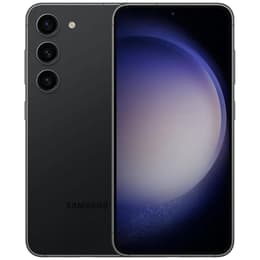
Galaxy S23
Galaxy S23
Starting at

Refurbished price:249.00

Versus €959.00 new

See options
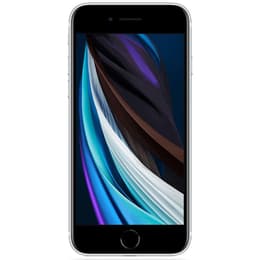
iPhone SE (2020)
iPhone SE (2020)
Starting at

Refurbished price:102.00

Versus €319.00 new

See options

Ratings

The Samsung Galaxy S23, released in February 2023, and the iPhone SE 2020, launched in April 2020, represent distinct approaches to smartphone design and functionality. The Galaxy S23 operates on the Android platform, while the iPhone SE 2020 runs on iOS. A primary difference lies in their form factor and feature sets: the S23 offers a modern, expansive display and a versatile camera system, contrasting with the iPhone SE 2020's classic design featuring a physical home button and a more compact screen.

Scores

Durability

The longevity of a smartphone is influenced by its release timeline, software support, and physical construction. The Galaxy S23, being a more recent device, benefits from a longer expected period of software updates and contemporary durability features.

  • Software Support: The Galaxy S23 is projected to receive four major Android operating system updates and five years of security updates, extending its software relevance well into the future. The iPhone SE 2020, while having received consistent iOS updates since its release with iOS 13.4, has a shorter remaining window for major operating system upgrades compared to the S23.
  • Physical Resilience: The Galaxy S23 incorporates Gorilla Glass Victus 2 on both its front and back, paired with an Armor Aluminum frame, contributing to its robust build. It also carries an IP68 rating, indicating resistance to dust and submersion in up to 1.5 meters of fresh water for up to 30 minutes. The iPhone SE 2020 features a glass front and back with an aluminum frame and is rated IP67 for dust and water resistance, allowing submersion in up to 1 meter of fresh water for up to 30 minutes.
  • Expected Lifespan: Given its newer release and extended software commitment, the Galaxy S23 offers a longer practical lifespan in terms of receiving the latest features and security enhancements.

Year of Release

2023

2020

Compatible with latest Update

Yes

Yes

OS

Android

iOS

Foldable

No

No

Performance

Performance is a key differentiator, with the newer Galaxy S23 offering more advanced processing capabilities compared to the iPhone SE 2020, which still provides capable performance for its age.

  • Processing Power: The Galaxy S23 is equipped with a current-generation processor, enabling it to handle demanding applications, intensive multitasking, and graphically rich games with fluidity. The iPhone SE 2020 utilizes an older, yet efficient, processor that capably manages everyday applications and general usage. However, it may encounter limitations with the most resource-intensive tasks or future software demands.
  • Multitasking Capability: The Galaxy S23 typically includes 8GB of RAM, facilitating seamless transitions between numerous applications and supporting complex workflows. The iPhone SE 2020 comes with 3GB of RAM, which is efficiently managed by its operating system for smooth daily operation, though it offers less capacity for extensive simultaneous application use.
  • Storage Options: The Galaxy S23 provides storage configurations of 128GB, 256GB, and 512GB, with higher capacities benefiting from faster storage technology. The iPhone SE 2020 is available with 64GB, 128GB, and 256GB storage options.

Memory (GB)

8 GB

3 GB

Screen quality

The visual experience varies significantly between these two devices, primarily due to differences in display technology, size, and refresh rate.

  • Display Technology: The Galaxy S23 features a Dynamic AMOLED 2X display, which delivers vibrant colors, deep black levels, and high contrast, enhancing the viewing experience. The iPhone SE 2020 uses a Retina IPS LCD display, known for its accurate color reproduction and wide viewing angles.
  • Size and Clarity: The Galaxy S23 offers a larger 6.1-inch display with a resolution of 2340 x 1080 pixels, resulting in a sharp image with 425 pixels per inch. The iPhone SE 2020 has a more compact 4.7-inch display with a resolution of 1334 x 750 pixels, providing 326 pixels per inch.
  • Brightness and Smoothness: The Galaxy S23 boasts a high peak brightness of 1750 nits and an adaptive refresh rate that can go up to 120Hz, ensuring smooth scrolling and excellent visibility in bright outdoor conditions. The iPhone SE 2020 has a maximum brightness of 625 nits and a standard 60Hz refresh rate.

Resolution

1080 x 2340

750 x 1334

Screen type

Dynamic AMOLED 2X

Retina IPS LCD

Audiovisual

The camera systems of the Galaxy S23 and iPhone SE 2020 cater to different photographic needs, with the S23 offering greater versatility and advanced features.

  • Camera System Configuration: The Galaxy S23 is equipped with a triple camera setup, including a 50MP main sensor, a 12MP ultrawide lens, and a 10MP telephoto lens with 3x optical zoom, providing a range of photographic options. The iPhone SE 2020 features a single 12MP wide main camera.
  • Photography Performance: The Galaxy S23 delivers strong performance across various lighting conditions, including improved low-light photography, and benefits from advanced computational photography. The iPhone SE 2020 performs well in bright, well-lit environments but has limitations in versatility and low-light scenarios due to its single lens.
  • Video Capabilities: The Galaxy S23 supports high-resolution video recording, including 8K at 24/30 frames per second and 4K at 30/60 frames per second. The iPhone SE 2020 can record 4K video at 24, 30, or 60 frames per second.

Main camera

50 megapixels

12 megapixels

Front camera

12 megapixels

7 megapixels

Miscellaneous

Beyond core features, several practical elements distinguish these two smartphones, impacting daily usability and connectivity.

  • Connectivity Standards: The Galaxy S23 supports 5G cellular networks, Wi-Fi 6E, and Bluetooth 5.3, offering faster wireless speeds and improved connectivity. The iPhone SE 2020 supports 4G LTE, Wi-Fi 6, and Bluetooth 5.0.
  • Ports and Biometrics: The Galaxy S23 features a USB-C 3.2 port for charging and data transfer, and an ultrasonic fingerprint sensor integrated under the display. The iPhone SE 2020 uses a Lightning port and includes a physical home button with Touch ID for fingerprint recognition. Neither device includes a 3.5mm headphone jack.
  • Physical Attributes: The Galaxy S23 measures 146.3 x 70.9 x 7.6 mm and weighs 168 grams. The iPhone SE 2020 is more compact and lighter, with dimensions of 138.4 x 67.3 x 7.3 mm and a weight of 148 grams.

Weight

167 g

148 g

Screen size (in)

6.1

4.7

Network

5G

4G

SIM card

Physical SIM + eSIM

Physical SIM + eSIM

Carrier compatibility

Unlocked

Unlocked

User feedback often highlights the Galaxy S23's vibrant display, powerful performance, and versatile camera system as key strengths. Conversely, some users have noted that its battery life might require more frequent charging for heavy use. The iPhone SE 2020 is frequently praised for its compact size, familiar design, and its ability to handle everyday tasks smoothly. Criticisms for the iPhone SE 2020 often point to its older design aesthetic, noticeable display bezels, and the limitations of its single camera system compared to multi-lens setups.

For users prioritizing a modern, expansive display, advanced camera capabilities, and top-tier performance for demanding applications and gaming, the Galaxy S23 may be the more suitable choice. Conversely, users who value a compact form factor, the familiarity of a physical home button, and a device that capably handles daily tasks without requiring the latest photographic or display innovations may find the iPhone SE 2020 aligns better with their needs. Both models are available as quality-assured refurbished options, providing an eco-friendly alternative for consumers.


See all articles

Our recent comparisons