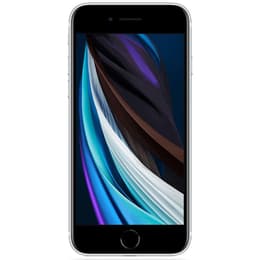
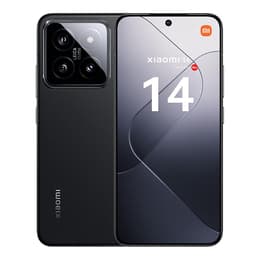


iPhone SE (2020) Vs Xiaomi 14

iPhone SE (2020)
iPhone SE (2020)
Starting at

Refurbished price:99.00

Versus €319.00 new

See options
Xiaomi 14
Xiaomi 14
Starting at

Refurbished price:384.00

Versus €1,099.00 new

See options

Ratings

The iPhone SE 2020 and the Xiaomi 14 represent distinct approaches to smartphone design and functionality, catering to different user preferences. Released in April 2020, the iPhone SE 2020 offers a compact form factor and operates on Apple's iOS ecosystem. In contrast, the Xiaomi 14, launched globally in February 2024, features a larger display, runs on Android with Xiaomi's HyperOS, and incorporates more contemporary hardware advancements. The primary differentiators lie in their operating systems, display technologies, and camera capabilities.

Scores

Durability

When considering the long-term usability of these devices, their release timelines and software support are key factors. The iPhone SE 2020, released in April 2020, benefits from Apple's extended software support, typically receiving iOS updates for several years post-launch. The Xiaomi 14, a much newer device with a global launch in February 2024, is expected to receive four generations of Android OS upgrades and five years of security patches, offering a longer guaranteed software lifespan from its release date.

  • Software Longevity: The iPhone SE 2020, having been released in 2020, has already received several major iOS updates and is expected to continue receiving support for a few more years. The Xiaomi 14, being a 2024 release, offers a longer forward-looking software support window with its commitment to four Android OS upgrades and five years of security updates.
  • Repairability: The iPhone SE 2020 has a repairability score of 6 out of 10, indicating that common repairs like display and battery replacements are relatively straightforward. The Xiaomi 14 boasts a higher repairability score of 8.0 out of 10, suggesting good accessibility for component replacement, including the screen and battery.
  • Expected Practical Lifespan: While both devices are built to last, the newer hardware and longer guaranteed software support of the Xiaomi 14 suggest a potentially longer practical lifespan for users who prioritize the latest features and security updates. The iPhone SE 2020 remains a viable option for those comfortable with its existing feature set and who value its compact design.

Year of Release

2020

2023

Compatible with latest Update

Yes

Yes

OS

iOS

Android

Foldable

No

No

Performance

The performance capabilities of the iPhone SE 2020 and the Xiaomi 14 reflect their respective generations and operating systems, impacting how smoothly they handle daily tasks and demanding applications. Both devices offer various storage configurations to suit different user needs.

  • Processing Power: The iPhone SE 2020, powered by its A13 Bionic chip, handles everyday applications, multitasking, and many games with smooth responsiveness. The Xiaomi 14, featuring a current-generation Snapdragon 8 Gen 3 processor, delivers significantly more powerful performance, ensuring exceptionally fluid operation for the most demanding apps, intensive gaming, and complex multitasking scenarios.
  • Storage Options: The iPhone SE 2020 is available with 64GB, 128GB, or 256GB of internal storage. The Xiaomi 14 offers larger base storage options, starting from 256GB and going up to 512GB or 1TB, providing more room for applications, media, and files.
  • Battery Behavior: The iPhone SE 2020's battery capacity often requires moderate users to charge it at least once daily, and heavy usage can necessitate more frequent charging. The Xiaomi 14, with its larger battery, typically provides full-day power even for heavy users and supports rapid wired and wireless charging, allowing for quick power top-ups.

Memory (GB)

3 GB

16 GB

Screen quality

The visual experience on the iPhone SE 2020 and the Xiaomi 14 differs significantly due to advancements in display technology and design philosophy over several years.

  • Display Technology and Resolution: The iPhone SE 2020 features a 4.7-inch IPS LCD display with a resolution of 1334 x 750 pixels, offering clear visuals for its size. The Xiaomi 14 boasts a larger 6.36-inch LTPO AMOLED display with a higher resolution of 2670 x 1200 pixels, providing sharper details and deeper contrast.
  • Brightness and Refresh Rate: The iPhone SE 2020's display reaches a peak brightness of 625 nits, which is adequate for most indoor and outdoor conditions. The Xiaomi 14 offers a significantly brighter display with a peak brightness of 3000 nits, ensuring excellent visibility even in direct sunlight. It also features an adaptive refresh rate of 1-120Hz, providing smoother scrolling and more fluid animations compared to the iPhone SE 2020's standard 60Hz refresh rate.
  • Viewing Experience: The iPhone SE 2020's compact screen is well-suited for one-handed use and users who prefer a smaller device. The Xiaomi 14's larger, more vibrant AMOLED display with a high refresh rate offers a more immersive viewing experience for media consumption, gaming, and general browsing.

Resolution

750 x 1334

1200 x 2670

Screen type

Retina IPS LCD

LTPO OLED

Audiovisual

The camera systems on the iPhone SE 2020 and the Xiaomi 14 reflect different generations of smartphone photography, with the latter offering a more versatile and advanced setup.

  • Rear Camera System: The iPhone SE 2020 features a single 12-megapixel wide-angle rear camera with optical image stabilization, capable of capturing good everyday photos and 4K video at up to 60fps. The Xiaomi 14 comes with a comprehensive triple 50-megapixel camera system, co-engineered with Leica, including a main wide-angle lens, an ultrawide lens, and a telephoto lens with optical image stabilization. This setup provides greater flexibility for various photographic scenarios, from expansive landscapes to detailed close-ups.
  • Low-Light and Video Performance: While the iPhone SE 2020 benefits from computational photography for improved image quality, its single lens and older sensor can struggle in very low-light conditions compared to more modern systems. The Xiaomi 14's larger sensors, wider apertures, and Leica optics contribute to superior low-light performance, capturing more detail and better exposure. It also supports 8K video recording, offering higher resolution video capabilities.
  • Front Camera and Audio: The iPhone SE 2020 has a 7-megapixel front camera suitable for video calls and selfies. The Xiaomi 14 features a higher-resolution 32-megapixel front camera, providing more detailed selfies and improved video call quality. Both devices offer capable audio recording and playback, though the Xiaomi 14's more modern hardware may provide a richer media consumption experience.

Main camera

12 megapixels

50 megapixels

Front camera

7 megapixels

32 megapixels

Miscellaneous

Beyond core performance and display, several practical elements differentiate the iPhone SE 2020 and the Xiaomi 14, influencing daily usability and interaction.

  • Connectivity and Ports: The iPhone SE 2020 supports 4G LTE, Wi-Fi 6, and Bluetooth 5.0, and uses Apple's proprietary Lightning port for charging and data transfer. The Xiaomi 14 offers more advanced connectivity with 5G support, Wi-Fi 7, and Bluetooth 5.4, and features a universal USB-C 3.2 Gen 1 port.
  • Biometrics and Design: The iPhone SE 2020 retains the classic home button with Touch ID for fingerprint authentication, alongside a compact design with a glass and aluminum build. The Xiaomi 14 adopts a more contemporary design with an in-display fingerprint sensor for biometric security, offering a larger screen-to-body ratio. Both devices feature IP-rated water and dust resistance, with the iPhone SE 2020 at IP67 and the Xiaomi 14 at IP68, providing robust protection against environmental elements.
  • Dimensions and Handling: The iPhone SE 2020 is a smaller and lighter device, measuring 138.4 x 67.3 x 7.3 mm and weighing 148g, making it ideal for one-handed use and those who prefer a highly portable phone. The Xiaomi 14 is larger and slightly heavier at 152.8 x 71.5 x 8.2 mm and 193g, offering a more expansive screen experience while still maintaining a manageable form factor.

Weight

148 g

188 g

Screen size (in)

4.7

6.36

Network

4G

5G

SIM card

Physical SIM + eSIM

Dual Physical SIM

Carrier compatibility

Unlocked

Unlocked

The iPhone SE 2020 and the Xiaomi 14 cater to distinct user needs, largely defined by their release dates, operating systems, and hardware philosophies. Users often praise the iPhone SE 2020 for its familiar compact design, the reliability of iOS, and its continued software support, making it a straightforward choice for those who prefer a smaller device and the Apple ecosystem. However, common criticisms point to its smaller battery capacity, which often requires frequent charging, and its single camera system, which, while capable, lacks the versatility of modern multi-lens setups.

Conversely, the Xiaomi 14 receives acclaim for its cutting-edge display, powerful performance, and highly versatile Leica-branded camera system, which excels in various photographic conditions, including low light. Its fast charging capabilities and longer-lasting battery are also frequently highlighted as significant advantages. Some users might find its larger size less ideal for one-handed use compared to the iPhone SE 2020.

Users prioritizing a compact device, the iOS experience, and a familiar design may find the iPhone SE 2020 well-suited to their needs, especially for essential communication and light media consumption. Those who value a larger, more vibrant display, top-tier performance for demanding applications and gaming, advanced photography features, and extended battery life with rapid charging will likely lean towards the Xiaomi 14. Both devices, when considered as quality-assured refurbished options, offer an eco-friendly alternative to purchasing new, enabling informed and sustainable choices for consumers.

See all articles

Our recent comparisons







