


Compare models
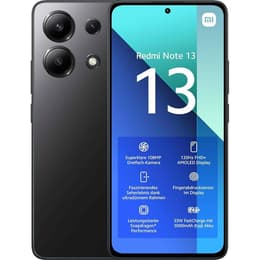
iPhone 17 Pro Max Vs Xiaomi Redmi Note 13 4G
- 1-year minimum warranty
- Free delivery on all orders
- Free 30-day returns
Differences at a glance
The iPhone 17 Pro Max (2025) and Xiaomi Redmi Note 13 4G (2024) represent two distinct approaches to the smartphone market, serving vastly different segments of everyday users. While the Apple flagship focuses on cutting-edge hardware and long-term capability within the iOS ecosystem, Xiaomi's device offers practical functionality centered on the Android operating system for everyday essentials. These two models differ fundamentally in build philosophy, processing architecture, and hardware sophistication, making them suited for entirely separate user expectations.
Available Models
Colour
Storage (GB)
Scores
Durability
When evaluating the longevity and support lifecycle of these devices, distinct differences emerge regarding software updates and hardware construction standards.
- Software longevity and update support: The iPhone 17 Pro Max benefits from Apple's extended support window, receiving major operating system updates for several years. The Xiaomi Redmi Note 13 4G operates on Android with a shorter scheduled timeline for system updates and security patches.
- Build materials and repairability: The iPhone features titanium framing and robust glass protection designed for long-term physical resilience. Xiaomi utilizes plastic composites, and both devices require professional service for complex hardware repairs.
- Expected practical lifespan: Premium internal components allow the iPhone to maintain performance headroom over many years, while the Xiaomi model satisfies immediate everyday demands reliably.
Year of Release
2025
2024
Compatible with latest Update
Yes
Yes
OS
iOS
Android
Foldable
No
No
Performance
System responsiveness and daily multitasking behavior vary significantly between these two models based on their internal processing capabilities.
- Everyday task handling and app loading: The iPhone 17 Pro Max executes demanding applications, complex games, and heavy multitasking smoothly without noticeable hesitation. The Xiaomi Redmi Note 13 4G handles standard web browsing, messaging, and media streaming adequately, though intensive apps load at a more deliberate pace.
- Storage configurations and memory: Apple provides expansive internal storage tiers paired with high-bandwidth memory for efficient multitasking. Xiaomi offers balanced storage options suited for typical personal media libraries and routine application usage.
- Battery behavior and endurance: Both devices deliver enough power to complete a full day of mixed usage, though charging speeds and power management profiles differ between the energy-efficient Apple architecture and Xiaomi's rapid-charging system.
Screen quality
Display technology differs considerably, influencing outdoor visibility, media consumption, and visual fluidity during daily interaction.
- Display technology and clarity: The iPhone 17 Pro Max features an advanced OLED panel with deep contrast levels and high pixel density. The Xiaomi Redmi Note 13 4G utilizes an AMOLED screen that delivers sharp text and rich colors for standard viewing tasks.
- Refresh rate and visual smoothness: Apple incorporates an adaptive high refresh rate for fluid scrolling and motion rendering. Xiaomi features a fixed high refresh rate option that enhances interface navigation compared to standard older display panels.
- Outdoor brightness capabilities: The iPhone achieves higher peak luminance levels for comfortable viewing under direct sunlight, whereas the Xiaomi display remains legible in most standard outdoor environments.
Resolution
2868x1320
1080 x 2400
Screen type
Super Retina XDR
AMOLED
Audiovisual
Imaging hardware and media recording capabilities cater to different photography styles and content creation requirements.
- Multi-lens camera versatility: The iPhone 17 Pro Max equips a sophisticated multi-sensor array including advanced wide, ultra-wide, and telephoto lenses capable of capturing fine details across various focal lengths. The Xiaomi Redmi Note 13 4G relies primarily on a high-resolution main sensor accompanied by basic supporting lenses for standard snapshots.
- Low-light and video performance: Apple processes low-light environments effectively while offering professional-grade video recording features and stabilization. Xiaomi handles daylight photography well, though challenging lighting conditions require steadier hands and yield simpler results.
- Audio output and media consumption: Stereo speakers on both devices provide clear sound for calls and videos, with the iPhone delivering broader dynamic range and deeper bass response during media playback.
Main camera
48 megapixels
108 megapixels
Front camera
18 megapixels
16 megapixels
Miscellaneous
Practical physical traits, connectivity standards, and daily usability features define the overall handling experience of each device.
- Connectivity and network compatibility: Both models support modern wireless standards, with the iPhone integrating advanced cellular modems and satellite connectivity features, while the Xiaomi focuses on standard dual-SIM 4G connectivity and local wireless protocols.
- Biometrics and security sensors: Apple utilizes secure facial recognition technology for device unlocking and authorization. Xiaomi incorporates a responsive fingerprint sensor integrated directly into the display structure.
- Physical dimensions and handling: The iPhone features a substantial, heavy frame constructed from premium materials. The Xiaomi model maintains a lighter plastic build that feels comfortable for single-handed operation during prolonged tasks. Choosing a quality-assured refurbished option provides a sustainable way to access these advanced features while reducing electronic waste.
Weight
233 g
175 g
Screen size (in)
6.9
6.67
Network
5G
4G
SIM card
eSIM
Dual Physical SIM
Carrier compatibility
Unlocked
Unlocked
Connector
USB-C
USB-C
What the community thinks
User feedback from online communities highlights distinct patterns of praise and common criticisms for both devices. Owners of the iPhone 17 Pro Max frequently commend its robust build quality, fluid display performance, and reliable camera system across diverse lighting conditions. At the same time, some users note the substantial physical weight and complex interface elements as minor adjustments. On the other hand, users of the Xiaomi Redmi Note 13 4G often praise its clear display panel, lightweight construction, and dependable everyday battery endurance. Common criticisms for the Xiaomi model focus on limited processing headroom for heavy tasks and a shorter software update schedule compared to premium flagship counterparts.
Users prioritizing advanced photography, maximum processing power, and long-term software support may prefer the iPhone 17 Pro Max, while users seeking a straightforward, lightweight device for daily communication and media consumption may lean toward the Xiaomi Redmi Note 13 4G. Exploring quality-assured refurbished options for these devices offers an eco-friendly alternative that supports sustainable technology consumption without compromising on functional reliability. Selecting the appropriate model depends entirely on individual daily requirements, technical expectations, and software preferences.