
Google Pixel 8 Pro Vs iPhone 14 Plus

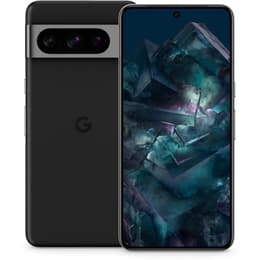
Google Pixel 8 Pro
Google Pixel 8 Pro
Starting at

Refurbished price:330.00

Versus €1,099.00 new

See options
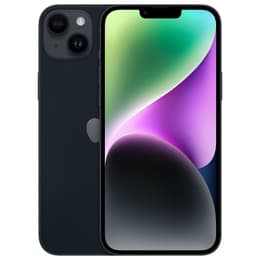
iPhone 14 Plus
iPhone 14 Plus
Starting at

Refurbished price:320.00

Versus €879.00 new

See options

Ratings

The Google Pixel 8 Pro (2023) and the iPhone 14 Plus (2022) are large-screen smartphones offering distinct experiences within their respective Android and iOS ecosystems. While both devices provide expansive displays and capable camera systems, the Pixel 8 Pro emphasizes advanced computational photography and AI-driven features, whereas the iPhone 14 Plus focuses on a streamlined user experience and robust safety functionalities.

Scores

Durability

The longevity of a smartphone is influenced by its release timeline, software support, and physical durability. The Pixel 8 Pro, being a newer device, generally benefits from a longer period of software updates compared to the iPhone 14 Plus.

  • Release Timeline: The Google Pixel 8 Pro was released in October 2023, making it a more recent model. The iPhone 14 Plus was released in October 2022.
  • Software Longevity: Google has committed to seven years of operating system and security updates for the Pixel 8 Pro, offering extended software support. Apple typically provides iOS updates for its devices for five to six years from their release date, meaning the iPhone 14 Plus will receive updates for a substantial period.
  • Repairability: The Pixel series generally scores well in repairability, with some models receiving scores around 6 out of 10, partly due to Google providing public service manuals and OEM replacement parts. The iPhone 14 Plus, like other recent iPhones, tends to have lower repairability scores, often around 4 out of 10, due to factors like proprietary parts pairing and strong adhesives.

Year of Release

2023

2022

Compatible with latest Update

Yes

Yes

Foldable

No

No

Performance

Both devices offer smooth performance for daily tasks, but they approach processing power and efficiency differently, impacting how they handle demanding applications and multitasking.

  • Everyday Responsiveness: The Pixel 8 Pro features a current-generation processor optimized for AI tasks, providing a fluid user interface and quick app loading. The iPhone 14 Plus is powered by a capable processor that delivers consistent and smooth performance across applications and the operating system.
  • Multitasking and Demanding Apps: The Pixel 8 Pro comes with 12GB of RAM, which supports extensive multitasking and resource-intensive applications effectively. The iPhone 14 Plus includes 6GB of RAM, which is sufficient for most users' multitasking needs within the iOS environment.
  • Battery Behavior: The Pixel 8 Pro has a larger battery capacity (5050 mAh) and generally offers all-day battery life, though heavy use might require more frequent charging. The iPhone 14 Plus, with its 4323 mAh battery, is also noted for offering good battery life, with users reporting it can last through a full day of typical use.

Memory (GB)

12 GB

6 GB

Screen quality

The visual experience on both smartphones is delivered through large, vibrant displays, though there are differences in their underlying technology and capabilities.

  • Display Technology and Clarity: The Google Pixel 8 Pro features a 6.7-inch LTPO OLED display with a resolution of 1344 x 2992 pixels, offering sharp visuals and deep blacks. The iPhone 14 Plus also has a 6.7-inch Super Retina XDR OLED display with a resolution of 1284 x 2778 pixels, providing excellent contrast and color accuracy.
  • Brightness and Refresh Rate: The Pixel 8 Pro's display can reach a peak brightness of up to 2400 nits and features an adaptive refresh rate that ranges from 1Hz to 120Hz, contributing to smoother scrolling and a more responsive feel. The iPhone 14 Plus offers a peak brightness of up to 1200 nits and a standard 60Hz refresh rate.
  • Viewing Experience: Both devices provide expansive screens suitable for media consumption and productivity. The Pixel 8 Pro's higher refresh rate and peak brightness may offer a more fluid and visible experience in bright outdoor conditions.

Resolution

1344 x 2992

1284 x 2778

Screen type

LTPO OLED

Super Retina XDR OLED

Audiovisual

Both smartphones are equipped with advanced camera systems designed to capture high-quality photos and videos, each with its own strengths and features.

  • Camera System Capabilities: The Google Pixel 8 Pro features a versatile triple camera setup, including a 50MP main sensor, a 48MP ultrawide lens, and a 48MP telephoto lens with 5x optical zoom. The iPhone 14 Plus has a dual-camera system with a 12MP main wide camera and a 12MP ultrawide camera.
  • Photography Performance: The Pixel 8 Pro is known for its computational photography, delivering detailed and clear photos with strong dynamic range, particularly excelling in low-light conditions. The iPhone 14 Plus provides consistent and reliable image quality, with improvements in low-light performance and features like Photonic Engine for enhanced detail and color.
  • Video Recording Quality: Both devices support 4K video recording at various frame rates. The iPhone 14 Plus offers features like Cinematic mode for shallow depth-of-field effects and Action mode for stabilized video, while the Pixel 8 Pro also provides robust video capabilities with its advanced sensors.

Main camera

50 megapixels

12 megapixels

Front camera

10.5 megapixels

12 megapixels

Miscellaneous

Beyond core performance and display, several practical elements differentiate these two large-screen smartphones, influencing daily usability and connectivity.

  • Connectivity Options: The Google Pixel 8 Pro supports Wi-Fi 7, offering advanced wireless speeds, alongside 5G and Bluetooth 5.3. The iPhone 14 Plus supports Wi-Fi 6, 5G, and Bluetooth 5.3.
  • Port Types and Biometrics: The Pixel 8 Pro uses a USB-C port for charging and data transfer and features an in-display fingerprint sensor for secure unlocking. The iPhone 14 Plus utilizes Apple's Lightning port and relies on Face ID for biometric authentication.
  • Build Materials and Dimensions: Both phones feature durable glass on the front and back with aluminum frames. The Pixel 8 Pro measures approximately 162.6 x 76.5 x 8.8 mm and weighs 213 grams. The iPhone 14 Plus measures 160.8 x 78.1 x 7.8 mm and weighs 203 grams.

Weight

213 g

203 g

Screen size (in)

6.7

6.7

Network

5G

5G

SIM card

Physical SIM + eSIM

Physical SIM + eSIM

Carrier compatibility

Unlocked

Unlocked

User sentiment for the Google Pixel 8 Pro often highlights its exceptional camera capabilities, particularly its advanced AI-driven features and strong low-light performance. Users also praise its vibrant display and the extended software support commitment from Google. Some criticisms have pointed to its processor performance not always matching the highest-tier benchmarks, and some users have reported occasional connectivity issues.

The iPhone 14 Plus is frequently lauded for its reliable performance, the intuitive iOS ecosystem, and its robust safety features like Crash Detection and Emergency SOS via satellite. Users appreciate its consistent battery life and the quality of its video recording. Common feedback sometimes notes the 60Hz display as a point of comparison against devices with higher refresh rates.

Users prioritizing cutting-edge camera technology, advanced AI functionalities, and a high-refresh-rate display will find the Google Pixel 8 Pro well-suited to their needs. Its long-term software support also appeals to those seeking extended device longevity. Conversely, users who value the established iOS ecosystem, strong video capabilities, and integrated safety features may lean toward the iPhone 14 Plus. Both devices offer a large-screen experience, and for those considering a more sustainable choice, quality-assured refurbished options are available for both models, providing an eco-friendly alternative.