

Compare models
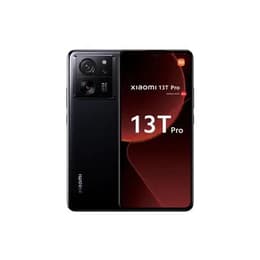
iPhone 16 Plus Vs Xiaomi 13T Pro
- 1-year minimum warranty
- Free delivery on all orders
- Free 30-day returns
Differences at a glance
The iPhone 16 Plus, released in September 2024, and the Xiaomi 13T Pro, launched in September 2023, represent distinct approaches to high-performance smartphones. While both devices offer robust capabilities, they differ in their operating systems, camera philosophies, and display technologies. The iPhone 16 Plus operates on Apple's iOS, emphasizing a streamlined user experience, whereas the Xiaomi 13T Pro runs on Android with Xiaomi's HyperOS, offering extensive customization. These differences cater to varying user preferences in terms of software ecosystem and hardware features.
Available Models
Colour
Storage (GB)
Scores
Durability
The expected lifespan and software support differ between these two devices, largely due to their release timelines and manufacturer policies.
- Release Timeline: The iPhone 16 Plus, released in September 2024, benefits from a more recent launch, typically translating to a longer period of software updates and security patches from Apple. The Xiaomi 13T Pro, launched in September 2023, has already received some updates since its release.
- Software Longevity: Apple generally provides iOS updates for approximately 5-6 years from a device's release, meaning the iPhone 16 Plus is expected to receive support well into the future. Xiaomi has committed to providing up to four major Android upgrades and five years of security patches for the 13T Pro, offering substantial longevity for an Android device.
- Physical Durability: The iPhone 16 Plus features a Ceramic Shield front and an aluminum frame, contributing to its scratch and bend resistance, along with an IP68 rating for dust and water resistance (up to 6 meters for 30 minutes). The Xiaomi 13T Pro utilizes Gorilla Glass 5 for its display and has an IP68 rating for dust and water resistance (up to 1.5 meters for 30 minutes), with some variants offering a vegan leather back for enhanced grip and feel.
Year of Release
2024
2023
Compatible with latest Update
Yes
Yes
Foldable
No
No
Performance
Both smartphones are equipped with powerful internal components designed to handle demanding applications and multitasking, though they achieve this through different hardware architectures.
- Processing Power: The iPhone 16 Plus is powered by Apple's A18 chip, which delivers a significant boost in performance and efficiency, enabling smooth operation for intensive tasks and advanced gaming. The Xiaomi 13T Pro features a MediaTek Dimensity 9200+ chipset, providing top-tier performance that ensures demanding apps and multitasking run smoothly.
- Multitasking and Storage: The iPhone 16 Plus comes with 8GB of RAM and storage options up to 512GB, offering ample space and efficient multitasking capabilities. The Xiaomi 13T Pro offers more generous RAM configurations, up to 16GB, and storage options up to 1TB, which can be beneficial for users who frequently switch between many applications or store large files.
- Real-world Responsiveness: Users of the iPhone 16 Plus report consistently smooth performance across various applications, including graphics-intensive games, with minimal heating. The Xiaomi 13T Pro also delivers a responsive experience, handling everyday tasks and gaming with fluidity, though some users have noted occasional heating during prolonged heavy use.
Screen quality
The visual experience on both devices is a highlight, with each offering a large, vibrant display, though with distinct characteristics.
- Display Technology and Size: The iPhone 16 Plus features a 6.7-inch Super Retina XDR OLED display, known for its deep blacks and vibrant colors. The Xiaomi 13T Pro sports a 6.67-inch AMOLED display, also delivering rich colors and excellent contrast.
- Resolution and Clarity: The iPhone 16 Plus offers a resolution of 2796x1290 pixels at 460 pixels per inch (ppi), providing sharp and detailed visuals. The Xiaomi 13T Pro has a resolution of 1220x2712 pixels, which also ensures a high level of clarity and detail for viewing content.
- Brightness and Refresh Rate: The iPhone 16 Plus achieves a typical brightness of 1000 nits, with peak brightness reaching 2000 nits outdoors, ensuring good visibility in various lighting conditions. It features a standard refresh rate. The Xiaomi 13T Pro boasts an adaptive refresh rate of up to 144Hz and a peak brightness of 2600 nits, offering smoother scrolling and a more fluid visual experience, particularly noticeable in gaming and fast-paced content.
Resolution
1290 x 2796
1220 x 2712
Screen type
Super Retina XDR OLED
AMOLED
Audiovisual
Both smartphones offer advanced camera systems, each with unique strengths and features designed to capture high-quality images and videos.
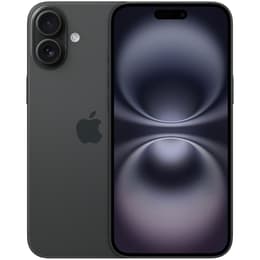
- Rear Camera Systems: The iPhone 16 Plus is equipped with a dual-camera setup, including a 48MP Fusion main camera with optical image stabilization (OIS) and a 12MP ultrawide camera. It introduces a new Camera Control button for enhanced photographic adjustments and supports spatial photo and video capture. The Xiaomi 13T Pro features a triple-camera system co-engineered with Leica, comprising a 50MP main camera with OIS, a 50MP telephoto lens with 2x optical zoom, and a 12MP ultrawide camera.
- Photography Performance: The iPhone 16 Plus delivers detailed photos with natural colors and good dynamic range across various lighting conditions, excelling in video recording up to 4K at 60 frames per second. Its ultrawide camera may show some grain in low-light situations. The Xiaomi 13T Pro's Leica-tuned cameras produce detailed and versatile images, with options for 'Leica Authentic' and 'Leica Vibrant' color styles. Its main camera performs well in daylight and low light, while the telephoto lens offers effective 2x optical zoom.
- Front Camera and Audio: The iPhone 16 Plus features a 12MP front camera that provides clear selfies and supports high-quality video calls. The Xiaomi 13T Pro has a 20MP front camera, which is suitable for social snaps and video calls, though some users note that fine details are not always perfectly preserved. Both devices offer stereo speakers for an immersive media consumption experience.
Main camera
48 megapixels
50 megapixels
Front camera
12 megapixels
20 megapixels
Miscellaneous
Beyond their core features, both devices offer a range of practical elements that enhance their overall usability and user experience.
- Connectivity and Ports: Both the iPhone 16 Plus and the Xiaomi 13T Pro support 5G connectivity, Wi-Fi 7, and modern Bluetooth standards (5.3 for iPhone, 5.4 for Xiaomi), ensuring fast and reliable wireless connections. The iPhone 16 Plus has transitioned to a USB-C port, aligning with broader industry standards, while the Xiaomi 13T Pro also features a USB-C port.
- Biometrics and Sensors: The iPhone 16 Plus relies on Face ID for secure authentication and includes an Action button for customizable shortcuts. The Xiaomi 13T Pro offers an in-screen fingerprint sensor and AI face unlock for security, and notably includes an IR blaster, which allows it to function as a universal remote control.
- Design and Handling: The iPhone 16 Plus weighs 199 grams and measures 160.9 x 77.8 x 7.8 mm, offering a balanced feel in hand. The Xiaomi 13T Pro weighs between 200g and 206g and measures 162.2 x 75.7 x 8.5 mm, with some users appreciating its grippy vegan leather back option.
Weight
199 g
200 g
Screen size (in)
6.7
6.67
Network
5G
5G
SIM card
eSIM
Dual Physical SIM
Carrier compatibility
Unlocked
Unlocked
Connector
USB-C (USB 2)
USB-C
What the community thinks
The iPhone 16 Plus and the Xiaomi 13T Pro cater to users with distinct priorities, offering compelling features within their respective ecosystems. User feedback for the iPhone 16 Plus frequently praises its exceptional battery life, often lasting a full day or more even with heavy use, and its consistently smooth performance for demanding applications and gaming. The camera system is also highly regarded for its video quality and natural image processing, though some users note the ultrawide camera's performance in low light. The inclusion of the new Camera Control button and spatial photo capabilities are also positive points for many.
For the Xiaomi 13T Pro, users often highlight its vibrant 144Hz AMOLED display, which provides a very fluid visual experience, and its top-tier performance for gaming and multitasking. The Leica-tuned camera system is appreciated for its versatility and detail in good lighting, particularly the main and telephoto lenses. The incredibly fast 120W wired charging is a significant advantage for users who need to quickly top up their device. However, some users have reported that battery life can be inconsistent for very heavy usage, and the selfie camera is considered adequate rather than outstanding. There have also been some mixed experiences regarding its water resistance despite the IP68 rating.
Users prioritizing a long-lasting battery, a highly optimized software experience with extended support, and a strong focus on video capabilities may find the iPhone 16 Plus well-suited to their needs. Conversely, those who value a high refresh rate display, extremely fast charging, greater customization options within the Android ecosystem, and a versatile camera system with optical zoom might lean towards the Xiaomi 13T Pro. Both devices offer a quality-assured refurbished option, providing an eco-friendly alternative for consumers seeking to make informed and sustainable choices.