

Galaxy A53 5G Vs Xiaomi Redmi 14C

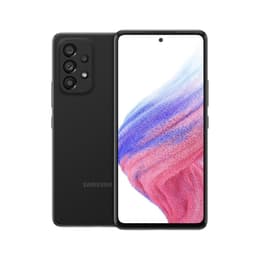
Galaxy A53 5G
Galaxy A53 5G
Starting at

Refurbished price:119.00

Versus €459.00 new

See options
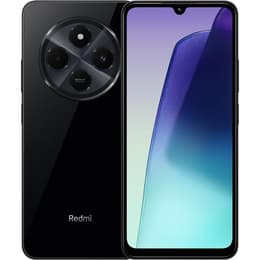
Xiaomi Redmi 14C
Xiaomi Redmi 14C
Starting at

Refurbished price:128.20

Versus €189.00 new

See options

Ratings

The Samsung Galaxy A53 5G (released in April 2022) and the Xiaomi Redmi 14C (released in August 2024) are both Android smartphones designed for everyday use. While the Galaxy A53 5G offers a more vibrant display and a longer software support commitment, the Redmi 14C provides a larger screen and a more recent operating system out of the box. Both devices run on the Android operating system, with the Galaxy A53 5G featuring Samsung's One UI and the Redmi 14C utilizing Xiaomi's HyperOS.

Scores

Durability

The longevity of a smartphone is influenced by its release timeline, software support, and ease of repair.

  • Release Timeline: The Samsung Galaxy A53 5G was released in April 2022, making it an older device compared to the Xiaomi Redmi 14C, which launched in August 2024. This difference in release dates impacts their respective software support cycles.
  • Software Longevity: The Galaxy A53 5G benefits from Samsung's policy of providing four major Android OS upgrades and five years of security updates, meaning it is expected to receive updates up to Android 16 and security patches until 2027. In contrast, the Redmi 14C is slated for two Android OS upgrades and four years of security updates, with its last security patch update expected in August 2028. This suggests the Galaxy A53 5G offers a longer period of major OS updates, while the Redmi 14C, being newer, will have security updates for a similar duration from its launch.
  • Repairability: The Samsung Galaxy A53 5G is considered relatively repairable, with a repairability score of around 6.75 to 7.5 out of 10, noting that components like the battery cable are accessible, though adhesive is used for the back cover and battery. The Redmi 14C has an average repairability score of 6.0 out of 10, with some components being accessible but requiring disassembly and dealing with adhesive for the back cover and battery.

Year of Release

2022

2024

Compatible with latest Update

Yes

Yes

OS

Android

Android

Foldable

No

No

Performance

Evaluating the performance of these devices involves looking at their storage capabilities, battery behavior, and how smoothly they handle daily tasks.

  • Storage and Multitasking: Both devices offer various RAM and internal storage configurations, with options typically ranging from 4GB to 8GB of RAM and 128GB to 256GB of internal storage. Both also support expandable storage via a microSD card. The Redmi 14C, however, often uses eMMC storage, which can result in slower app loading and updating compared to the Galaxy A53 5G's UFS storage.
  • Everyday Responsiveness: The Galaxy A53 5G, while generally capable for daily use, has been noted by some users to exhibit occasional lag and stuttering in system menus and app navigation, particularly due to its processor. The Redmi 14C, powered by a processor designed for entry-level use, handles daily tasks like social media and messaging smoothly, but users may experience minor stutters when multitasking or running several apps in the background.
  • Battery Endurance: The Galaxy A53 5G features a 5000 mAh battery, which users report can last through a full day of varied use, often with significant charge remaining. The Redmi 14C comes with a slightly larger 5160 mAh battery, and users generally find it provides a full day of use under normal conditions, though heavy gaming may require more frequent charging.

Memory (GB)

4 GB

4 GB

Screen quality

The visual experience on a smartphone is largely defined by its display technology, resolution, and refresh rate.

  • Display Technology and Clarity: The Samsung Galaxy A53 5G features a 6.5-inch Super AMOLED display, known for producing deep blacks and vibrant colors, offering a clear viewing experience with its 1080 x 2400 pixel resolution. The Xiaomi Redmi 14C has a larger 6.88-inch IPS LCD screen, which provides good viewing angles but typically offers less contrast than AMOLED. Its resolution is 720 x 1640 pixels, resulting in a less sharp image compared to the Galaxy A53 5G.
  • Brightness and Outdoor Visibility: The Galaxy A53 5G's Super AMOLED display can reach a peak brightness of 800 nits, contributing to good visibility even in bright outdoor conditions. The Redmi 14C offers a typical brightness of 450 nits, with a High Brightness Mode (HBM) reaching 600 nits, which may be less effective under direct sunlight.
  • Smoothness and Responsiveness: Both devices feature a 120Hz refresh rate, which contributes to smoother scrolling and a more fluid user interface experience.

Resolution

1080 x 2400

720 x 1640

Screen type

Super AMOLED

IPS LCD

Audiovisual

The camera systems on both phones offer different capabilities for capturing photos and videos.

  • Rear Camera System: The Samsung Galaxy A53 5G is equipped with a versatile quad-camera setup, including a 64 MP main sensor with optical image stabilization (OIS), a 12 MP ultrawide lens, and two 5 MP sensors for macro and depth. The Xiaomi Redmi 14C features a triple-camera system with a 50 MP main sensor and a 2 MP depth sensor, alongside a less significant third sensor.
  • Photography Performance: The Galaxy A53 5G generally produces good photos in daylight, though some users note a slight over-saturation and mediocre performance in low-light conditions. The Redmi 14C's camera is described as decent for its category, with some users reporting improved results when using third-party camera applications.
  • Video Recording: The Galaxy A53 5G supports 4K video recording at 30 frames per second (fps) and 1080p at 30/60fps, with gyro-EIS for stabilization. The Redmi 14C records video at 1080p at 30fps.
  • Audio Experience: The Galaxy A53 5G features stereo speakers, providing a more immersive audio experience for media consumption and calls. The Redmi 14C also includes a 3.5mm headphone jack, offering a traditional wired audio option not present on the A53 5G.

Main camera

64 megapixels

50 megapixels

Front camera

32 megapixels

13 megapixels

Miscellaneous

Beyond core features, several practical elements differentiate these two smartphones.

  • Connectivity and Ports: The Samsung Galaxy A53 5G supports 5G networks, Wi-Fi 5 (802.11ac) or Wi-Fi 6 (802.11ax for some models), and Bluetooth 5.1. It uses a USB-C port for charging and data transfer but lacks a 3.5mm headphone jack. The Xiaomi Redmi 14C is primarily a 4G device, supporting Wi-Fi 5 (802.11ac) and Bluetooth 5.4. It includes a USB-C port and retains the 3.5mm headphone jack.
  • Biometric Security: The Galaxy A53 5G features an under-display optical fingerprint sensor, which users generally find works well and consistently. The Redmi 14C incorporates a side-mounted fingerprint sensor. Both devices also offer face recognition.
  • Build and Handling: The Galaxy A53 5G has a glass front protected by Corning Gorilla Glass 5, a plastic frame, and a plastic back, with an IP67 rating for dust and water resistance. It weighs 189g. The Redmi 14C has a glass front, plastic frame, and either a glass or silicone polymer (eco-leather) back. It weighs 204g.

Weight

189 g

207 g

Screen size (in)

6.5

6.88

Network

5G

4G

SIM card

Physical SIM

Dual Physical SIM

Carrier compatibility

Unlocked

Unlocked

Connector

USB-C

USB-C

The Samsung Galaxy A53 5G and the Xiaomi Redmi 14C cater to slightly different user priorities, reflecting their respective release timelines and design philosophies.

Users often praise the Galaxy A53 5G for its vibrant Super AMOLED display, reliable battery life, and Samsung's commitment to long-term software updates. Its IP67 water and dust resistance is also a notable advantage for those seeking added durability. However, some users have expressed concerns regarding the performance of its processor, noting occasional lag and shutter delay in the camera. The absence of a headphone jack and the lack of a charger in the box are also common criticisms.

The Redmi 14C is frequently lauded for its large screen, generally good battery life for typical use, and the inclusion of a 3.5mm headphone jack. Its HyperOS software is also often seen as a positive. On the other hand, common criticisms include its lower-resolution display, the performance limitations of its processor, especially with demanding applications or games, and the use of slower eMMC storage. Some users have also reported issues with software sluggishness and potential overheating under heavy load.

Users prioritizing a high-quality, vibrant display, robust water and dust resistance, and a longer period of major Android updates may prefer the Samsung Galaxy A53 5G. This device is well-suited for individuals who value a polished software experience and consistent performance for everyday tasks, and who are comfortable with a slightly older device that still receives regular updates. Conversely, users who prioritize a larger screen for media consumption, the convenience of a headphone jack, and a more recent initial software version may lean toward the Xiaomi Redmi 14C. This device could be a suitable option for those with lighter usage patterns who do not engage in intensive gaming or multitasking.

For those considering either device, exploring quality-assured refurbished options can provide an eco-friendly alternative, extending the lifespan of these electronics and offering a sustainable choice.


See all articles

Our recent comparisons