
Galaxy S21 5G Vs Xiaomi Redmi Note 14 Pro

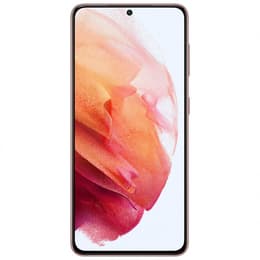
Galaxy S21 5G
Galaxy S21 5G
Starting at

Refurbished price:165.00

Versus €1,026.00 new

See options
Xiaomi Redmi Note 14 Pro
Starting at

Refurbished price:260.77

Versus €349.99 new

See options

Ratings

The Samsung Galaxy S21 5G, released in January 2021, and the Xiaomi Redmi Note 14 Pro, launched in January 2025, represent different generations and market segments within the Android smartphone landscape. While the Galaxy S21 5G was a flagship device at its release, the Redmi Note 14 Pro positions itself as a feature-rich option with more recent technology. The primary distinctions between these two devices lie in their release timelines, software longevity, and camera capabilities, offering users distinct experiences based on their priorities.

Scores

Durability

The practical lifespan of a smartphone is heavily influenced by its release date and the manufacturer's commitment to software updates. The Galaxy S21 5G, being an older device, is nearing the end of its official software support cycle, while the Redmi Note 14 Pro benefits from a more current launch.

  • Release Timeline: The Galaxy S21 5G was introduced in January 2021, making it a device from an earlier generation. The Redmi Note 14 Pro, released in January 2025, is a much newer model, benefiting from more recent technological advancements and a longer support window.
  • Software Longevity: The Galaxy S21 5G launched with Android 11 and has received updates up to Android 14 (One UI 6), with Android 15 (One UI 7) expected in May 2025. Samsung typically provides four generations of Android OS updates and five years of security updates for its flagship devices, meaning the S21 5G is approaching the end of its major OS upgrade cycle. The Redmi Note 14 Pro, launching with Android 14 and HyperOS, is expected to receive up to three major OS upgrades, ensuring a longer period of current software features and security patches.
  • Durability Features: Both devices offer robust build quality. The Galaxy S21 5G features Corning Gorilla Glass Victus for display protection and an IP68 rating for dust and water resistance. The Redmi Note 14 Pro comes with the newer Corning Gorilla Glass Victus 2 and also boasts an IP68 rating, indicating strong protection against environmental elements.

Year of Release

2021

2025

OS

Android

Android

Foldable

No

No

Performance

Performance is a critical aspect for daily smartphone usage, impacting everything from app responsiveness to demanding tasks like gaming. These two devices, despite their different release dates, offer distinct performance profiles.

  • Processing Power: The Galaxy S21 5G is equipped with a flagship-tier processor from its release year, providing smooth operation for multitasking, demanding applications, and graphically intensive games. The Redmi Note 14 Pro features a current-generation mid-range processor designed to handle everyday tasks efficiently, including social media, browsing, and casual gaming, with a focus on stable performance.
  • Multitasking Capabilities: The Galaxy S21 5G typically comes with 8GB of RAM, allowing for competent multitasking and quick switching between applications. The Redmi Note 14 Pro offers configurations with 8GB or 12GB of RAM, which can provide a slightly smoother experience for users who frequently juggle many applications simultaneously.
  • Storage Options: Both phones offer ample internal storage. The Galaxy S21 5G is available with 128GB or 256GB of storage. The Redmi Note 14 Pro provides more flexibility with options for 128GB, 256GB, or 512GB of internal storage, catering to users with larger digital libraries.

Memory (GB)

8 GB

8 GB

Screen quality

The display is the primary interface for smartphone interaction, and both devices offer vibrant viewing experiences with key differences in technology and specifications.

  • Display Technology and Clarity: The Galaxy S21 5G features a 6.2-inch Dynamic AMOLED 2X display with a resolution of 1080 x 2400 pixels, delivering sharp and colorful visuals. The Redmi Note 14 Pro boasts a larger 6.67-inch AMOLED display with a 1.5K resolution (1220 x 2712 pixels), offering a slightly higher pixel density for enhanced clarity.
  • Refresh Rate and Smoothness: Both smartphones feature a 120Hz refresh rate, which contributes to smoother scrolling, more fluid animations, and a more responsive feel during use, particularly noticeable in gaming and navigating the user interface.
  • Brightness for Visibility: The Galaxy S21 5G provides good brightness levels for various lighting conditions. The Redmi Note 14 Pro stands out with a significantly higher peak brightness, reaching up to 3000 nits, which greatly enhances outdoor visibility even in bright sunlight.

Resolution

1080 x 2400

1080x2400

Audiovisual

Camera capabilities are a significant factor for many users, and both the Galaxy S21 5G and the Redmi Note 14 Pro offer versatile camera systems with different strengths.

  • Rear Camera Systems: The Galaxy S21 5G features a triple-camera setup with a 12MP main sensor, a 12MP ultrawide lens, and a 64MP telephoto lens, providing optical zoom capabilities and a range of photographic options. The Redmi Note 14 Pro emphasizes a high-megapixel main sensor, featuring a 200MP primary camera with optical image stabilization (OIS), complemented by an 8MP ultrawide and a 2MP macro lens.
  • Photography Performance: The Galaxy S21 5G is known for its consistent image quality, fast autofocus, and good performance in various lighting conditions, including a capable night mode. The Redmi Note 14 Pro's 200MP main camera can capture highly detailed photos, especially in good lighting, with users praising its sharpness and dynamic range. However, its secondary cameras (ultrawide and macro) are generally considered less capable.
  • Video Recording and Front Camera: The Galaxy S21 5G offers advanced video recording, including 8K resolution and a Director's View mode for switching between lenses while filming. The Redmi Note 14 Pro's video capabilities are a point of user discussion; while some specifications mention 4K recording, many user reviews indicate that stable 4K video recording is often not achievable, with performance generally limited to 1080p at 60fps, and sometimes with stability issues. For selfies, the S21 5G has a 10MP front camera, while the Redmi Note 14 Pro features a 20MP or 32MP front camera.

Front camera

10 megapixels

32 MP

Miscellaneous

Beyond core specifications, several practical elements contribute to the overall user experience and device utility.

  • Connectivity Standards: Both devices support 5G connectivity for faster mobile data speeds. The Galaxy S21 5G includes Wi-Fi 6 and Bluetooth 5.2. The Redmi Note 14 Pro features Wi-Fi 5 and the newer Bluetooth 5.4, offering potentially improved wireless accessory connections.
  • Ports and Biometrics: Both smartphones utilize a USB-C port for charging and data transfer. The Galaxy S21 5G features an under-display fingerprint sensor. The Redmi Note 14 Pro also includes an in-screen fingerprint sensor and offers AI face unlock. Some variants of the Redmi Note 14 Pro also retain a 3.5mm headphone jack, which is absent on the Galaxy S21 5G.
  • Physical Design and Handling: The Galaxy S21 5G is a more compact device, weighing around 169-171 grams with dimensions of 151.7 x 71.2 x 7.9 mm. The Redmi Note 14 Pro is slightly larger and heavier, at approximately 190 grams and dimensions of 162.33 x 74.42 x 8.4 mm, offering a larger screen but a less compact feel.

Weight

171 g

180 g

Screen size (in)

6.2

6.67

Network

5G

4G

SIM card

Physical SIM + eSIM

Dual Physical SIM

Carrier compatibility

Unlocked

Unlocked

User sentiment for the Galaxy S21 5G often highlights its balanced performance, capable camera system, and premium build quality, which were well-regarded at its launch. Common praise points include its vibrant display and reliable software experience. Some criticisms have emerged over time regarding its battery life for heavy users and the eventual end of major software updates.

For the Redmi Note 14 Pro, users frequently commend its impressive display, large battery capacity, and the high-resolution main camera for still photography. However, common criticisms revolve around the inconsistent video recording capabilities, particularly the lack of reliable 4K video, and the performance of its secondary cameras. Some users also note potential software optimization issues despite the capable hardware.

Users prioritizing a more compact device with a proven flagship camera system and a robust software experience from a few years ago may find the Galaxy S21 5G well-suited to their needs. Those who value a larger, brighter display, a newer device with a longer software support window, and a high-megapixel main camera for still photos might lean toward the Redmi Note 14 Pro. Both devices offer compelling features, and considering a quality-assured refurbished option for either model can provide an eco-friendly alternative for consumers.


See all articles

Our recent comparisons