

iPhone 13 Vs iPhone 16 Pro Max

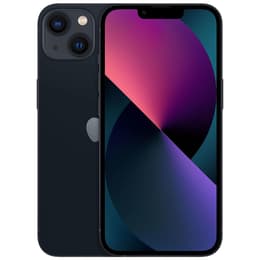
iPhone 13
iPhone 13
Starting at

Refurbished price:232.00

Versus €769.00 new

See options
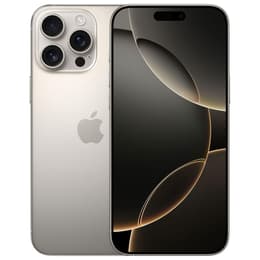
iPhone 16 Pro Max
iPhone 16 Pro Max
Starting at

Refurbished price:821.00

Versus €1,489.00 new

See options

Ratings

The iPhone 13, released in September 2021, and the iPhone 16 Pro Max, launched in September 2024, represent different generations and tiers within Apple's smartphone lineup. While both operate on Apple's iOS ecosystem, the iPhone 16 Pro Max introduces substantial advancements in display technology, camera capabilities, and overall performance, reflecting three years of technological evolution and its position as a professional-grade device.

Scores

Durability

The expected practical lifespan of a smartphone is influenced by its initial release date, ongoing software support, and physical durability.

  • Release Timeline: The iPhone 13 was released in September 2021, while the iPhone 16 Pro Max followed in September 2024. This three-year difference means the iPhone 16 Pro Max will likely receive software updates and security patches for a longer period, extending its usable life. The iPhone 13 launched with iOS 15 and is compatible with iOS 18, and is expected to continue receiving updates for several more years. The iPhone 16 Pro Max launched with iOS 18.
  • Repairability: The iPhone 13 initially received an iFixit repairability score of 5 out of 10, which later improved to 6 out of 10 with an iOS update that addressed Face ID issues related to screen replacements. The iPhone 16 Pro Max, however, boasts a significantly improved repairability score of 7 out of 10, making it one of the most repairable iPhones in years. This is attributed to a design that allows access to internal components from both the front and back, simplifying common repairs like battery and camera replacements.
  • Physical Durability: Both devices feature Ceramic Shield on the front for enhanced drop protection and are rated IP68 for water and dust resistance, meaning they can withstand immersion in up to 6 meters of water for up to 30 minutes. The iPhone 16 Pro Max also incorporates a titanium design, which contributes to its overall robustness.

Year of Release

2021

2024

Compatible with latest Update

Yes

Yes

Foldable

No

No

Performance

Performance differences between these two models are notable, stemming from generational advancements in internal components and system optimization.

  • Processing Power: The iPhone 13 is powered by an A15 Bionic chip, which provides smooth performance for everyday tasks, app loading, and moderate gaming. The iPhone 16 Pro Max features the A18 Pro chip, offering a substantial increase in processing capabilities. This translates to faster app launches, more fluid multitasking, and a superior experience for demanding applications, advanced gaming, and on-device artificial intelligence features.
  • Multitasking and Responsiveness: The iPhone 16 Pro Max is designed to handle more intensive workloads and complex operations with greater efficiency, ensuring a highly responsive user experience even with numerous applications running simultaneously. This is particularly beneficial for users who frequently switch between heavy apps or engage in mobile content creation.
  • Battery Behavior: The iPhone 13 offers reliable battery life, often lasting a full day for many users under typical usage conditions. The iPhone 16 Pro Max, with its larger battery capacity and more efficient A18 Pro chip, delivers exceptional battery endurance, with some tests indicating it can last significantly longer, making it suitable for extended use without frequent recharging.

Memory (GB)

4 GB

8 GB

Screen quality

The visual experience on these devices differs significantly due to advancements in display technology and size.

  • Display Technology and Size: The iPhone 13 features a 6.1-inch Super Retina XDR OLED display, offering deep blacks and vibrant colors with a resolution of 2532x1170 pixels at 460 pixels per inch (ppi). The iPhone 16 Pro Max comes with a larger 6.9-inch Super Retina XDR OLED display, providing a more expansive viewing area with a resolution of 2868x1320 pixels at 460 ppi.
  • Refresh Rate and Smoothness: The iPhone 13 has a standard 60Hz refresh rate, which provides a consistent visual experience. The iPhone 16 Pro Max incorporates ProMotion technology, offering adaptive refresh rates up to 120Hz. This results in noticeably smoother scrolling, more fluid animations, and a more responsive feel, particularly beneficial for gaming and fast-paced content.
  • Brightness and Features: Both displays offer excellent brightness, with the iPhone 13 reaching 800 nits typical and 1200 nits peak for HDR content. The iPhone 16 Pro Max features advanced OLED panels designed for higher brightness and longer lifespans, ensuring better visibility in bright outdoor conditions. Additionally, the iPhone 16 Pro Max includes an Always-On display and the Dynamic Island, which integrates alerts and activities into an interactive area at the top of the screen.

Resolution

1170 x 2532

1320 x 2868

Screen type

Super Retina XDR OLED

LTPO Super Retina XDR OLED

Audiovisual

The camera systems on the iPhone 13 and iPhone 16 Pro Max reflect different levels of photographic and videographic capabilities.

  • Rear Camera System: The iPhone 13 features a dual 12MP camera system, comprising a Main camera with an f/1.6 aperture and Sensor-shift optical image stabilization, and an Ultra Wide camera with an f/2.4 aperture and a 120-degree field of view. The iPhone 16 Pro Max steps up with a professional-grade triple camera system, including a 48MP Fusion main camera (f/1.78, second-generation sensor-shift OIS, capable of 24MP and 48MP photos), a 48MP Ultra Wide camera (f/2.2, 120-degree field of view), and a 12MP 5x Telephoto camera with a tetraprism design and 3D sensor-shift OIS.
  • Photography Features: Both devices offer features like Night mode, Deep Fusion, and Photographic Styles. The iPhone 13 includes Smart HDR 4. The iPhone 16 Pro Max enhances these with a LiDAR Scanner for improved low-light focusing and depth sensing, and advanced computational photography features that leverage its more powerful processor.
  • Video Recording: The iPhone 13 supports HDR video recording with Dolby Vision up to 4K at 60 frames per second (fps) and Cinematic mode at 1080p at 30fps. The iPhone 16 Pro Max offers more advanced video capabilities, including 4K Dolby Vision video recording at up to 120fps, Cinematic mode up to 4K at 30fps, Action mode, Spatial video recording, and ProRes video recording up to 4K at 120fps with external recording, along with Log video for professional workflows. It also introduces a new Camera Control button for enhanced photographic control.

Main camera

12 megapixels

48 megapixels

Front camera

12 megapixels

12 megapixels

Miscellaneous

Beyond core performance and display, several practical elements differentiate these two iPhone models.

  • Connectivity and Ports: The iPhone 13 utilizes a Lightning port for charging and data transfer and supports Wi-Fi 6. The iPhone 16 Pro Max features a USB-C port, offering broader compatibility and potentially faster data transfer speeds, and supports the newer Wi-Fi 7 standard for improved wireless performance. Both support 5G cellular connectivity.
  • Biometric Security and Sensors: Both devices rely on Face ID for secure authentication. The iPhone 16 Pro Max includes a LiDAR Scanner, which enhances augmented reality experiences and improves autofocus in low-light photography.
  • Design and Handling: The iPhone 13 has a flat-edged design with an aluminum frame and a glass back, weighing around 173-174 grams. The iPhone 16 Pro Max features a larger form factor with a titanium design, Ceramic Shield front, and textured matte glass back, weighing approximately 227 grams. Its larger size and weight contribute to a more substantial feel in hand, which can impact one-handed use.

Weight

173 g

227 g

Screen size (in)

6.1

6.9

Network

5G

5G

SIM card

Physical SIM + eSIM

Physical SIM + eSIM

Carrier compatibility

Unlocked

Unlocked

Connector

Lightning

USB-C (USB 3)

The iPhone 13 and iPhone 16 Pro Max cater to different user needs and expectations, largely due to the significant generational gap and their respective positions in Apple's product hierarchy. The iPhone 13, released in 2021, remains a capable smartphone for everyday use, offering a solid display, reliable performance for general tasks, and a competent camera system. Users often praise its balanced size and consistent performance for daily communication, social media, and casual photography. However, some users might find its 60Hz display less fluid compared to newer models, and its battery life, while good for its time, may require more frequent charging for heavy users.

The iPhone 16 Pro Max, launched in 2024, is designed for users who demand the latest technology and premium features. It receives commendation for its expansive and fluid 120Hz ProMotion display, exceptional battery life that can easily last through demanding days, and a highly advanced camera system capable of professional-grade photos and videos. Its powerful processor ensures smooth operation across all applications, including intensive gaming and advanced AI features. Criticisms, when they arise, often relate to its larger size and weight, which some users find less comfortable for one-handed operation. The enhanced repairability of the iPhone 16 Pro Max is also a notable improvement, offering greater longevity and ease of maintenance.

Users prioritizing a compact form factor and sufficient performance for standard smartphone activities may find the iPhone 13 to be a suitable option. Conversely, users who value a large, high-refresh-rate display, extended battery life, cutting-edge camera capabilities, and the most powerful processing for demanding tasks will find the iPhone 16 Pro Max better suited to their needs. For those considering an eco-friendly alternative, both models are available as quality-assured refurbished options, providing a sustainable choice for acquiring these devices.