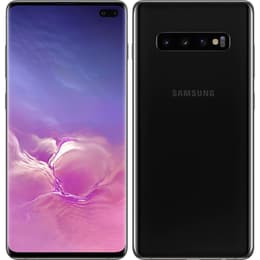



Galaxy S10 Vs Xiaomi Redmi Note 11 Pro 5G

Galaxy S10
Galaxy S10
Starting at

Refurbished price:114.00

Versus €549.00 new

See options
Xiaomi Redmi Note 11 Pro 5G
Starting at

Refurbished price:126.00

Versus €699.00 new

See options

Ratings

The Samsung Galaxy S10, released in March 2019, and the Xiaomi Redmi Note 11 Pro 5G, launched in January 2022, are Android smartphones from different generations and market segments. While the Galaxy S10 offered a premium experience at its release, the Redmi Note 11 Pro 5G focuses on delivering modern features, including 5G connectivity, to a broader audience. Both devices operate on the Android platform, offering a wide range of applications and customization options.

Scores

Durability

The Samsung Galaxy S10, released in 2019, has received its final major Android operating system update, concluding its software support cycle. The Xiaomi Redmi Note 11 Pro 5G, launched in 2022, benefits from a more recent release, meaning it will continue to receive software updates for a longer period, extending its practical lifespan for users who prioritize the latest software features and security patches.

  • Release Timeline: The Galaxy S10 is an older device, having been released three years prior to the Redmi Note 11 Pro 5G, which impacts its remaining software support window.
  • OS Support: The Redmi Note 11 Pro 5G is expected to receive at least one more major Android OS update and security patches for a few more years, offering a longer period of official support compared to the Galaxy S10.
  • Repairability: Both devices feature glass backs and screens, which can be susceptible to damage from drops. The Galaxy S10 received a repairability score of 3 out of 10 from iFixit, indicating it is difficult to repair due to extensive adhesive and a soldered charging port.

Year of Release

2019

2022

Compatible with latest Update

No

No

OS

Android

Android

Foldable

No

No

Performance

The performance characteristics of the Galaxy S10 and the Redmi Note 11 Pro 5G reflect their respective release years and target markets. The Galaxy S10, despite its age, was equipped with a high-end processor for its time, while the Redmi Note 11 Pro 5G features a more recent, mid-range processor designed for efficient 5G connectivity.

  • Everyday Tasks: The Galaxy S10 handles daily applications and multitasking smoothly, offering a responsive experience for general use and moderately demanding applications. The Redmi Note 11 Pro 5G provides a consistent experience for most common apps and light gaming, with its processor optimized for power efficiency and 5G connectivity.
  • Demanding Applications: For graphically intensive games or very heavy multitasking, the Galaxy S10's processor, while older, still provides capable performance. The Redmi Note 11 Pro 5G manages demanding applications adequately but may show limitations in sustained high-performance scenarios.
  • Storage and RAM: The Galaxy S10 offered higher base RAM configurations (8GB) and faster internal storage options (128GB/512GB) at its launch. Both devices offer expandable storage via microSD cards, providing flexibility for users who need additional space.

Memory (GB)

8 GB

6 GB

Screen quality

The display technologies on the Galaxy S10 and the Redmi Note 11 Pro 5G offer distinct viewing experiences, catering to different user preferences. The Galaxy S10 features a higher resolution and pixel density, while the Redmi Note 11 Pro 5G prioritizes a smoother refresh rate.

  • Display Technology: The Galaxy S10 utilizes a Dynamic AMOLED display, known for its vibrant colors, deep blacks, and excellent contrast, offering a premium visual experience. The Redmi Note 11 Pro 5G features a Super AMOLED display, also delivering rich colors and good contrast.
  • Resolution and Refresh Rate: The Galaxy S10 boasts a Quad HD+ resolution (3040x1440 pixels), resulting in exceptionally sharp images and text, operating at a standard 60Hz refresh rate. The Redmi Note 11 Pro 5G offers a Full HD+ resolution (2400x1080 pixels) with a significantly smoother 120Hz refresh rate, making scrolling and animations appear fluid.
  • Brightness and Size: Both devices offer good brightness levels for outdoor visibility. The Redmi Note 11 Pro 5G has a larger 6.67-inch display compared to the Galaxy S10's 6.1-inch screen, providing more screen real estate.

Resolution

1440 x 3040

1080 x 2400

Screen type

Dynamic AMOLED

Super AMOLED

Audiovisual

The camera systems of the Galaxy S10 and the Redmi Note 11 Pro 5G approach photography with different strengths, reflecting their design philosophies and target markets. The Galaxy S10 emphasizes versatility and image processing, while the Redmi Note 11 Pro 5G focuses on a high-resolution main sensor.

  • Rear Camera System: The Galaxy S10 features a triple-camera setup with main (12MP), ultrawide (16MP), and telephoto (12MP) lenses, offering optical zoom. The Redmi Note 11 Pro 5G also has a triple-camera system, led by a high-resolution main sensor (108MP), alongside an ultrawide (8MP) and a macro (2MP) lens.
  • Photography Performance: Both capture detailed images in good lighting. The Galaxy S10 generally offers more consistent color science and dynamic range across its lenses, with its telephoto lens providing clear zoomed shots. The Redmi Note 11 Pro 5G's high-resolution main sensor excels in detail. Low-light performance is generally stronger on the Galaxy S10 due to its larger sensor pixels and advanced image processing.
  • Video and Audio: The Galaxy S10 supports higher resolution video recording with better stabilization. Both offer decent microphone quality. The Redmi Note 11 Pro 5G features dual stereo speakers, providing a more immersive audio experience than the Galaxy S10's stereo setup.

Main camera

12 megapixels

108 megapixels

Front camera

10 megapixels

16 megapixels

Miscellaneous

Beyond core performance and display, several practical elements differentiate the Galaxy S10 and the Redmi Note 11 Pro 5G, impacting daily usability and connectivity.

  • Connectivity: The Redmi Note 11 Pro 5G offers modern 5G cellular connectivity, providing faster mobile data speeds in supported areas, a feature absent on the older Galaxy S10, which is limited to 4G LTE. Both support Wi-Fi and Bluetooth.
  • Ports and Sensors: Both smartphones include a USB-C port and a 3.5mm headphone jack. The Galaxy S10 features an ultrasonic in-display fingerprint sensor, while the Redmi Note 11 Pro 5G uses a side-mounted fingerprint sensor integrated into the power button.
  • Design and Handling: The Galaxy S10 has a more compact and lighter design, weighing around 157 grams, making it easier for one-handed use. The Redmi Note 11 Pro 5G is larger and heavier at approximately 202 grams, offering a more substantial feel and a larger screen. The Galaxy S10 features a glass back and aluminum frame, while the Redmi Note 11 Pro 5G has a plastic back and frame.

Weight

158 g

202 g

Screen size (in)

6.1

6.67

Network

4G

5G

SIM card

Physical SIM

Dual Physical SIM

Carrier compatibility

Unlocked

Unlocked

User feedback for the Samsung Galaxy S10 often praises its premium build quality, vibrant display, and versatile camera system, particularly its telephoto lens and consistent image processing. Some users have noted its battery life can be a concern for heavy usage, especially as the device ages. The Xiaomi Redmi Note 11 Pro 5G is frequently commended for its large, smooth 120Hz display, long battery life, and fast charging capabilities. Criticisms sometimes point to its processor performance not being as robust as some competitors in its segment, and its camera performance can be inconsistent in challenging lighting conditions.

Users prioritizing a compact design, a high-resolution display, and a versatile camera with optical zoom capabilities may find the Galaxy S10 well-suited to their needs. Those who value a larger, smoother display, extended battery life, and future-proof 5G connectivity will likely lean towards the Redmi Note 11 Pro 5G. Both devices offer distinct advantages, making the choice dependent on individual priorities. For consumers looking for an eco-friendly alternative, both models are available as quality-assured refurbished options, providing a sustainable choice for acquiring capable smartphones.


See all articles

Our recent comparisons