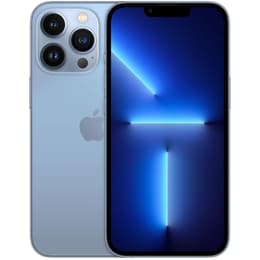
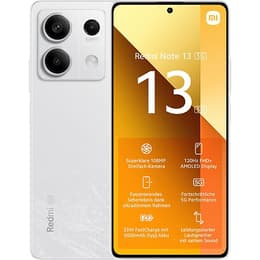


iPhone 13 Pro Vs Xiaomi Redmi Note 13

iPhone 13 Pro
iPhone 13 Pro
Starting at

Refurbished price:313.00

Versus €1,149.00 new

See options
Xiaomi Redmi Note 13
Starting at

Refurbished price:137.00

Versus €340.00 new

See options

Ratings

The iPhone 13 Pro, released in September 2021, and the Xiaomi Redmi Note 13, launched globally in January 2024, represent distinct approaches to smartphone design and functionality. While the iPhone 13 Pro operates on Apple's iOS ecosystem, the Redmi Note 13 runs on Android, offering users different software experiences. The iPhone 13 Pro emphasizes advanced camera capabilities and a premium build, whereas the Redmi Note 13 focuses on a large, high-refresh-rate display and a versatile camera system for a broader audience.

Scores

Durability

The longevity and practical lifespan of a smartphone are influenced by its release timeline, software support, and physical durability.

  • Release Timeline: The iPhone 13 Pro was released in September 2021, making it an older device compared to the Xiaomi Redmi Note 13, which saw its global launch in January 2024. This difference in release dates means the iPhone 13 Pro has already received several years of software updates, while the Redmi Note 13 is at the beginning of its update cycle.
  • Software Longevity: Apple typically provides iOS updates for 5-6 years from a device's release, suggesting the iPhone 13 Pro will continue to receive major OS updates for a few more years. Xiaomi generally offers 2-3 major Android updates and 3-4 years of security patches for its Redmi Note series, meaning the Redmi Note 13 will likely receive updates for a comparable period from its newer launch date.
  • Physical Durability: The iPhone 13 Pro features a Ceramic Shield front cover and a stainless steel frame, contributing to its robust feel and IP68 water and dust resistance. The Redmi Note 13 offers IP54 splash and dust resistance and uses Corning Gorilla Glass 3 for screen protection.

Year of Release

2021

2024

Compatible with latest Update

Yes

Yes

OS

iOS

Android

Foldable

No

No

Performance

Evaluating performance involves looking at how smoothly devices handle daily tasks, multitasking, and demanding applications.

  • System Responsiveness: The iPhone 13 Pro is equipped with a powerful processor that ensures fluid navigation, rapid app launches, and seamless transitions between applications. Users can expect consistent high performance even with intensive use.
  • Multitasking and Storage: The iPhone 13 Pro comes with 6GB of RAM, which allows for efficient multitasking and keeping multiple applications open in the background without significant slowdowns. It offers various storage options up to 1TB, catering to users with extensive storage needs. The Redmi Note 13, depending on the variant, offers 6GB or 8GB of RAM, with memory fusion technology to virtually expand RAM, aiding in multitasking. It provides up to 256GB of internal storage, which is expandable via a microSD card.
  • Battery Behavior: The iPhone 13 Pro has a 3095 mAh battery, which, combined with its efficient processor and adaptive refresh rate display, provides reliable power for a full day of typical use, with some users reporting up to 20 hours of video playback. The Redmi Note 13 features a larger 5000 mAh battery, and while some reports indicate up to 1.5 to 2 days of use, heavy usage, especially with the 120Hz refresh rate enabled, can lead to more frequent charging.

Memory (GB)

6 GB

8 GB

Screen quality

The display is a primary interface for user interaction, and its quality significantly impacts the overall experience.

  • Display Technology and Clarity: The iPhone 13 Pro features a 6.1-inch Super Retina XDR OLED display, offering deep blacks, high contrast, and vibrant colors with a resolution of 2532 x 1170 pixels, resulting in a sharp 460 pixels per inch. The Redmi Note 13 has a larger 6.67-inch AMOLED display with a resolution of 2400 x 1080 pixels, providing clear visuals at 395 pixels per inch.
  • Brightness and Outdoor Visibility: The iPhone 13 Pro's display can reach a typical brightness of 1000 nits and a peak HDR brightness of 1200 nits, ensuring excellent visibility even in bright outdoor conditions. The Redmi Note 13 boasts a peak brightness of 1000 nits, with some sources indicating up to 1800 nits, which also provides good outdoor readability.
  • Refresh Rate and Smoothness: A key differentiator is the iPhone 13 Pro's ProMotion technology, offering an adaptive refresh rate that can dynamically adjust from 10Hz to 120Hz, providing smooth scrolling and animations while conserving battery life. The Redmi Note 13 features a fixed 120Hz refresh rate, delivering a consistently smooth visual experience.

Resolution

1170 x 2532

1080 x 2400

Screen type

Super Retina XDR OLED

AMOLED

Audiovisual

Camera capabilities are often a deciding factor for many users, encompassing photo and video quality across various conditions.

  • Rear Camera System: The iPhone 13 Pro is equipped with a versatile triple 12MP camera system, including Wide, Ultra Wide, and Telephoto lenses, complemented by a LiDAR scanner for improved low-light focusing and depth sensing. It offers 3x optical zoom and advanced computational photography features. The Redmi Note 13 features a triple camera setup with a high-resolution 108MP main sensor, an 8MP ultra-wide lens, and a 2MP macro lens, designed to capture detailed images in various scenarios.
  • Low-Light and Video Performance: The iPhone 13 Pro excels in low-light conditions due to its larger sensors and wider apertures, and its sensor-shift optical image stabilization on the wide lens. It supports advanced video features like Cinematic mode for shallow depth of field and ProRes video recording, offering professional-grade video capabilities. The Redmi Note 13's 108MP main camera utilizes pixel-binning technology to enhance light capture in challenging conditions. Both devices support Full HD (1080p) video recording at 30 frames per second, with the iPhone 13 Pro also offering 4K video recording at up to 60 frames per second.
  • Audio and Media Consumption: The iPhone 13 Pro provides a rich audio experience with stereo speakers. The Redmi Note 13 also offers a good media consumption experience, with some models featuring a 3.5mm headphone jack and Dolby Atmos support for an immersive audio experience.

Main camera

12 megapixels

108 megapixels

Front camera

12 megapixels

16 megapixels

Miscellaneous

Beyond core features, several practical elements contribute to the daily usability and overall experience of a smartphone.

  • Connectivity and Ports: The iPhone 13 Pro supports 5G connectivity and Wi-Fi 6, ensuring fast wireless speeds, and uses Apple's proprietary Lightning port for charging and data transfer. The Redmi Note 13 also supports 4G or 5G (depending on the model) and modern Wi-Fi standards, featuring a more universal USB-C port for charging and data, along with a 3.5mm headphone jack for wired audio.
  • Biometric Security and Sensors: The iPhone 13 Pro relies on Face ID for secure facial recognition. The Redmi Note 13 incorporates an in-screen fingerprint sensor for biometric authentication, with some models also featuring an IR blaster for controlling home appliances.
  • Design and Handling: The iPhone 13 Pro has a compact design, measuring 146.7 x 71.5 x 7.65 mm and weighing 204 grams, with a premium feel due to its stainless steel frame and matte glass back. The Redmi Note 13 is larger at 162.24 x 75.55 x 7.97 mm and lighter at 188 grams, offering a larger screen in a relatively slim profile.

Weight

203 g

175 g

Screen size (in)

6.1

6.67

Network

5G

5G

SIM card

Physical SIM + eSIM

Dual Physical SIM

Carrier compatibility

Unlocked

Unlocked

Connector

Lightning

USB-C

Users often praise the iPhone 13 Pro for its exceptional camera performance, particularly its video capabilities and low-light photography, as well as its smooth and responsive user experience driven by its powerful processor and ProMotion display. Common criticisms sometimes point to its proprietary charging port and the challenges associated with third-party repairs, especially concerning Face ID functionality.

The Xiaomi Redmi Note 13 is frequently lauded for its large, vibrant AMOLED display with a high refresh rate, its high-megapixel main camera, and its generally solid battery life for everyday tasks. Some users have noted that while the battery capacity is substantial, real-world heavy usage, particularly with the 120Hz display, can lead to quicker drain than anticipated.

Users prioritizing a highly refined software experience, advanced video recording features, and a compact, premium build may find the iPhone 13 Pro well-suited to their needs. Conversely, users who value a larger display, expandable storage, a universal charging port, and a high-resolution main camera for general photography might lean toward the Xiaomi Redmi Note 13. Both devices offer compelling features for different user profiles, and considering a quality-assured refurbished option for either model can be an eco-friendly alternative.


See all articles

Our recent comparisons