
iPhone

Compare models
Differences at a glance
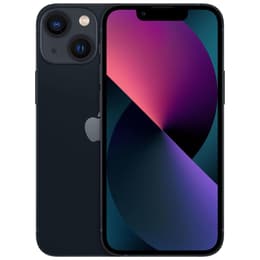
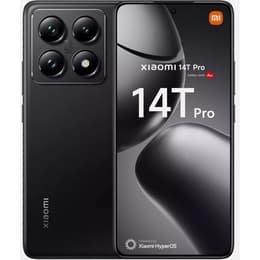
The iPhone 13 Mini, released in September 2021, and the Xiaomi 14T Pro, launched in September 2024, represent distinct approaches to smartphone design and functionality. While the iPhone 13 Mini offers a compact form factor with Apple's iOS ecosystem, the Xiaomi 14T Pro provides a larger display and a powerful Android experience. Key differentiators include their physical size, operating systems, and performance philosophies.
Colour
Storage
When considering the long-term usability of these devices, their release timelines and software support are important factors. The iPhone 13 Mini, launched in 2021, benefits from Apple's extended software support, typically receiving iOS updates for five to six years from its release date. This means it is expected to continue receiving major OS updates for several more years, ensuring access to new features and security patches.
The Xiaomi 14T Pro, being a more recent device from late 2024, is expected to receive Android OS updates and security patches for a comparable, if not longer, period, aligning with Xiaomi's commitment to software longevity for its flagship-tier devices. Both phones feature robust build materials designed for daily use. The iPhone 13 Mini incorporates a Ceramic Shield front cover and an IP68 rating for water and dust resistance. The Xiaomi 14T Pro also boasts an IP68 rating, indicating strong resistance to dust and water ingress. In terms of repairability, the iPhone 13 Mini has been noted to have a relatively low repairability score due to the use of adhesives and specific tools required for disassembly.
Year of Release
Compatible with latest Update
OS
Foldable
Performance is a key area where these two devices cater to different user expectations, largely influenced by their respective release dates and underlying hardware architectures. The iPhone 13 Mini is powered by a capable processor that handles everyday applications, multitasking, and graphically demanding games smoothly. Users generally report a responsive and fluid experience across the iOS interface.
The Xiaomi 14T Pro, being a newer device, features a more recent and powerful processor designed for high-end performance, including advanced AI capabilities. This translates to exceptionally fast app loading, seamless multitasking with numerous applications open, and a highly optimized experience for intensive gaming and complex computational tasks. The Xiaomi 14T Pro also offers significantly more RAM and larger storage options, which can benefit users who frequently switch between many applications or store large files and media.
The visual experience on these two smartphones differs significantly, primarily due to their display technologies, sizes, and refresh rates. The iPhone 13 Mini features a 5.4-inch Super Retina XDR OLED display, known for its deep blacks, vibrant colors, and excellent contrast. Its resolution provides a sharp image with a high pixel density, making text and images appear clear. The display operates at a standard 60Hz refresh rate.
In contrast, the Xiaomi 14T Pro offers a larger 6.67-inch AMOLED display with a higher 1.5K resolution, resulting in a very sharp and detailed viewing experience. A notable feature of the Xiaomi 14T Pro is its 144Hz refresh rate, which provides noticeably smoother scrolling and more fluid animations compared to a 60Hz display. The Xiaomi 14T Pro also boasts a significantly higher peak brightness, which can improve visibility in bright outdoor conditions and enhance HDR content.
Resolution
Screen type
The camera systems on the iPhone 13 Mini and Xiaomi 14T Pro are designed to capture high-quality images and videos, though they differ in their configurations and advanced features. The iPhone 13 Mini features a dual 12MP rear camera system, comprising a main wide-angle lens with sensor-shift optical image stabilization and an ultra-wide lens. It is praised for its ability to take excellent photos in good lighting and offers improved low-light performance compared to its predecessors. Video recording capabilities include 4K at up to 60 frames per second and a Cinematic mode for shallow depth-of-field effects at 1080p.
The Xiaomi 14T Pro boasts a Leica-tuned triple rear camera system, typically including a high-resolution main sensor, a telephoto lens with optical zoom, and an ultra-wide lens. This setup provides greater versatility, especially with the dedicated telephoto lens for zoomed-in shots. The Xiaomi 14T Pro emphasizes advanced computational photography, Master Portrait modes, and cinematic video features, including 10-bit video recording and focus switching. For selfies, the iPhone 13 Mini has a 12MP front camera, while the Xiaomi 14T Pro features a higher-resolution 32MP front sensor.
Main camera
Front camera
Beyond core performance and display, several practical elements contribute to the overall user experience of these devices. The iPhone 13 Mini is known for its exceptionally compact and lightweight design, making it comfortable for one-handed use and easy to carry. It utilizes Apple's proprietary Lightning port for charging and data transfer. Connectivity options include 5G and Wi-Fi 6, along with Bluetooth 5.0. For biometric security, it relies on Face ID.
The Xiaomi 14T Pro, in contrast, is a larger and heavier device, offering a more expansive screen experience. It features a USB Type-C port, a widely adopted standard for charging and accessories. Connectivity is robust, supporting 5G and likely newer Wi-Fi and Bluetooth standards given its later release. The Xiaomi 14T Pro also stands out with its rapid 120W wired charging capability, allowing for a very quick full charge, and supports 50W wireless charging. Its build materials typically include a metal frame, contributing to a premium feel.
Weight
Screen size (in)
Network
SIM card
Carrier compatibility
User sentiment for the iPhone 13 Mini frequently highlights its unique compact size as a major advantage, with many appreciating its comfortable handling and the ability to use it with one hand. Its performance is generally praised as being very capable for its size, and the camera system is considered good for everyday photos and videos. Common criticisms often revolve around its battery life, which, while improved over its predecessor, may still require a mid-day charge for heavy users compared to larger phones. The lack of a telephoto lens is also sometimes noted.
For the Xiaomi 14T Pro, users often commend its powerful hardware, vibrant and smooth high-refresh-rate display, and the versatility of its Leica-tuned camera system. The exceptionally fast wired and wireless charging capabilities are also frequently cited as significant benefits, providing convenience for users on the go. Some users have noted the presence of pre-installed applications as a minor drawback.
Users prioritizing a highly portable device with a premium build and a long-term software commitment within the Apple ecosystem may find the iPhone 13 Mini well-suited to their needs. Its compact form factor is unmatched by many modern smartphones. Conversely, users who value a large, high-refresh-rate display, cutting-edge performance for demanding tasks, a versatile camera system with optical zoom, and ultra-fast charging will likely lean towards the Xiaomi 14T Pro. This device is a strong contender for those seeking a powerful Android experience with a focus on multimedia and productivity. Both devices, whether new or as quality-assured refurbished options, offer distinct advantages depending on individual preferences and usage patterns.