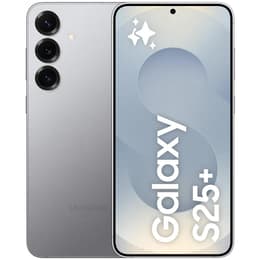
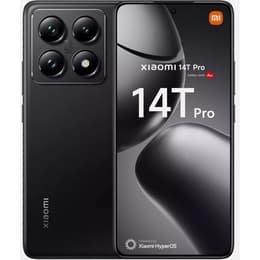


Galaxy S25+ Vs Xiaomi 14T Pro

Galaxy S25+
Galaxy S25+
Starting at

Refurbished price:624.00

Versus €1,401.57 new

See options
Xiaomi 14T Pro
Xiaomi 14T Pro
Starting at

Refurbished price:395.00

Versus €1,500.00 new

See options

Ratings

The Samsung Galaxy S25 Plus (released in early 2025) and the Xiaomi 14T Pro (launched in late 2024) are both advanced smartphones designed to offer a comprehensive user experience. While both devices run on the Android operating system, they present distinct approaches to hardware and software integration. The Galaxy S25 Plus emphasizes a refined ecosystem with extensive software support, whereas the Xiaomi 14T Pro focuses on cutting-edge display technology and rapid charging capabilities.

Scores

Durability

When considering the long-term usability of these devices, several factors contribute to their expected lifespan, including software support and physical resilience.

  • Software Longevity: The Samsung Galaxy S25 Plus is projected to receive an extensive seven years of operating system and security updates, offering a prolonged period of software relevance and security. In contrast, the Xiaomi 14T Pro typically receives up to four major Android upgrades, providing a solid but shorter update cycle.
  • Physical Durability: The Galaxy S25 Plus features an Armor Aluminum frame and Corning Gorilla Glass Victus 2 on its front and back panels, contributing to its overall robustness. The Xiaomi 14T Pro is constructed with a glass and aluminum design, protected by Corning Gorilla Glass 5, and boasts an IP68 rating for water and dust resistance, indicating a high level of protection against environmental elements.
  • Repairability: While specific repairability scores can vary, both devices are designed with modern smartphone construction, which generally involves specialized tools and expertise for repairs. Users seeking to extend the life of their device through repair may find refurbished options an eco-friendly alternative.

Year of Release

2025

2024

Compatible with latest Update

Yes

Yes

OS

Android

Android

Foldable

No

No

Performance

Both smartphones are equipped with powerful internal components designed to handle demanding applications and multitasking with ease, though they achieve this through different hardware configurations.

  • Processing Power: The Galaxy S25 Plus is powered by a current-generation processor, enabling smooth performance across various tasks, from everyday browsing to intensive gaming and advanced AI features. The Xiaomi 14T Pro features a flagship-level processor known for its efficiency and speed, ensuring a responsive experience even with graphically demanding applications.
  • Multitasking and Storage: Both devices offer ample RAM, with the Galaxy S25 Plus typically featuring 12GB and the Xiaomi 14T Pro offering 12GB or 16GB options, facilitating seamless app switching and background processes. Storage options range from 256GB to 512GB for the Galaxy S25 Plus, while the Xiaomi 14T Pro provides more expansive choices up to 1TB, though it lacks a microSD card slot for expandable storage.
  • Battery Performance: The Galaxy S25 Plus houses a 4900mAh battery, providing a full day of typical use, with some tests showing over 14 hours of video streaming. The Xiaomi 14T Pro comes with a larger 5000mAh battery, often lasting up to two days with moderate usage, and features exceptionally fast 120W wired charging, capable of fully recharging the device in approximately 25 minutes.

Memory (GB)

12 GB

12 GB

Screen quality

The visual experience on both devices is a highlight, with each offering a vibrant and responsive display tailored for media consumption and daily interaction.

  • Display Technology and Clarity: The Galaxy S25 Plus features a 6.7-inch Dynamic AMOLED 2X display with a high resolution of 3120 x 1440 pixels, delivering sharp images and text. The Xiaomi 14T Pro sports a 6.67-inch AMOLED display with a resolution of 2712 x 1220 pixels, offering excellent clarity that sits between standard Full HD and Quad HD.
  • Brightness and Smoothness: Both phones offer impressive brightness levels, with the Galaxy S25 Plus reaching up to 2600 nits peak brightness and the Xiaomi 14T Pro boasting an even higher 4000 nits peak brightness, ensuring good visibility in bright outdoor conditions. The Galaxy S25 Plus has an adaptive refresh rate of up to 120Hz, while the Xiaomi 14T Pro pushes this further with an adaptive refresh rate of up to 144Hz, providing exceptionally smooth scrolling and fluid animations.
  • Viewing Experience: Both displays support HDR10+ and Dolby Vision, enhancing the contrast and color accuracy for an immersive viewing experience. The slightly larger screen of the Galaxy S25 Plus might offer a marginally more expansive canvas, while the Xiaomi 14T Pro's higher refresh rate can be particularly appealing to mobile gamers.

Resolution

1440 x 3120 pixels

1220 x 2712

Audiovisual

Both smartphones offer versatile camera systems, capable of capturing high-quality photos and videos, though they differ in their specific configurations and photographic philosophies.

  • Rear Camera System: The Galaxy S25 Plus is equipped with a triple rear camera setup, including a 50MP main sensor with optical image stabilization, a 12MP ultrawide lens, and a 10MP telephoto lens offering 3x optical zoom. The Xiaomi 14T Pro features a Leica-tuned triple camera system, comprising a 50MP main sensor with a wide aperture, a 50MP telephoto lens with 2.6x optical zoom, and a 12MP ultrawide camera.
  • Photography Performance: The Galaxy S25 Plus delivers sharp and vibrant photos with good dynamic range, performing well in various lighting conditions, including low light with its dedicated night mode. The Xiaomi 14T Pro, with its Leica collaboration, is praised for producing natural and detailed images, with strong performance in low-light scenarios and excellent portrait capabilities from its telephoto lens.
  • Video and Front Camera: Both devices support 8K video recording. For selfies, the Galaxy S25 Plus has a 12MP front camera with autofocus, capturing clear and detailed self-portraits. The Xiaomi 14T Pro features a higher resolution 32MP front camera, suitable for detailed selfies and video calls.

Front camera

12MP

32 megapixels

Miscellaneous

Beyond the core features, several practical elements contribute to the overall user experience and daily convenience of these smartphones.

  • Connectivity and Ports: Both the Galaxy S25 Plus and Xiaomi 14T Pro support 5G connectivity for fast mobile data. They both utilize a USB-C port for charging and data transfer. The Xiaomi 14T Pro also includes an infrared (IR) blaster, allowing it to function as a universal remote control.
  • Biometrics and Design: Both phones incorporate in-display fingerprint sensors for secure unlocking, and also offer face recognition. The Galaxy S25 Plus maintains a familiar design with an Armor Aluminum frame, while the Xiaomi 14T Pro features a glass and aluminum construction with a distinctive camera module design. The Xiaomi 14T Pro is slightly heavier at 209g compared to the Galaxy S25 Plus at 190g.
  • Additional Features: The Galaxy S25 Plus integrates advanced AI features within its software, enhancing various aspects of the user experience. The Xiaomi 14T Pro offers dual SIM capabilities and supports the latest Wi-Fi standards, including Wi-Fi 6/7, for robust wireless connectivity.

Weight

190 g

209 g

Screen size (in)

6.7

6.67

Network

5G

5G

SIM card

Physical SIM + eSIM

Dual Physical SIM

Carrier compatibility

Unlocked

Unlocked

The Samsung Galaxy S25 Plus and Xiaomi 14T Pro each present compelling packages for different user priorities. The Galaxy S25 Plus is frequently praised for its consistent performance, vibrant display, and the integration of advanced AI features, alongside Samsung's commitment to long-term software support. Some users note that its camera system, while capable, does not always represent a significant generational leap compared to its predecessors.

Conversely, the Xiaomi 14T Pro garners positive feedback for its exceptionally bright and smooth display, rapid charging technology, and the high quality of its Leica-tuned camera system. User feedback sometimes points to potential heating under heavy load and occasional software quirks with HyperOS, though overall performance is highly regarded.

Users prioritizing extended software longevity and a highly refined, AI-enhanced user experience within a familiar ecosystem may find the Samsung Galaxy S25 Plus well-suited to their needs. Those who value cutting-edge display technology, ultra-fast charging, and a camera system with a distinct photographic character might lean towards the Xiaomi 14T Pro. Both devices offer robust performance for daily tasks and demanding applications. For consumers looking for a quality-assured refurbished option, both models are excellent choices, providing a sustainable path to owning advanced technology.


See all articles

Our recent comparisons