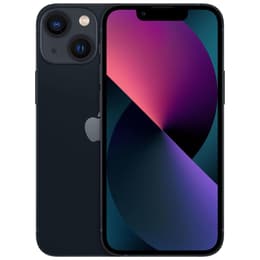



iPhone 13 mini Vs iPhone 15 Plus

iPhone 13 mini
iPhone 13 mini
Starting at

Refurbished price:228.00

Versus €829.00 new

See options
iPhone 15 Plus
iPhone 15 Plus
Starting at

Refurbished price:421.00

Versus €979.00 new

See options

Ratings

The iPhone 13 Mini, released in September 2021, and the iPhone 15 Plus, launched in September 2023, represent distinct approaches within Apple's smartphone lineup. While both operate on the iOS platform, they cater to different user preferences primarily through their physical size, display features, and camera systems. The iPhone 13 Mini offers a compact experience, whereas the iPhone 15 Plus provides a larger screen and updated internal components.

Scores

Durability

When considering the long-term usability of these devices, their release timelines and software support are key factors.

  • Release Timeline: The iPhone 13 Mini was introduced in September 2021, making it two years older than the iPhone 15 Plus, which debuted in September 2023. This age difference directly impacts the duration of future software updates.
  • OS Support: Apple typically provides major iOS updates for 5-6 years from a device's release. Consequently, the iPhone 15 Plus is expected to receive software support for a longer period than the iPhone 13 Mini, offering extended access to new features and security enhancements.
  • Durability Features: Both models feature a Ceramic Shield front cover, designed to enhance drop protection. Additionally, both devices carry an IP68 rating, indicating resistance to dust and water immersion up to 6 meters for 30 minutes, contributing to their overall practical lifespan.

Year of Release

2021

2023

Compatible with latest Update

Yes

Yes

OS

iOS

iOS

Foldable

No

No

Performance

The performance of these two iPhones varies, largely due to the generational advancements in their internal processing capabilities and battery designs.

  • System Responsiveness: The iPhone 15 Plus incorporates a newer generation processor, which translates to smoother handling of demanding applications, more fluid multitasking, and an overall more responsive user experience compared to the iPhone 13 Mini. The iPhone 13 Mini, while still capable, relies on an earlier generation processor.
  • Multitasking Capacity: The iPhone 15 Plus is equipped with 6GB of RAM, allowing it to manage more applications simultaneously without slowdowns. The iPhone 13 Mini features 4GB of RAM, which is sufficient for everyday use but may show limitations with a high number of open applications or intensive tasks.
  • Battery Behavior: A significant difference lies in battery capacity and endurance. The iPhone 15 Plus boasts a substantially larger battery (4383 mAh) compared to the iPhone 13 Mini (2406 mAh). This results in the iPhone 15 Plus offering considerably longer battery life, with users often reporting it lasting through a full day and potentially into a second day of typical use. The iPhone 13 Mini, due to its smaller size, requires more frequent charging for heavy users.

Memory (GB)

4 GB

6 GB

Screen quality

The visual experience on these devices is shaped by their display technology, size, and brightness capabilities.

  • Display Technology and Clarity: Both the iPhone 13 Mini and iPhone 15 Plus feature Super Retina XDR OLED displays, providing deep blacks and vibrant colors. The iPhone 13 Mini has a resolution of 2340x1080 pixels at 476 ppi, while the iPhone 15 Plus offers 2796x1290 pixels at 460 ppi. Both deliver sharp and clear visuals for text and images.
  • Screen Size and Viewing Experience: The most apparent difference is screen size. The iPhone 13 Mini features a compact 5.4-inch display, ideal for one-handed use and easy pocketability. In contrast, the iPhone 15 Plus offers a significantly larger 6.7-inch display, providing an expansive canvas for media consumption, gaming, and productivity.
  • Brightness and Features: The iPhone 15 Plus offers higher peak brightness levels, reaching up to 1000 nits typical, 1600 nits peak for HDR content, and an impressive 2000 nits peak for outdoor viewing, making it easier to view in bright sunlight. The iPhone 13 Mini has a typical brightness of 800 nits and a peak HDR brightness of 1200 nits. Additionally, the iPhone 15 Plus introduces the Dynamic Island, a dynamic area around the front camera that displays alerts and live activities, replacing the traditional notch found on the iPhone 13 Mini. Both maintain a standard 60Hz refresh rate.

Resolution

1080 x 2340

1290 x 2796

Screen type

Super Retina XDR OLED

Super Retina XDR OLED

Audiovisual

The camera systems on these iPhones offer distinct capabilities, particularly in resolution and advanced features.

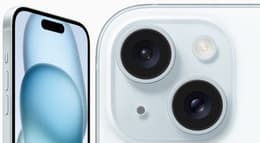
  • Rear Camera System: The iPhone 13 Mini features a dual 12MP camera system, comprising a wide-angle lens with an f/1.6 aperture and an ultra-wide-angle lens with an f/2.4 aperture. The iPhone 15 Plus steps up with an advanced dual-camera system, including a 48MP main sensor with an f/1.6 aperture and a 12MP ultra-wide lens with an f/2.4 aperture. The higher resolution main sensor on the 15 Plus allows for 2x optical quality zoom and captures more detail. Both models benefit from sensor-shift optical image stabilization on their main cameras for steadier shots.
  • Photography Enhancements: For low-light conditions, the iPhone 15 Plus leverages its larger 48MP sensor and the Photonic Engine for improved performance, capturing brighter and more detailed images. The iPhone 13 Mini also includes Night mode and Deep Fusion for enhanced low-light photography. Both devices offer Cinematic mode for video recording, providing a shallow depth of field effect.
  • Video and Front Camera: Both iPhones support 4K HDR video recording with Dolby Vision. The iPhone 15 Plus also introduces Action mode for smoother video capture during movement. For selfies and video calls, both have a 12MP TrueDepth front camera, with the iPhone 15 Plus adding autofocus for clearer self-portraits. Both devices provide a stereo speaker experience for media consumption.

Main camera

12 megapixels

48 megapixels

Front camera

12 megapixels

12 megapixels

Miscellaneous

Beyond core performance and display, several practical elements differentiate these two iPhone models.

  • Connectivity and Ports: Both devices support 5G cellular connectivity and Wi-Fi 6 for fast wireless internet. However, they differ in their physical charging and data transfer ports. The iPhone 13 Mini utilizes Apple's proprietary Lightning port. The iPhone 15 Plus, in line with newer industry standards, features a USB-C port. The iPhone 15 Plus also includes Bluetooth 5.3, an upgrade from the iPhone 13 Mini's Bluetooth 5.0, offering improved wireless accessory connectivity.
  • Sensors and Biometrics: Both iPhones rely on Face ID for secure facial recognition. The iPhone 15 Plus incorporates a second-generation Ultra Wideband chip, which can offer enhanced spatial awareness features and more precise location tracking with compatible accessories.
  • Physical Characteristics: The iPhone 13 Mini is notably smaller and lighter, measuring 131.5 x 64.2 x 7.65 mm and weighing 141 grams, making it highly portable and comfortable for one-handed use. The iPhone 15 Plus is a larger device, with dimensions of 160.9 x 77.8 x 7.8 mm and a weight of 201 grams, providing a more substantial feel and a larger footprint. Both models feature an aluminum frame and a Ceramic Shield front for durability.

Weight

140 g

171 g

Screen size (in)

5.4

6.7

Network

5G

5G

SIM card

Physical SIM + eSIM

eSIM

Carrier compatibility

Unlocked

Unlocked

Connector

Lightning

USB-C (USB 2)

User feedback highlights distinct strengths for both the iPhone 13 Mini and the iPhone 15 Plus. The iPhone 15 Plus is frequently praised for its exceptional battery life, often lasting well over a day of heavy use, and its large, immersive display, which is ideal for media consumption and gaming. Its updated camera system also receives positive remarks for its detail and low-light capabilities. Conversely, the iPhone 13 Mini is consistently lauded for its compact form factor, making it a preferred choice for users who value one-handed operation and easy pocketability.

Common criticisms for the iPhone 13 Mini often revolve around its smaller battery capacity, which may necessitate more frequent charging for users with high screen-on time. The iPhone 15 Plus, while offering many advantages, might be considered too large for some users who prefer a more discreet device.

Ultimately, the choice between these two devices depends on individual priorities. Users prioritizing a compact, highly portable smartphone that is comfortable for one-handed use may find the iPhone 13 Mini well-suited to their needs. On the other hand, users who value an expansive display for entertainment and productivity, coupled with significantly extended battery life and enhanced photographic capabilities, will likely lean towards the iPhone 15 Plus. Both devices offer a quality experience within the iOS ecosystem, and opting for a quality-assured refurbished option can be a sustainable choice for either model.


See all articles

Our recent comparisons