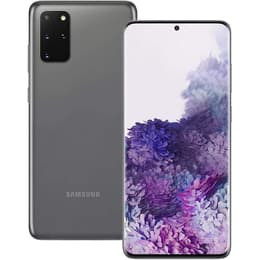


Galaxy S20+ 5G Vs Google Pixel 7A

Galaxy S20+ 5G
Galaxy S20+ 5G
Starting at

Refurbished price:191.00

Versus €590.00 new

See options
Google Pixel 7A
Google Pixel 7A
Starting at

Refurbished price:177.00

Versus €649.99 new

See options

Ratings

The Samsung Galaxy S20 Plus 5G, released in March 2020, and the Google Pixel 7a, launched in May 2023, represent different approaches to smartphone design and functionality. While both devices operate on the Android platform, they offer distinct experiences in terms of their hardware focus and software longevity. The Galaxy S20 Plus 5G emphasizes a larger display and a versatile camera system, whereas the Pixel 7a prioritizes a compact form factor and advanced computational photography.

Scores

Durability

When considering the long-term usability of these devices, their release timelines and software support policies are key factors. The Pixel 7a, being a more recent release, benefits from a longer expected period of software updates.

  • Release Timeline: The Samsung Galaxy S20 Plus 5G was released in March 2020, while the Google Pixel 7a followed in May 2023. This three-year difference significantly impacts their respective software support lifecycles.
  • OS Support Duration: The Galaxy S20 Plus 5G launched with Android 10 and received major OS updates up to Android 13. Its software update support officially ended around April 2025, though some security patches might still be released periodically. In contrast, the Pixel 7a launched with Android 13 and is expected to receive five years of OS and security updates, extending its support until at least May 2028.
  • Physical Durability: The Galaxy S20 Plus 5G features Corning Gorilla Glass 6 on both its front and back, coupled with an aluminum frame, and boasts an IP68 rating for dust and water resistance, allowing submersion up to 1.5 meters for 30 minutes. The Pixel 7a uses Corning Gorilla Glass 3 on the front, a plastic back, and an aluminum frame, with an IP67 rating, protecting against submersion up to 1 meter for 30 minutes.

Year of Release

2020

2023

Compatible with latest Update

No

Yes

OS

Android

Android

Foldable

No

No

Performance

The performance of a smartphone is largely determined by its internal components, influencing how smoothly applications run and how efficiently the device handles various tasks. Both devices offer capable performance for their respective generations, but with different strengths.

  • Processing Power: The Galaxy S20 Plus 5G is equipped with a processor that, at its release, was a flagship-tier component, providing robust performance for demanding applications and multitasking. The Pixel 7a features a newer-generation processor designed by Google, which is optimized for the device's software and excels in tasks involving artificial intelligence and machine learning.
  • Memory and Storage: The Galaxy S20 Plus 5G typically comes with 12GB of RAM and offers storage options of 128GB, 256GB, or 512GB, with expandable storage via a microSD card. The Pixel 7a includes 8GB of RAM and 128GB of internal storage, without an option for expandable storage.
  • Battery Behavior: The Galaxy S20 Plus 5G houses a 4500 mAh battery, generally providing sufficient power for a full day of moderate use. The Pixel 7a has a 4385 mAh battery, and while it can last a full day for many users, some reports indicate that heavy usage or certain tasks can lead to more rapid battery drain and potential overheating.

Memory (GB)

8 GB

8 GB

Screen quality

The display is a primary interface for smartphone interaction, and both devices offer vibrant viewing experiences with distinct characteristics.

  • Display Technology and Size: The Galaxy S20 Plus 5G features a larger 6.7-inch Dynamic AMOLED 2X display, providing a more expansive viewing area. The Pixel 7a comes with a 6.1-inch OLED display, offering a more compact form factor.
  • Resolution and Clarity: The Galaxy S20 Plus 5G boasts a Quad HD+ resolution of 3200 x 1440 pixels, resulting in a very sharp and detailed image. The Pixel 7a has a Full HD+ resolution of 2400 x 1080 pixels, which provides clear visuals for everyday use.
  • Refresh Rate: The Galaxy S20 Plus 5G supports a 120Hz refresh rate, which contributes to smoother scrolling and a more fluid visual experience. The Pixel 7a offers a 90Hz refresh rate, providing a noticeably smoother experience compared to standard 60Hz displays.

Resolution

1440 x 3200

1080 x 2400

Screen type

Dynamic AMOLED 2X

OLED

Audiovisual

The camera systems on both the Galaxy S20 Plus 5G and the Pixel 7a are designed to capture high-quality images and videos, though they achieve this through different hardware and software philosophies.

  • Rear Camera Configuration: The Galaxy S20 Plus 5G features a versatile quad-camera setup, including a 12MP wide-angle lens, a 64MP telephoto lens with 3x hybrid optical zoom, a 12MP ultrawide lens, and a DepthVision camera. The Pixel 7a has a dual-camera system with a 64MP wide-angle main camera and a 13MP ultrawide camera.
  • Photography Performance: The Galaxy S20 Plus 5G offers strong performance across various lighting conditions, with its telephoto lens providing optical zoom capabilities. The Pixel 7a is highly regarded for its computational photography, which enhances image quality, particularly in challenging lighting and with features like Super Res Zoom for digital magnification.
  • Video Recording Capabilities: The Galaxy S20 Plus 5G is capable of recording video at up to 8K resolution at 24 frames per second, as well as 4K at 30 or 60 frames per second. The Pixel 7a supports 4K video recording at 30 or 60 frames per second from its main camera, and 4K at 30 frames per second from its ultrawide and front cameras.

Main camera

12 megapixels

64 megapixels

Front camera

10 megapixels

13 megapixels

Miscellaneous

Beyond core features, several practical elements contribute to the overall user experience and daily functionality of these smartphones.

  • Connectivity and Ports: Both devices support 5G connectivity, ensuring access to faster mobile networks. The Galaxy S20 Plus 5G supports Wi-Fi 6 and Bluetooth 5.0. The Pixel 7a features newer Wi-Fi 6E and Bluetooth 5.3 standards, offering potentially faster and more stable wireless connections. Both phones utilize a USB-C port for charging and data transfer and lack a traditional 3.5mm headphone jack.
  • Biometric Security: The Galaxy S20 Plus 5G incorporates an ultrasonic in-display fingerprint sensor for secure unlocking. The Pixel 7a also features an optical under-display fingerprint sensor, though some users have reported inconsistencies with its responsiveness. The Pixel 7a also offers face recognition.
  • Physical Design and Handling: The Galaxy S20 Plus 5G measures 161.9 x 73.7 x 7.8 mm and weighs 188 grams, providing a substantial feel in hand due to its larger screen. The Pixel 7a is more compact at 152 x 72.9 x 9 mm and weighs 193.5 grams, making it easier for one-handed use.

Weight

188 g

193 g

Screen size (in)

6.7

6.1

Network

5G

5G

SIM card

Physical SIM + eSIM

Physical SIM + eSIM

Carrier compatibility

Unlocked

Unlocked

Connector

USB-C

USB-C

The Samsung Galaxy S20 Plus 5G and the Google Pixel 7a cater to different user preferences, reflecting their respective release eras and design philosophies. The Galaxy S20 Plus 5G is often praised for its expansive and high-resolution display, versatile camera system with optical zoom, and premium build materials. Some users, however, have noted its older software support timeline and potential for certain software-related issues over time.

The Google Pixel 7a receives commendation for its exceptional camera quality driven by computational photography, its clean Android experience, and a longer guaranteed software update period. Common criticisms from users sometimes point to its plastic back, potential for overheating during intensive tasks, and occasional inconsistencies with the fingerprint sensor.

Users prioritizing a larger, high-resolution, and high-refresh-rate display for media consumption and a camera system with dedicated telephoto hardware may find the Galaxy S20 Plus 5G well-suited to their needs. Conversely, individuals who value a more compact device, a longer software support window, and a camera that excels with advanced image processing will likely lean towards the Pixel 7a. Both devices offer a compelling smartphone experience, and considering a quality-assured refurbished option for either model can be an eco-friendly alternative for those seeking value and sustainability.


See all articles

Our recent comparisons






