

Google Pixel Fold Vs Xiaomi Redmi Note 11

Google Pixel Fold
Google Pixel Fold
Starting at

Refurbished price:454.00

Versus €1,750.29 new

See options
Xiaomi Redmi Note 11
Starting at

Refurbished price:108.00

Versus €249.99 new

See options

Ratings

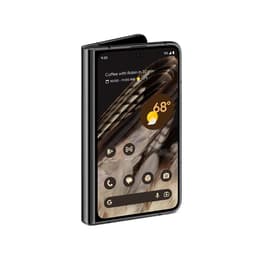
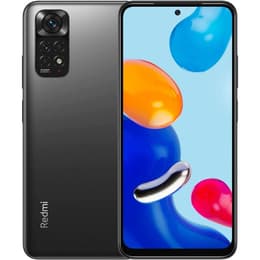
The Google Pixel Fold, released in June 2023, represents Google's entry into the foldable smartphone market, offering a unique dual-screen experience. In contrast, the Xiaomi Redmi Note 11, launched in January 2022, is a more traditional smartphone designed for a broad user base. These devices operate on the Android platform, but they cater to different user needs through their distinct form factors and performance capabilities.

Scores

Durability

When considering the longevity of these devices, several factors come into play, including their release timelines, software support, and physical durability features.

  • Release Timeline and Software Support: The Google Pixel Fold, being a newer device from June 2023, is expected to receive a longer period of software updates, including major Android version upgrades and security patches, typically extending to five years from its release. The Xiaomi Redmi Note 11, released in January 2022, generally receives two major Android updates and three years of security updates, meaning its software support window will close sooner than the Pixel Fold's.
  • Physical Durability: The Pixel Fold features an IPX8 water resistance rating, indicating it can withstand submersion in water, and its cover display is protected by Gorilla Glass Victus. The foldable nature introduces a hinge mechanism, which Google has designed for durability. The Redmi Note 11 offers IP53 dust and splash protection and uses Gorilla Glass 3 for its display, providing a more basic level of protection against everyday elements.
  • Expected Practical Lifespan: Users prioritizing the longest possible software support and advanced water resistance may find the Pixel Fold more aligned with their needs. For those seeking a device with solid everyday protection and a reasonable software lifecycle for its category, the Redmi Note 11 offers a practical choice.

Year of Release

2023

2022

Compatible with latest Update

Yes

No

OS

Android

Android

Foldable

Yes

No

Performance

The performance of a smartphone significantly impacts daily usage, from launching applications to handling demanding tasks.

  • Processor Capabilities: The Google Pixel Fold is equipped with Google's Tensor G2 processor, which is designed for efficient handling of complex tasks, advanced AI features, and smooth multitasking. This translates to quick app loading, fluid navigation, and capable performance for graphically intensive games. The Xiaomi Redmi Note 11 utilizes a Qualcomm Snapdragon 680 processor, which provides reliable performance for everyday activities like browsing, social media, and light gaming.
  • Multitasking and Responsiveness: With 12GB of RAM, the Pixel Fold is well-suited for heavy multitasking, allowing users to switch between numerous applications without experiencing slowdowns. The Redmi Note 11 typically comes with 4GB or 6GB of RAM, which is sufficient for general use and moderate multitasking.
  • Storage Options: The Pixel Fold offers storage options of 256GB or 512GB, utilizing UFS 3.1 technology for faster data access. The Redmi Note 11 provides 64GB or 128GB of internal storage, with some variants supporting expandable storage via a microSD card.

Memory (GB)

12 GB

4 GB

Screen quality

The display is a primary interface for any smartphone, and these two devices offer distinct viewing experiences.

  • Display Technology and Size: The Google Pixel Fold features two OLED displays: a 5.8-inch outer display and a 7.6-inch foldable inner display. Both offer vibrant colors and deep blacks characteristic of OLED technology. The Xiaomi Redmi Note 11 has a single 6.43-inch AMOLED display, also known for its rich colors and contrast.
  • Resolution and Clarity: The Pixel Fold's outer display has a resolution of 2092 x 1080 pixels, and its inner display is 2208 x 1840 pixels, providing sharp visuals across both screens. The Redmi Note 11 offers a resolution of 2400 x 1080 pixels, resulting in clear and detailed images for its size.
  • Refresh Rate and Brightness: Both displays on the Pixel Fold support a 120Hz refresh rate, contributing to smooth scrolling and responsive interactions. The Redmi Note 11 features a 90Hz refresh rate, which also provides a fluid visual experience. The Pixel Fold's displays can reach high peak brightness levels, making them suitable for outdoor visibility. The Redmi Note 11 also offers good brightness, with a peak of 1000 nits, ensuring decent visibility in various lighting conditions.

Resolution

1840 x 2208

1080 x 2400

Screen type

Foldable OLED

AMOLED

Audiovisual

Camera capabilities are a significant consideration for many users, and both devices approach photography differently.

  • Rear Camera Systems: The Google Pixel Fold features a versatile triple rear camera setup, including a 48MP main lens with optical image stabilization, a 10.8MP ultrawide lens, and a 10.8MP telephoto lens with 5x optical zoom. This system is enhanced by Google's computational photography, known for producing detailed and color-accurate images across various conditions. The Xiaomi Redmi Note 11 comes with a quad-camera system, typically featuring a 50MP main camera, an 8MP ultrawide, a 2MP macro, and a 2MP depth sensor.
  • Photography Performance: The Pixel Fold excels in low-light performance and offers advanced features like high optical zoom, making it suitable for a wide range of photographic scenarios. The Redmi Note 11 performs well in good lighting conditions for everyday photos, though its low-light capabilities are more limited.
  • Video Recording and Selfie Cameras: The Pixel Fold can record video at up to 4K resolution at 60 frames per second and includes multiple selfie cameras: a 9.5MP on the cover display and an 8MP on the inner display. The Redmi Note 11 typically records video at 1080p at 30 frames per second and has a 13MP front-facing camera for selfies.

Main camera

48 megapixels

50 megapixels

Front camera

8 megapixels

13 megapixels

Miscellaneous

Beyond the core specifications, several other features contribute to the overall user experience and practicality of these smartphones.

  • Connectivity and Ports: The Google Pixel Fold supports 5G connectivity, Wi-Fi 6E, and Bluetooth 5.2, along with a USB-C 3.2 port. The Xiaomi Redmi Note 11 supports 4G (with some variants offering 5G), Wi-Fi 5 (802.11ac), and Bluetooth 5.0, featuring a USB-C 2.0 port and a 3.5mm headphone jack.
  • Biometric Security and Sensors: Both devices include a side-mounted fingerprint sensor for secure unlocking. The Pixel Fold also offers face recognition. The Pixel Fold incorporates a range of sensors, including a barometer and UWB (Ultra-Wideband) for enhanced spatial awareness.
  • Design and Handling: The Pixel Fold, with its foldable design, is heavier at 283 grams and thicker when folded, offering a compact form factor when closed and an expansive screen when open. The Redmi Note 11 is a lighter device at 179 grams and has a more traditional, slimmer smartphone profile, making it comfortable for one-handed use.

Weight

283 g

179 g

Screen size (in)

7.6

6.43

Network

5G

4G

SIM card

Physical SIM + eSIM

Dual Physical SIM

Carrier compatibility

Unlocked

Unlocked

The Google Pixel Fold and Xiaomi Redmi Note 11 cater to distinct user preferences, reflecting their different design philosophies and target markets. Users often praise the Pixel Fold for its innovative foldable design, offering a large tablet-like screen in a portable form factor, and its exceptional camera performance, driven by Google's advanced image processing. However, some users note its weight and thickness when folded as potential drawbacks.

The Xiaomi Redmi Note 11 is frequently lauded for its reliable battery life, vibrant AMOLED display, and solid performance for everyday tasks. Common feedback suggests it provides a balanced user experience for its category, though its camera performance in challenging lighting conditions is not as strong as higher-end devices.

Users prioritizing a cutting-edge, versatile device with a large, immersive display for productivity and media consumption, coupled with a top-tier camera system, may find the Google Pixel Fold well-suited to their needs. Its longer software support also appeals to those seeking extended device longevity. Conversely, users who value a traditional smartphone experience with strong battery endurance, a good quality display for daily use, and a comfortable, lightweight design will likely lean towards the Xiaomi Redmi Note 11. Both devices offer a gateway to the Android ecosystem, with the Pixel Fold providing a premium, innovative experience and the Redmi Note 11 delivering a dependable and practical one. For those considering an eco-friendly alternative, quality-assured refurbished options are available for both models, providing a sustainable choice for consumers.

See all articles

Our recent comparisons







