

Google Pixel Fold Vs Xiaomi Redmi 14C

Google Pixel Fold
Google Pixel Fold
Starting at

Refurbished price:454.00

Versus €1,750.29 new

See options
Xiaomi Redmi 14C
Xiaomi Redmi 14C
Starting at

Refurbished price:128.20

Versus €189.00 new

See options

Ratings

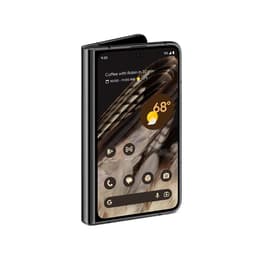
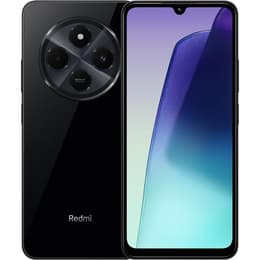
The Google Pixel Fold, released in June 2023, represents a premium entry into the foldable smartphone market, offering a unique form factor that combines a traditional smartphone experience with a larger tablet-like display. In contrast, the Xiaomi Redmi 14C, launched around August 2024, is a conventional slab smartphone designed for users seeking essential features and reliable performance in a more accessible package. These devices cater to distinct user needs, with the Pixel Fold emphasizing versatility and advanced capabilities, while the Redmi 14C focuses on core smartphone functionality.

Scores

Durability

The expected practical lifespan and software support differ significantly between these two devices, reflecting their respective market segments and release timelines.

  • Release Timeline: The Google Pixel Fold, introduced in June 2023, benefits from Google's commitment to software longevity, promising at least five years of security updates from its launch. The Xiaomi Redmi 14C, released around August 2024, is a newer device, but its software support duration is typically aligned with Xiaomi's standard for its budget-friendly Redmi series, which may not match the extended period offered by premium devices.
  • Software Longevity: The Pixel Fold launched with Android 13 and is expected to receive several major Android version updates, extending its functional life. The Redmi 14C launched with Android 14 and Xiaomi's HyperOS, providing a current software experience, but the duration of future Android version updates might be shorter compared to a flagship device.
  • Durability Features: The Pixel Fold features IPX8 water resistance and Gorilla Glass Victus on its cover display, indicating a design intended to withstand some environmental challenges. The Redmi 14C typically features a glass front and a plastic or eco-leather back, with some variants offering IP52 dust and splash resistance, providing a more basic level of protection.

Year of Release

2023

2024

Compatible with latest Update

Yes

Yes

OS

Android

Android

Foldable

Yes

No

Performance

Performance characteristics vary considerably, driven by the different processors and memory configurations tailored to each device's intended use.

  • Processing Power: The Google Pixel Fold is equipped with a high-performance processor designed to handle demanding applications, complex multitasking across its dual screens, and advanced computational photography with ease. This allows for smooth transitions between modes and efficient execution of intensive tasks.
  • Multitasking and Storage: With 12 GB of RAM, the Pixel Fold offers substantial capacity for running numerous applications simultaneously without slowdowns, complemented by storage options of 256 GB or 512 GB for ample space. The Redmi 14C, typically offering 4 GB, 6 GB, or 8 GB of RAM and 128 GB or 256 GB of storage, is well-suited for everyday tasks, social media, and light gaming, providing a responsive experience for general use.
  • Battery Behavior: The Pixel Fold houses a 4821 mAh battery, optimized to power its dual displays and advanced features, aiming for a full day of use. The Redmi 14C features a larger 5160 mAh battery, which, combined with its less power-intensive components, generally translates to extended usage times between charges for typical smartphone activities.

Memory (GB)

12 GB

4 GB

Screen quality

The display technologies and viewing experiences offered by these two smartphones are fundamentally different due to their distinct form factors.

  • Display Technology and Size: The Google Pixel Fold features two OLED displays: a 7.6-inch foldable inner screen and a 5.8-inch cover screen, both offering deep blacks and vibrant colors. The Xiaomi Redmi 14C typically comes with a single 6.88-inch IPS LCD display, providing a large viewing area for a traditional smartphone.
  • Resolution and Clarity: The Pixel Fold's inner display boasts a resolution of 2208 x 1840 pixels, while its cover display is 2092 x 1080 pixels, delivering sharp and detailed visuals. The Redmi 14C offers an HD+ resolution of 720 x 1640 pixels, which is suitable for general content consumption.
  • Refresh Rate and Brightness: Both devices feature a 120Hz refresh rate, contributing to smoother scrolling and more fluid animations. The Pixel Fold's OLED panels offer high peak brightness for excellent outdoor visibility and HDR content. The Redmi 14C's display typically reaches up to 600 nits peak brightness, which is adequate for most indoor and outdoor conditions.

Resolution

1840 x 2208

720 x 1640

Screen type

Foldable OLED

IPS LCD

Audiovisual

The camera systems of the Pixel Fold and Redmi 14C are designed for different photographic priorities and user expectations.

  • Rear Camera System: The Google Pixel Fold features a versatile triple-camera setup on the rear, including a 48 MP main sensor, a 10.8 MP ultrawide lens, and a 10.8 MP telephoto lens with 5x optical zoom, enabling a wide range of photographic styles and detailed long-range shots. The Xiaomi Redmi 14C typically includes a dual-camera system with a 50 MP main sensor and an auxiliary 2 MP depth sensor, focusing on clear everyday photography.
  • Photography Performance: The Pixel Fold leverages its advanced processing capabilities for computational photography, resulting in strong low-light performance, accurate color reproduction, and detailed images. The Redmi 14C provides reliable performance for well-lit conditions, capturing clear and vibrant photos suitable for social sharing.
  • Front-Facing Cameras: The Pixel Fold offers a 9.5 MP camera on its cover display and an 8 MP camera on its inner foldable screen, providing options for selfies and video calls in both folded and unfolded states. The Redmi 14C features a 13 MP front camera, designed for clear selfies and video communication.

Main camera

48 megapixels

50 megapixels

Front camera

8 megapixels

13 megapixels

Miscellaneous

Beyond core specifications, several practical elements contribute to the overall user experience and differentiate these two devices.

  • Connectivity and Ports: Both devices offer modern connectivity options, including Wi-Fi and Bluetooth. The Pixel Fold features USB-C 3.2 Gen 2 for faster data transfer. The Redmi 14C typically includes USB Type-C and may also retain a 3.5mm headphone jack, offering broader compatibility with audio accessories.
  • Biometric Security: The Pixel Fold incorporates advanced security features, including face recognition and a side-mounted fingerprint sensor. The Redmi 14C commonly features a side-mounted fingerprint sensor and supports face unlock for convenient access.
  • Physical Design and Handling: The Pixel Fold's unique foldable design allows it to transform from a compact smartphone to a larger tablet, weighing 283g. The Redmi 14C, with its traditional slab design, measures around 171.9 x 77.8 x 8.2 mm and weighs between 204-211g, offering a more conventional handling experience.

Weight

283 g

207 g

Screen size (in)

7.6

6.88

Network

5G

4G

SIM card

Physical SIM + eSIM

Dual Physical SIM

Carrier compatibility

Unlocked

Unlocked

Connector

USB-C

USB-C

User feedback for the Google Pixel Fold often highlights its innovative foldable design and the versatility it offers, allowing users to switch between a compact phone and a larger screen for productivity or media consumption. Its camera system and software experience, characteristic of Google's Pixel line, are frequently praised. However, some users have noted its weight and the learning curve associated with the foldable form factor.

For the Xiaomi Redmi 14C, common praise points revolve around its large display, reliable battery life, and overall performance for everyday tasks, especially considering its market positioning. Users appreciate its straightforward functionality and the inclusion of features like a 120Hz refresh rate on a budget-friendly device. Criticisms sometimes point to the display resolution and the camera performance in challenging lighting conditions.

Users prioritizing a cutting-edge, versatile device that offers both a smartphone and tablet experience in one, with advanced camera capabilities and long-term software support, may find the Google Pixel Fold well-suited to their needs. Conversely, users who value a large, conventional display, extended battery life, and solid performance for daily smartphone use without the complexities of a foldable design will likely lean toward the Xiaomi Redmi 14C. Both devices can be considered as quality-assured refurbished options, providing an eco-friendly alternative for consumers.


See all articles

Our recent comparisons


