

Google Pixel Fold Vs OnePlus 10 Pro

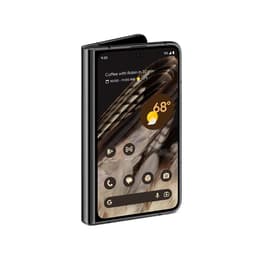
Google Pixel Fold
Google Pixel Fold
Starting at

Refurbished price:454.00

Versus €1,750.29 new

See options
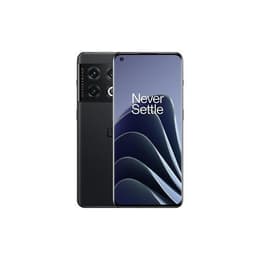
OnePlus 10 Pro
OnePlus 10 Pro
Starting at

Refurbished price:228.00

Versus €999.00 new

See options

Ratings

The Google Pixel Fold (2023) and the OnePlus 10 Pro (2022) represent distinct approaches to the premium smartphone market. The Pixel Fold introduces a foldable design, offering a compact smartphone experience that unfolds into a larger tablet-like display, while the OnePlus 10 Pro is a traditional, high-performance slab smartphone. Both devices operate on the Android platform, but they cater to different user preferences through their form factors and feature sets.

Scores

Durability

The expected lifespan of a smartphone is influenced by its release date, software support, and physical resilience. These two devices offer different considerations in these areas.

  • Release Timeline: The OnePlus 10 Pro was released in early 2022, making it an older device compared to the Google Pixel Fold, which launched in mid-2023. This age difference impacts their remaining software support.
  • Software Longevity: The Google Pixel Fold is set to receive Android OS and security updates until at least 2028, offering a longer period of software support. The OnePlus 10 Pro, having launched earlier, is expected to receive its last major OS update in early 2026.
  • Physical Durability: The Pixel Fold features an IPX8 rating for water resistance and Google marketed its hinge as highly durable. However, some durability tests indicated potential weak points around antenna lines and the SIM slot, leading to damage under specific stress. The inner foldable screen, being plastic, is also more susceptible to scratches. The OnePlus 10 Pro, while featuring Gorilla Glass Victus on its display, notably failed some bend tests, showing a structural weakness that could lead to the device snapping. International versions of the OnePlus 10 Pro often lack an official IP rating, though some models, like the T-Mobile US version, do carry an IP68 rating.

Year of Release

2023

2022

Compatible with latest Update

Yes

Yes

OS

Android

Android

Foldable

Yes

No

Performance

Performance in both devices is designed to handle demanding applications and multitasking, though their underlying hardware and user experiences differ.

  • Processing Power: The Google Pixel Fold is equipped with a Google Tensor G2 processor, which provides efficient performance for everyday tasks, AI-driven features, and moderate gaming. The OnePlus 10 Pro features a current-generation processor from Qualcomm, enabling smooth operation for intensive applications and high-fidelity gaming.
  • Multitasking and Responsiveness: With 12GB of RAM, the Pixel Fold is well-suited for switching between multiple applications and utilizing its large inner display for split-screen productivity. The OnePlus 10 Pro offers configurations with 8GB or 12GB of RAM, providing ample capacity for fluid multitasking and responsive app launches. Some users of the OnePlus 10 Pro have reported aggressive RAM management that can close background apps, potentially impacting seamless transitions.
  • Battery Behavior: The Pixel Fold houses a 4821mAh battery, which is a substantial capacity for a foldable device. The OnePlus 10 Pro comes with a 5000mAh battery. User experiences with the OnePlus 10 Pro's battery life vary, with some reporting it lasting a full day of moderate use, while others find it requires more frequent charging, especially with heavy usage. The OnePlus 10 Pro supports rapid wired and wireless charging.

Memory (GB)

12 GB

8 GB

Screen quality

The display experience is a primary differentiator, with the Pixel Fold offering a unique dual-screen setup and the OnePlus 10 Pro providing a high-quality traditional panel.

  • Display Technology and Size: The Google Pixel Fold features two OLED displays: a 5.8-inch outer screen and a 7.6-inch inner foldable screen when unfolded. The OnePlus 10 Pro has a single 6.7-inch QHD+ Fluid AMOLED display with curved edges. Both devices offer vibrant colors and deep blacks characteristic of OLED technology.
  • Resolution and Clarity: The Pixel Fold's outer display has a resolution of 1080 x 2092 pixels (408 ppi), and its inner display is 2208 x 1840 pixels (380 ppi). The OnePlus 10 Pro's display offers a resolution of 3216 x 1440 pixels (525 ppi), providing sharp visuals.
  • Brightness and Refresh Rate: Both devices feature a 120Hz refresh rate for smooth scrolling and animations. The Pixel Fold's outer screen can reach up to 1550 nits peak brightness, and the inner screen up to 1450 nits. The OnePlus 10 Pro offers a peak brightness of 1300 nits and utilizes LTPO2.0 technology, allowing its refresh rate to dynamically adjust from 1Hz to 120Hz for improved power efficiency.

Resolution

1840 x 2208

1440 x 3216

Screen type

Foldable OLED

LTPO2 Fluid AMOLED

Audiovisual

Both smartphones offer capable camera systems, but they approach photography with different strengths and features.

  • Rear Camera Systems: The Google Pixel Fold includes a triple rear camera setup with a 48MP main sensor, a 10.8MP ultrawide, and a 10.8MP telephoto lens with optical zoom. The OnePlus 10 Pro also features a triple rear camera system, comprising a 48MP main sensor, a 50MP ultrawide lens with a unique 150-degree field of view option, and an 8MP telephoto lens with 3.3x optical zoom.
  • Photography Performance: The Pixel Fold is generally praised for its camera quality, delivering consistent and detailed images. The OnePlus 10 Pro, with its Hasselblad tuning, produces rich and warm photos, particularly from its main sensor. However, some users note inconsistencies in color reproduction across its different lenses and that its low-light performance may not match the Pixel's capabilities.
  • Video and Audio: The OnePlus 10 Pro supports 4K video at up to 120fps and 8K video at 24fps, with good stabilization and colors in 4K. The Pixel Fold also offers strong video recording capabilities. Information on specific microphone quality for calls and recording, and speaker output for media consumption, suggests both provide a satisfactory experience for their respective categories.

Main camera

48 megapixels

48 megapixels

Front camera

8 megapixels

32 megapixels

Miscellaneous

Beyond core features, several practical elements contribute to the overall user experience and daily usability of these devices.

  • Connectivity and Ports: Both devices support modern connectivity standards, including 5G and advanced Wi-Fi (802.11 ax for Pixel Fold). The Pixel Fold uses a USB Type-C port, while the OnePlus 10 Pro also features USB-C. Neither device includes a traditional headphone jack.
  • Biometric Security: The Google Pixel Fold incorporates a side-mounted fingerprint sensor and face recognition for secure unlocking. The OnePlus 10 Pro utilizes an optical under-display fingerprint sensor.
  • Design and Handling: The Pixel Fold, when folded, has a passport-like design, making it relatively compact, and it was noted for being the thinnest foldable at its launch. When unfolded, it offers a wider aspect ratio for its inner screen compared to some other foldables, which can enhance the viewing experience. The OnePlus 10 Pro features a curved display and a weight of approximately 200.5g, with a design that some users find comfortable to hold despite its size.
  • Storage Options: The Pixel Fold is available with 256GB or 512GB of internal storage. The OnePlus 10 Pro offers 128GB, 256GB, or 512GB storage options, none of which are expandable.

Weight

283 g

201 g

Screen size (in)

7.6

6.7

Network

5G

5G

SIM card

Physical SIM + eSIM

Physical SIM

Carrier compatibility

Unlocked

Unlocked

Connector

USB-C

USB-C

The Google Pixel Fold and the OnePlus 10 Pro cater to different user needs, primarily distinguished by the Pixel Fold's innovative foldable form factor and the OnePlus 10 Pro's traditional smartphone design.

Users frequently praise the Pixel Fold for its versatile dual-screen experience, allowing for both a conventional smartphone feel when closed and an expansive tablet-like interface when open. Its camera system is consistently highlighted for delivering high-quality images, and its extended software support is a significant advantage for long-term use. However, some users have expressed concerns regarding its initial durability, particularly the susceptibility of the inner screen to scratches and potential structural weaknesses in extreme bend tests, though real-world usage often proves more resilient. The wider aspect ratio of its outer display is generally well-received for improved usability compared to narrower foldable alternatives.

The OnePlus 10 Pro is often commended for its vibrant and smooth display, fast charging capabilities, and a main camera that produces appealing results, especially with its Hasselblad color science. Its performance is generally considered robust for demanding tasks. Criticisms often revolve around its durability, specifically its susceptibility to snapping in bend tests, and some users have reported inconsistent battery performance and aggressive background app management. The curved screen, while aesthetically pleasing, can also lead to accidental touches for some users.

Users prioritizing a cutting-edge, adaptable device for productivity and media consumption on a larger screen, coupled with a strong camera and long-term software support, may find the Google Pixel Fold well-suited to their needs. Conversely, individuals seeking a powerful, traditional smartphone with a high-quality display, rapid charging, and a capable main camera, and who are less concerned with the latest software updates or extreme durability, might lean towards the OnePlus 10 Pro. Both devices offer distinct experiences, and considering a quality-assured refurbished option for either model can provide an eco-friendly alternative for consumers.


See all articles

Our recent comparisons