

Compare models
Galaxy S25 Edge Vs Galaxy Z Fold7
- 1-year minimum warranty
- Free delivery on all orders
- Free 30-day returns
Differences at a glance
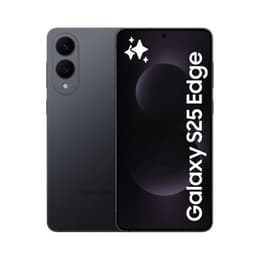
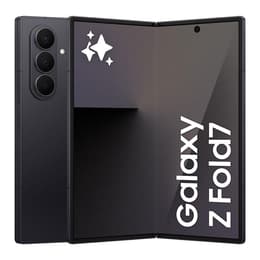
The Samsung Galaxy S25 Edge (2025) and the Samsung Galaxy Z Fold7 (2025) represent two distinct paths in modern mobile design, pairing a classic slate form factor with an innovative foldable screen concept. While both devices share high-end processing power and core Android foundations, they cater to fundamentally different daily experiences through their hardware structure. The Galaxy S25 Edge prioritizes an ultra-thin traditional profile, whereas the Galaxy Z Fold7 offers a transformable dual-screen workspace.
Available Models
Colour
Storage (GB)
Scores
Durability
Both models arrive from the same product generation and benefit from extensive long-term software support frameworks designed to keep devices secure and up to date for years. When evaluating longevity, hardware format plays a notable role in daily wear and tear.
- Software longevity: Both devices receive multi-year operating system upgrades and security patches, though exact durations vary slightly depending on their initial software release versions.
- Physical durability: The Galaxy S25 Edge relies on reinforced glass and a rigid titanium frame, whereas the Galaxy Z Fold7 introduces moving hinge components that require careful handling over extended periods of heavy use.
- Expected lifespan: Users who select a quality-assured refurbished option can expect reliable multi-year performance from either architecture, provided the foldable inner screen receives standard care.
Year of Release
2025
2025
OS
Android
Android
Foldable
No
Yes
Performance
Demanding applications, multitasking routines, and heavy graphics run smoothly across both devices thanks to advanced current-generation internal processing hardware. System responsiveness remains swift during intensive daily workflows.
- Memory and multitasking: Both models feature generous RAM capacities that allow multiple applications to remain open in the background without stuttering.
- Battery behavior: The Galaxy S25 Edge utilizes a compact physical footprint that requires more frequent charging for intensive tasks, while the Galaxy Z Fold7 accommodates a slightly larger battery capacity to support its expansive dual screens.
- Storage configurations: Both options offer ample built-in storage tiers for large media libraries and offline files, with no expandable card slot available.
Screen quality
Display technology defines the primary contrast between these two handsets, shifting between a standard slate window and an expansive tablet-scale canvas. Both options incorporate vibrant panel technology with high refresh rates for smooth scrolling.
- Panel design: The Galaxy S25 Edge features a single, rigid AMOLED screen with sharp resolution, while the Galaxy Z Fold7 opens outward to reveal a large flexible inner display alongside a usable outer cover screen.
- Outdoor visibility: High peak brightness levels on both devices ensure content remains legible under direct sunlight conditions.
- Viewing experience: Users who consume media on the go will find the foldable layout of the Z Fold7 provides significantly more surface area for split-screen apps, while the S25 Edge offers a traditional, crease-free viewing pane.
Resolution
1440x3120
1968x2184
Audiovisual
Photography and media capture hardware vary considerably to match the distinct structural designs of each chassis. Both handsets handle everyday photo snapshots and high-resolution video recording with dependable clarity.
- Lens configurations: The Galaxy S25 Edge focuses on a streamlined dual-camera array led by a high-resolution main sensor, whereas the Galaxy Z Fold7 incorporates a versatile triple-camera system alongside flexible angles for self-portraits.
- Low-light performance: Advanced image processing helps both models capture balanced night shots with minimal noise and accurate color reproduction.
- Media output: Stereo speakers on both devices provide clear audio output for hands-free calls, casual video viewing, and gaming sessions.
Miscellaneous
Physical dimensions and connectivity standards determine how comfortably each smartphone integrates into pockets, travel bags, and daily accessories.
- Handling and weight: The Galaxy S25 Edge emphasizes a lightweight, remarkably thin slate build, while the Galaxy Z Fold7 carries a heavier footprint to accommodate its folding hinge mechanism and dual-screen layout.
- Connectivity: Both models support widespread 5G network bands, modern Wi-Fi standards, and Bluetooth accessories for seamless wireless pairing.
- Security sensors: Biometric authentication is handled via responsive fingerprint and facial recognition systems integrated directly into the physical frames.
Weight
163 g
215 g
Screen size (in)
6.7
8.0
Network
5G
5G
SIM card
Dual Physical SIM + eSIM
Carrier compatibility
Unlocked
Unlocked
Connector
USB-C
USB-C (USB 3)
What the community thinks
Choosing between the Galaxy S25 Edge and the Galaxy Z Fold7 depends entirely on how you interact with mobile technology throughout the day. Users prioritizing a lightweight, ultra-slim profile with traditional single-screen handling will find the Galaxy S25 Edge well-suited to their daily routines. Conversely, users who favor maximum screen workspace for multitasking, document editing, and expansive media consumption will lean toward the versatile format of the Galaxy Z Fold7.
Community feedback highlights praise for the S25 Edge's sleek handling, though some note its battery requires mindful management during heavy usage. Meanwhile, owners of the Z Fold7 frequently commend its productivity advantages on the large inner display, while acknowledging the heavier weight and visible screen crease inherent to foldable designs. Exploring an eco-friendly, quality-assured refurbished option provides a sustainable pathway to experiencing either of these distinct mobile technologies without compromising on performance.