

Compare models

iPhone 11 Vs iPhone 12 Pro

  • 1-year minimum warranty
  • Free delivery on all orders
  • Free 30-day returns
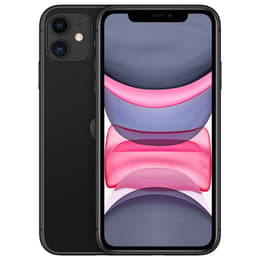
iPhone 11
iPhone 11
Starting at

Refurbished price:149.00

Versus €589.00 new

See options
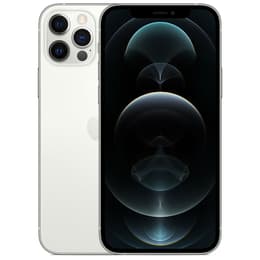
iPhone 12 Pro
iPhone 12 Pro
Starting at

Refurbished price:236.00

Versus €1,039.00 new

See options

Differences at a glance

The iPhone 11, released in September 2019, and the iPhone 12 Pro, launched in October 2020, represent different generations within Apple's smartphone lineup. While both devices offer a 6.1-inch display and operate on the iOS ecosystem, the iPhone 12 Pro introduces a more advanced display technology, enhanced camera capabilities, and next-generation cellular connectivity, setting it apart from its predecessor.

Scores

Durability

When considering the practical lifespan of these devices, several factors come into play, including software support, physical durability, and repairability.

  • Software Longevity: The iPhone 11, released in 2019, will receive iOS updates for a substantial period, typically 5-6 years from its launch. The iPhone 12 Pro, being a year newer (2020 release), is expected to receive software support for approximately one year longer, extending its functional lifespan in terms of new features and security updates.
  • Physical Durability: Both models feature an IP68 rating for water and dust resistance. However, the iPhone 12 Pro offers improved water resistance, capable of submersion up to 6 meters for 30 minutes, compared to the iPhone 11's 2 meters for 30 minutes. The iPhone 12 Pro also introduced a Ceramic Shield front cover, designed to provide enhanced drop performance.
  • Repairability: While specific repairability scores can vary, both devices are designed with Apple's ecosystem in mind. The availability of parts and repair services for both models remains good, though the newer iPhone 12 Pro may benefit from a longer period of readily available official components.

Year of Release

2019

2020

Compatible with latest Update

Yes

Yes

OS

iOS

iOS

Foldable

No

No

Performance

The performance of a smartphone is crucial for daily tasks, app usage, and overall responsiveness. Both the iPhone 11 and iPhone 12 Pro deliver smooth experiences, but there are distinctions in their underlying capabilities.

  • Everyday Responsiveness: The iPhone 11 handles common applications and multitasking efficiently, providing a fluid user experience for browsing, social media, and productivity apps. The iPhone 12 Pro, with its newer internal processing unit, offers a noticeable boost in speed, resulting in quicker app loading times and smoother transitions, especially in more demanding applications or games.
  • Multitasking and Storage: The iPhone 11 comes with 4GB of RAM, which is sufficient for typical multitasking. The iPhone 12 Pro features 6GB of RAM, allowing it to keep more applications active in the background and switch between them with greater fluidity. Storage options for the iPhone 11 range from 64GB to 256GB, while the iPhone 12 Pro starts at 128GB and goes up to 512GB, offering more space for media and applications.
  • Battery Behavior: The iPhone 11 is equipped with a 3110 mAh battery, generally providing a full day of use for most users. The iPhone 12 Pro has a slightly smaller 2815 mAh battery. However, due to the more power-efficient processor and OLED display, its real-world battery performance is comparable to, or in some scenarios, slightly better than the iPhone 11 for typical usage.

Memory (GB)

4 GB

6 GB

Screen quality

The display is a primary interface for any smartphone, and the iPhone 11 and iPhone 12 Pro offer different visual experiences.

  • Display Technology and Clarity: The iPhone 11 features a 6.1-inch Liquid Retina HD display, which is an LCD panel with a resolution of 1792 x 828 pixels at 326 ppi. The iPhone 12 Pro also has a 6.1-inch display, but it upgrades to a Super Retina XDR OLED panel with a higher resolution of 2532 x 1170 pixels at 460 ppi. This results in significantly sharper text and images on the iPhone 12 Pro.
  • Brightness and Color Reproduction: The iPhone 11's LCD display offers a maximum typical brightness of 625 nits. The iPhone 12 Pro's OLED display provides deeper blacks, more vibrant colors, and a higher contrast ratio. It also boasts a higher typical brightness of 800 nits and can reach up to 1200 nits for HDR content, making it more legible in bright outdoor conditions and enhancing HDR video playback.
  • Viewing Experience: Both phones support True Tone and Haptic Touch for a consistent and responsive interaction. While both screens are 6.1 inches, the iPhone 12 Pro's OLED technology and higher pixel density deliver a more immersive and detailed viewing experience, particularly for high-resolution content and photography.

Resolution

828 x 1792

1170 x 2532

Screen type

Liquid Retina IPS LCD

Super Retina XDR OLED

Audiovisual

Both the iPhone 11 and iPhone 12 Pro are capable photographic tools, but the Pro model introduces significant advancements in its camera system.

  • Rear Camera System: The iPhone 11 features a dual 12MP camera system with a wide (f/1.8) and an ultra-wide (f/2.4) lens, offering a 2x optical zoom out. It includes Night mode, Deep Fusion, and Smart HDR for improved image processing. The iPhone 12 Pro steps up with a triple 12MP camera system, adding a telephoto lens (f/2.0) for 2x optical zoom in, alongside the wide (f/1.6) and ultra-wide (f/2.4) lenses, providing a 4x optical zoom range. The wider aperture on the main lens of the 12 Pro improves low-light performance.
  • Advanced Photography Features: The iPhone 12 Pro introduces a LiDAR Scanner, which enhances autofocus speed in low-light conditions and enables Night mode portraits, a feature not available on the iPhone 11. It also supports Smart HDR 3, an improvement over the iPhone 11's Smart HDR. Both models offer Portrait mode with advanced bokeh and Depth Control.
  • Video Recording Quality: Both devices can record 4K video at up to 60 frames per second. However, the iPhone 12 Pro is capable of recording HDR video with Dolby Vision at up to 60 fps, offering a wider dynamic range and more vibrant colors in video content, a feature absent from the iPhone 11. The iPhone 12 Pro also benefits from improved video stabilization.

Main camera

12 megapixels

12 megapixels

Front camera

12 megapixels

12 megapixels

Miscellaneous

Beyond core features, several practical elements differentiate the iPhone 11 and iPhone 12 Pro, impacting daily usability and future-proofing.

  • Connectivity and Ports: A key difference is cellular connectivity; the iPhone 11 supports 4G LTE, while the iPhone 12 Pro introduces 5G capabilities, offering faster download and upload speeds in supported areas. Both devices support Wi-Fi 6 and Bluetooth 5.0. Both utilize the Lightning port for charging and data transfer.
  • Design and Handling: The iPhone 11 features rounded aluminum edges, while the iPhone 12 Pro adopts a flat-edge design with a stainless steel frame, giving it a more angular and distinct feel. Despite both having 6.1-inch displays, the iPhone 12 Pro is slightly thinner and lighter (146.7 x 71.5 x 7.4 mm, 189g) compared to the iPhone 11 (150.9 x 75.7 x 8.3 mm, 194g), making the 12 Pro feel more compact in hand.
  • Additional Features: The iPhone 12 Pro introduces MagSafe, a magnetic system on the back for attaching accessories and enabling faster wireless charging. It also includes the LiDAR Scanner, which, in addition to camera benefits, enhances augmented reality (AR) experiences by creating accurate depth maps of environments. The iPhone 11 does not have these features.

Weight

194 g

187 g

Width

7,57 cm

7.15 cm

Height

15,09 cm

14.67 cm

Depth

0,83 cm

0.74 cm

Screen size (in)

6.1

6.1

Network

4G

5G

SIM card

Physical SIM + eSIM

Physical SIM + eSIM

Carrier compatibility

Unlocked

Unlocked

Connector

Lightning

Lightning

What the community thinks

Users often praise the iPhone 11 for its reliable performance, capable dual-camera system, and solid battery life, making it a practical choice for everyday use. Common feedback highlights its consistent user experience and the quality of its wide and ultra-wide camera lenses. Some users, however, note the LCD display as a point of comparison against newer OLED screens.

The iPhone 12 Pro is frequently lauded for its vibrant OLED display, significantly improved camera system with the addition of a telephoto lens and LiDAR Scanner, and the introduction of 5G connectivity. Users appreciate the enhanced low-light photography and video capabilities, particularly Dolby Vision HDR recording. Criticisms sometimes point to the battery capacity being slightly smaller than its predecessor, though efficiency gains often balance this.

Users prioritizing a modern display with superior contrast and brightness, advanced photography features including a telephoto lens and enhanced low-light performance, and future-proof 5G connectivity may find the iPhone 12 Pro well-suited to their needs. Its flat-edge design and Ceramic Shield front cover also offer a different aesthetic and improved durability. Conversely, users who value a slightly larger battery capacity and a still-capable camera system for general photography, without the need for the absolute latest display or cellular technology, may lean toward the iPhone 11. Both devices offer a quality-assured refurbished option, providing an eco-friendly alternative for those seeking reliable technology.