

Compare models
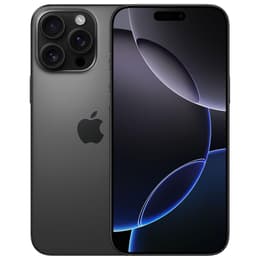
Google Pixel 9a Vs iPhone 16 Pro Max
- 1-year minimum warranty
- Free delivery on all orders
- Free 30-day returns
Differences at a glance
The Google Pixel 9a (2025) and the Apple iPhone 16 Pro Max (2024) represent two distinct approaches to modern smartphone design, catering to users with very different daily requirements. While the Google Pixel 9a focuses on streamlined functionality and extended software support, the iPhone 16 Pro Max prioritizes a large-format display and advanced media recording capabilities. Operating on Android and iOS respectively, these devices offer contrasting software environments alongside different physical footprints.
Available Models
Colour
Storage
Scores
Durability
When evaluating structural longevity and software maintenance, both devices offer robust support timelines designed to keep software secure over multiple years of ownership, though they approach hardware resilience differently.
- Software Update Longevity: The Google Pixel 9a benefits from an extended commitment of seven years of operating system and security updates, matching the highest industry standards for device longevity. The iPhone 16 Pro Max also receives long-term iOS updates spanning many years, ensuring extended feature compatibility.
- Build Resilience: The iPhone 16 Pro Max utilizes a grade-5 titanium frame and durable front glass protection, while the Google Pixel 9a features a structured composite build paired with robust water and dust resistance ratings for everyday protection.
- Repairability Expectations: Both manufacturers design their hardware to meet modern durability standards, though users seeking a quality-assured refurbished option can find sustainably restored versions of these devices through platforms like Back Market to extend product lifecycles further.
Year of Release
2025
2024
Performance
Under everyday workloads, both smartphones deliver dependable processing speeds, smooth application switching, and reliable battery endurance suited for heavy daily use.
- System Responsiveness: Both devices handle multitasking, demanding applications, and high-framerate mobile gaming smoothly, ensuring apps open instantly without stuttering or noticeable lag during intense workloads.
- Battery Endurance: The Google Pixel 9a includes a large internal battery capacity designed to comfortably exceed a full day of mixed usage, while the iPhone 16 Pro Max features an optimized power management system that delivers prolonged media playback and screen-on time.
- Storage and Memory: Both configurations offer baseline memory allocations paired with fast internal storage options, allowing background processes and large local files to load efficiently.
Screen quality
Display characteristics differ significantly between the two models in terms of physical dimensions, peak brightness capabilities, and panel technology.
- Display Technology: The iPhone 16 Pro Max features a large 6.9-inch OLED Super Retina XDR display with adaptive refresh rates up to 120Hz, providing expansive viewing space and fluid scrolling. The Google Pixel 9a features a more compact 6.3-inch OLED panel that also supports a smooth 120Hz variable refresh rate.
- Outdoor Visibility: Both panels deliver high peak brightness levels and deep contrast ratios, ensuring text and images remain legible under direct sunlight or bright ambient lighting conditions.
- Viewing Experience: The larger canvas of the iPhone 16 Pro Max suits media consumption and split-screen multitasking, whereas the smaller footprint of the Google Pixel 9a offers easier one-handed reachability.
Audiovisual
Imaging hardware and audio reproduction vary to accommodate casual photography as well as advanced videography workflows.
- Camera Systems: The Google Pixel 9a is equipped with a dual-rear camera setup emphasizing computational photography features, while the iPhone 16 Pro Max incorporates a triple-lens pro camera array including a dedicated long-range telephoto zoom and dedicated hardware control mechanics.
- Video and Audio Output: Both models capture high-resolution video clips with stabilization features, and their internal microphone arrays deliver clear voice pickup during calls and audio recording sessions alongside balanced stereo speaker output.
- Low-Light Photography: Computational image processing on both devices allows for sharp details and accurate color reproduction in dimly lit environments without requiring manual adjustments.
Miscellaneous
Practical daily features such as connectivity standards, physical dimensions, and security authentication shape the overall user experience.
- Connectivity and Ports: Both smartphones support modern 5G cellular networks, advanced Wi-Fi standards, and Bluetooth connections, utilizing reversible USB-C charging ports for wired accessories.
- Biometric Security: The Google Pixel 9a utilizes an under-display fingerprint sensor alongside facial recognition, whereas the iPhone 16 Pro Max relies entirely on secure facial mapping technology.
- Dimensions and Weight: The Google Pixel 9a weighs approximately 186 grams with a relatively compact profile, while the larger iPhone 16 Pro Max weighs 227 grams, reflecting its expansive screen estate and heavier build materials.
Screen size (in)
6.3
6.9
Network
5G
5G
SIM card
Physical SIM + eSIM
Physical SIM + eSIM
Carrier compatibility
Unlocked
Unlocked
Connector
USB-C
USB-C (USB 3)
What the community thinks
User discussions across community forums highlight distinct preferences for each device based on physical size and ecosystem preference. Common praise for the Google Pixel 9a centers on its comfortable physical dimensions, long software support window, and reliable battery longevity. Conversely, users frequently praise the iPhone 16 Pro Max for its immersive display size, robust build quality, and advanced multi-lens camera versatility. Common discussions occasionally note that the larger iPhone can feel heavy during prolonged one-handed use, while the Pixel 9a relies on a simpler dual-camera layout without an optical zoom lens.
Users prioritizing a more compact physical form factor, straightforward daily operation, and long-term software commitments will find the Google Pixel 9a well-suited to their needs. Meanwhile, users prioritizing expansive screen real estate, advanced camera configurations, and media production capabilities may lean toward the iPhone 16 Pro Max. Choosing a quality-assured refurbished model via platforms like Back Market provides an eco-friendly alternative for acquiring either device while reducing electronic waste. Ultimately, the right choice depends entirely on individual preferences regarding size, software ecosystem, and hardware priorities.