


Compare models
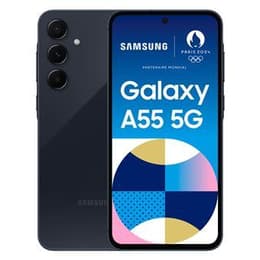
Galaxy A55 Vs Google Pixel 9a
- 1-year minimum warranty
- Free delivery on all orders
- Free 30-day returns
Differences at a glance
The Samsung Galaxy A55 (2024) and the Google Pixel 9a (2025) are mid-range smartphones designed to deliver reliable everyday performance without the complexity or scale of flagship devices. While the Galaxy A55 emphasizes an expansive display and expandable storage options within the Android ecosystem, the Google Pixel 9a provides a streamlined software experience backed by extended update support and advanced automated photography tools. Both models cater to users seeking practical functionality, though they differ significantly in their approach to hardware layout, software interface, and physical dimensions.
Available Models
Colour
Storage
Scores
Durability
When evaluating long-term usability and physical resilience, both devices offer robust support structures tailored for multi-year ownership, though their update timelines and repair considerations vary.
- Software longevity and updates: The Google Pixel 9a benefits from an extended software support window, receiving major operating system upgrades and security patches for several years past its release. The Galaxy A55 provides a slightly shorter, yet substantial, multi-year update commitment that matches standard mid-range expectations.
- Build resilience and repairability: Both phones feature high-level dust and water resistance ratings, allowing them to withstand accidental spills and everyday environmental exposure. Internal component accessibility remains standard for modern sealed glass-and-metal slabs, though professional servicing is typically required for battery replacements.
- Expected lifespan: Users can anticipate stable daily functionality spanning four to six years from both devices, supported by efficient battery management and regular background security enhancements.
Year of Release
2024
2025
Compatible with latest Update
Yes
Yes
OS
Android
Android
Foldable
No
No
Performance
Handling daily responsibilities, multitasking, and mobile applications involves distinct hardware configurations across these two smartphones, affecting overall system fluidity.
- Everyday multitasking and app loading: Both devices manage routine tasks, web browsing, and social media switching smoothly, supported by ample memory configurations that keep background applications active without sudden reloads.
- Battery behavior and endurance: Equipped with high-capacity internal power cells, both models comfortably last through a full day of standard use involving messaging, media streaming, and navigation before requiring a recharge.
- Gaming and demanding software: While neither device is tailored primarily for high-end mobile gaming, both handle casual titles and graphic-intensive applications reliably, maintaining stable thermal performance during extended use.
Screen quality
Visual output and screen interactions differ primarily in physical dimensions, panel technology, and outdoor visibility performance under direct sunlight.
- Display technology and clarity: The Galaxy A55 utilizes an expansive Super AMOLED panel offering deep contrast levels and vivid color reproduction, while the Google Pixel 9a features a slightly smaller OLED screen renowned for sharp text rendering and natural tones.
- Brightness and outdoor visibility: Both screens deliver high peak brightness capabilities, ensuring that menus, maps, and media remain legible even when used outdoors under bright daylight conditions.
- Refresh rate and smoothness: Each model supports adaptive high refresh rates up to 120Hz, providing fluid scrolling through web pages, documents, and interface animations.
Resolution
1080 x 2340
2424 x 1080
Audiovisual
Capturing memories and consuming audio-visual media involve distinct optical setups and speaker configurations tailored to everyday documentation.
- Camera system capabilities: The Google Pixel 9a relies on advanced computational photography to process sharp everyday shots and low-light scenes automatically, whereas the Galaxy A55 incorporates a versatile multi-lens rear array featuring a high-resolution main sensor and a dedicated macro option.
- Video recording and stabilization: Both devices offer steady 4K video capture equipped with effective digital stabilization to minimize shake during handheld recording.
- Media consumption and audio: Stereo speakers on both smartphones deliver clear sound output for casual video viewing, podcasts, and hands-free calls, though neither includes a traditional headphone jack.
Front camera
32 megapixels
13 megapixels
Miscellaneous
Practical physical characteristics, connectivity standards, and daily handling elements shape how each device fits into routine user habits.
- Connectivity and ports: Both models support modern 5G cellular networks, reliable Wi-Fi standards, and Bluetooth pairing, utilizing a reversible USB Type-C port for charging and wired data transfers.
- Storage expansion: The Galaxy A55 offers the distinct advantage of expandable storage via a microSD card slot, whereas the Google Pixel 9a relies strictly on fixed internal storage capacities.
- Physical handling and build: The Galaxy A55 is slightly larger and heavier, featuring a glass back and metal frame, while the Pixel 9a presents a lighter, compact form factor that rests comfortably in smaller hands.
Weight
213 g
186 g
Screen size (in)
6.6
6.3
Network
5G
5G
SIM card
Physical SIM
Physical SIM + eSIM
Carrier compatibility
Unlocked
Unlocked
Connector
USB-C
USB-C
What the community thinks
Community feedback from actual users highlights distinct preferences for each device based on daily habits and software priorities. Owners of the Galaxy A55 frequently praise its bright, wide screen, premium metal-and-glass construction, and the convenience of expandable storage. Conversely, users of the Google Pixel 9a consistently commend its streamlined software interface, reliable point-and-shoot photography, and compact handling.
Users who prioritize media consumption on a larger screen alongside expandable storage will find the Galaxy A55 well-suited to their needs. Meanwhile, users who value a cleaner software environment, extended update longevity, and effortless automated photography may lean toward the Google Pixel 9a. For those looking to make a sustainable choice, both smartphones are widely available as quality-assured refurbished options through Back Market, offering an eco-friendly alternative to purchasing newly manufactured hardware. Ultimately, the right choice depends on whether physical screen workspace or streamlined software support aligns more closely with daily routines.










