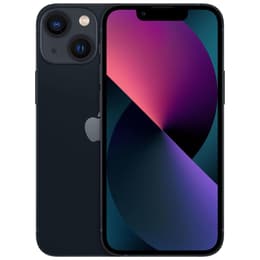
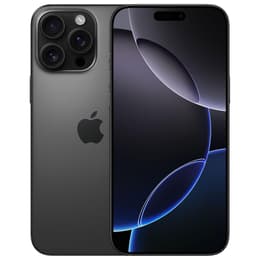


iPhone 13 mini Vs iPhone 16 Pro Max

iPhone 13 mini
iPhone 13 mini
Starting at

Refurbished price:228.00

Versus €829.00 new

See options
iPhone 16 Pro Max
iPhone 16 Pro Max
Starting at

Refurbished price:821.00

Versus €1,489.00 new

See options

Ratings

The iPhone 13 Mini, released in 2021, and the iPhone 16 Pro Max, launched in 2024, represent distinct approaches within Apple's smartphone lineup. The primary differentiators lie in their physical size, overall performance capabilities, and advanced camera systems. Both devices operate on Apple's iOS platform, ensuring a consistent software experience, though the 16 Pro Max benefits from the latest software advancements and longer future support.

Scores

Durability

When considering the longevity of these devices, several factors come into play, including their release timelines, software support, and physical resilience.

  • Release Timeline and Software Support: The iPhone 13 Mini, released in September 2021, has already received several major iOS updates and is expected to continue receiving software support for approximately 5-7 years from its launch [3, 11, 33]. The iPhone 16 Pro Max, launched in September 2024, benefits from a newer release date, ensuring a significantly longer period of guaranteed software updates and access to the latest iOS features, including Apple Intelligence [2, 14, 17, 19, 26, 32].
  • Physical Durability: Both models feature a Ceramic Shield front cover, contributing to enhanced drop performance [5, 30]. They also share an IP68 rating for water and dust resistance, meaning they can withstand submersion up to 6 meters for 30 minutes [1, 5, 16, 19, 30, 33]. The iPhone 16 Pro Max introduces a titanium frame, which offers a balance of strength and reduced weight compared to the aluminum frame of the 13 Mini [1, 2, 19].
  • Repairability: The iPhone 13 Mini has a repairability score that has fluctuated, with iFixit initially giving it a 5/10, then 6/10 after a software fix for Face ID, but later retroactively dropping it to 4/10 due to challenges with third-party repairs and component interoperability [21, 36, 39, 40]. While a specific score for the 16 Pro Max is not widely available, Apple has made efforts to improve repair accessibility for newer models through initiatives like Repair Assistant, though challenges with third-party parts persist [40].

Year of Release

2021

2024

Compatible with latest Update

Yes

Yes

Foldable

No

No

Performance

The performance of these two iPhones reflects the generational advancements in mobile processing power and efficiency.

  • Processing Power: The iPhone 13 Mini is equipped with a capable processor that handles everyday applications and multitasking smoothly [3, 4, 7, 12, 33]. It provides a responsive user experience for most tasks, including moderate gaming and content consumption. The iPhone 16 Pro Max, featuring a significantly newer processor, delivers a substantial leap in performance, particularly noticeable in demanding applications, advanced gaming, and tasks leveraging artificial intelligence features [1, 2, 14, 17, 18, 23, 25, 26, 32]. Users will experience faster app loading, smoother transitions, and more efficient handling of intensive workloads.
  • Multitasking and Storage: The iPhone 13 Mini comes with 4GB of RAM, which is sufficient for typical smartphone usage and switching between several applications [7, 33]. Storage options range from 128GB to 512GB [7, 12]. The iPhone 16 Pro Max includes 8GB of RAM, providing greater headroom for extensive multitasking and ensuring that numerous applications can run concurrently without performance degradation [2, 18]. Its base storage starts at 256GB, with options extending to 1TB, catering to users with larger digital libraries and content creation needs [1, 2, 13, 18].
  • Battery Behavior: The iPhone 13 Mini, due to its compact size, has a smaller battery capacity, which translates to a full day of moderate use for many users, though heavy users may find themselves needing to recharge more frequently [7, 33]. The iPhone 16 Pro Max features a considerably larger battery, designed to offer extended usage times. It is noted for providing exceptional battery life, with reports indicating over 17-18 hours of web browsing and up to 33 hours of video playback, making it well-suited for power users and those who require prolonged use between charges [18, 24, 28, 32, 35].

Memory (GB)

4 GB

8 GB

Screen quality

The display experience differs significantly between these two models, primarily due to advancements in screen technology and physical dimensions.

  • Display Technology and Size: The iPhone 13 Mini features a 5.4-inch Super Retina XDR OLED display, offering vibrant colors and deep blacks in a compact form factor [3, 4, 5, 8]. The iPhone 16 Pro Max boasts a much larger 6.9-inch Super Retina XDR OLED display, providing an expansive viewing area for media consumption and productivity [1, 2, 6, 9, 10, 19].
  • Resolution and Clarity: Both phones offer high pixel densities, ensuring sharp text and clear images. The 13 Mini has a resolution of 2340x1080 pixels at 476 ppi [3, 4, 5, 8]. The 16 Pro Max features a higher resolution of 2868x1320 pixels at 460 ppi, maintaining excellent clarity across its larger screen [1, 2, 6, 9, 10, 19].
  • Brightness and Smoothness: The 13 Mini provides a typical maximum brightness of 800 nits and a peak HDR brightness of 1200 nits, suitable for most indoor and outdoor conditions [3, 4, 5, 8]. The 16 Pro Max significantly enhances this with a typical brightness of 1000 nits, a peak HDR brightness of 1600 nits, and an impressive 2000 nits for outdoor peak brightness, improving visibility in bright sunlight [1, 2, 6, 19]. Furthermore, the 16 Pro Max incorporates ProMotion technology, offering adaptive refresh rates up to 120Hz for smoother scrolling and more fluid animations, a feature absent on the 60Hz display of the 13 Mini [1, 2, 6, 19]. The 16 Pro Max also includes an Always-On display and Dynamic Island for interactive notifications and activities [1, 2, 6, 19].

Resolution

1080 x 2340

1320 x 2868

Screen type

Super Retina XDR OLED

LTPO Super Retina XDR OLED

Audiovisual

The camera systems of the iPhone 13 Mini and iPhone 16 Pro Max reflect different generations of Apple's photographic innovation, with the latter offering more advanced capabilities.

  • Rear Camera System: The iPhone 13 Mini features a dual 12MP camera system, comprising a main wide-angle lens (f/1.6 with sensor-shift optical image stabilization) and an ultra-wide lens (f/2.4 with a 120° field of view) [4, 8, 16, 20, 29]. This system is capable of capturing detailed photos and good low-light performance for its generation. The iPhone 16 Pro Max boasts a more comprehensive pro camera system, including a 48MP main wide-angle lens (f/1.78 with second-generation sensor-shift OIS), a 48MP ultra-wide lens (f/2.2 with 120° field of view), and a 12MP 5x telephoto lens (f/2.8 with 3D sensor-shift OIS) [1, 2, 13, 17, 19, 27]. This setup provides greater versatility, improved detail, and enhanced zoom capabilities.
  • Low-Light and Video Performance: Both devices offer Night mode for improved low-light photography. The 13 Mini records video up to 4K at 60fps and includes Cinematic mode at 1080p 30fps [4, 8, 29]. The 16 Pro Max elevates video recording significantly, supporting up to 4K at 120fps with Dolby Vision, Cinematic mode up to 4K 30fps, and advanced features like ProRes video recording up to 4K 120fps and Spatial video recording, offering more professional-grade video capture options [1, 13, 19, 26].
  • Front Camera and Audio: The 13 Mini has a 12MP TrueDepth front camera with an f/2.2 aperture [4, 8]. The 16 Pro Max features an upgraded 12MP TrueDepth front camera with an f/1.9 aperture and autofocus, leading to sharper selfies and improved video calls [1, 13]. Both phones offer stereo speakers for media consumption, but the 16 Pro Max generally provides a richer audio experience due to its larger form factor and newer audio technologies.

Main camera

12 megapixels

48 megapixels

Front camera

12 megapixels

12 megapixels

Miscellaneous

Beyond core performance and display, several practical elements differentiate these two iPhone models.

  • Connectivity: Both the iPhone 13 Mini and the iPhone 16 Pro Max support 5G cellular connectivity, enabling faster download and upload speeds [5, 7, 12, 19, 33]. However, the 16 Pro Max features more advanced Wi-Fi 7 (802.11be) and Bluetooth 5.3, compared to the 13 Mini's Wi-Fi 6 (802.11ax) and Bluetooth 5.0, offering potentially faster and more stable wireless connections [1, 2, 6, 7, 19, 33]. The 16 Pro Max also includes a second-generation Ultra Wideband chip and Thread networking technology for enhanced spatial awareness and smart home integration [1].
  • Ports and Biometrics: The iPhone 13 Mini utilizes Apple's proprietary Lightning connector for charging and data transfer [11]. The iPhone 16 Pro Max has transitioned to a USB-C port, offering broader compatibility with accessories and potentially faster data transfer speeds [17]. Both devices rely on Face ID for secure facial recognition and authentication [1, 12]. The 16 Pro Max further integrates a LiDAR Scanner, enhancing augmented reality experiences and improving low-light autofocus for the camera [1].
  • Physical Design and Handling: The iPhone 13 Mini is designed for users who prefer a compact and lightweight device, measuring 131.5 x 64.2 x 7.65 mm and weighing 141g [7, 11, 33]. Its smaller size makes it easy for one-handed use and pocketability. The iPhone 16 Pro Max is a significantly larger and heavier device, with dimensions of 163 x 77.6 x 8.25 mm and a weight of 227g [1, 9, 10, 19]. Its titanium frame contributes to its premium feel and durability [1, 2, 19]. The larger size of the 16 Pro Max provides a more immersive screen experience but requires two-handed operation for many users.

Weight

140 g

227 g

Screen size (in)

5.4

6.9

Network

5G

5G

SIM card

Physical SIM + eSIM

Physical SIM + eSIM

Carrier compatibility

Unlocked

Unlocked

Connector

Lightning

USB-C (USB 3)

The iPhone 13 Mini and iPhone 16 Pro Max cater to distinct user preferences, largely defined by their size, generational advancements, and feature sets. Users often praise the iPhone 13 Mini for its compact form factor, making it comfortable for one-handed use and easy to carry [33]. Its performance is generally considered robust for everyday tasks, and its camera system delivers quality photos and videos for casual use. However, some users note its smaller battery capacity requires more frequent charging, especially with heavy use, and the smaller screen might not be ideal for extensive media consumption or productivity tasks.

The iPhone 16 Pro Max, on the other hand, is frequently lauded for its expansive and vibrant display, exceptional battery life, and its highly advanced camera system, which includes features like a telephoto lens and enhanced video capabilities [15, 18, 24, 28, 32, 34, 35]. Its powerful processor ensures smooth performance across all applications, including demanding games and AI-driven tasks. Criticisms often revolve around its large size and weight, which can make one-handed operation challenging and pocketability less convenient for some individuals.

Users prioritizing a highly portable device that is easy to handle and fits comfortably in smaller pockets may find the iPhone 13 Mini well-suited to their needs. It offers a solid smartphone experience for those who value compactness above all else. Conversely, users who prioritize a large, immersive display, extended battery life, and a professional-grade camera system for photography and videography will likely lean towards the iPhone 16 Pro Max. Its superior performance and advanced features make it ideal for power users, content creators, and those who consume a lot of media on their device. Both models, when considered as quality-assured refurbished options, offer an eco-friendly alternative for consumers.


See all articles

Our recent comparisons