

Google Pixel 9 Vs Xiaomi Redmi Note 11

Google Pixel 9
Google Pixel 9
Starting at

Refurbished price:376.00

Versus €1,066.71 new

See options
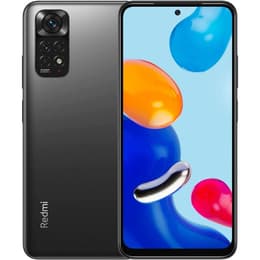
Xiaomi Redmi Note 11
Starting at

Refurbished price:108.00

Versus €249.99 new

See options

Ratings

The Google Pixel 9 and the Xiaomi Redmi Note 11 represent distinct offerings in the smartphone market, catering to different user expectations and priorities. The Pixel 9, released in August 2024, is a more recent device from Google's flagship line, emphasizing advanced computational photography and a streamlined Android experience. In contrast, the Redmi Note 11, launched in January 2022, is a mid-range device from Xiaomi, focusing on delivering a balanced feature set at a more accessible point. These differences are evident across their core specifications, from processing power to camera capabilities and display technology.

Scores

Durability

The longevity of a smartphone is influenced by its release timeline, software support, and physical resilience. The Pixel 9, being a newer device, offers a significantly longer expected lifespan in terms of software updates and overall performance compared to the Redmi Note 11.

  • Release Timeline: The Google Pixel 9 was released in August 2024, making it a relatively new device in the current market. The Xiaomi Redmi Note 11, launched in January 2022, is an older model, which impacts its remaining software support window.
  • Software Longevity: Google typically provides extensive software support for its Pixel devices. The Pixel 9 is expected to receive seven years of OS, security, and Pixel Drop updates, ensuring it remains current and secure for an extended period. The Redmi Note 11 launched with Android 11 and MIUI 13, and while it has received updates, its update cycle is generally shorter than that of a flagship Pixel device.
  • Durability Features: The Pixel 9 features Corning Gorilla Glass Victus 2 for enhanced scratch and drop resistance on both the front and back, along with an IP68 rating for dust and water resistance. The Redmi Note 11 uses Gorilla Glass 3 for its display and has an IP53 rating, offering protection against dust and splashes.

Year of Release

2024

2022

Compatible with latest Update

Yes

No

OS

Android

Android

Foldable

No

No

Performance

Performance is a key differentiator, with the Pixel 9 designed for demanding tasks and advanced AI features, while the Redmi Note 11 provides reliable performance for everyday use within its segment.

  • Processing Power: The Google Pixel 9 is equipped with Google's Tensor G4 processor, designed for efficient handling of complex tasks, advanced AI computations, and smooth multitasking. The Redmi Note 11 is powered by the Qualcomm Snapdragon 680 4G chipset, which is suitable for daily applications and moderate usage.
  • Multitasking and Responsiveness: With 12GB of RAM, the Pixel 9 offers substantial capacity for running numerous applications simultaneously and maintaining overall system responsiveness. The Redmi Note 11 typically comes with 4GB or 6GB of RAM, which is sufficient for general use but may show limitations with heavy multitasking or graphically intensive applications.
  • Battery Performance: The Pixel 9 features a 4700 mAh battery, designed to provide over 24 hours of use, with fast charging capabilities. The Redmi Note 11 has a 5000 mAh battery and supports 33W fast charging, offering a full day of use for many users.

Memory (GB)

12 GB

4 GB

Screen quality

The display experience varies significantly between these two devices, with the Pixel 9 offering a more advanced and brighter panel compared to the Redmi Note 11.

  • Display Technology and Clarity: The Google Pixel 9 features a 6.3-inch Actua OLED display with a resolution of 1080 x 2424 pixels, providing sharp visuals and deep blacks. The Xiaomi Redmi Note 11 has a 6.43-inch AMOLED DotDisplay with a resolution of 1080 x 2400 pixels, offering vibrant colors and good contrast.
  • Brightness and Outdoor Visibility: The Pixel 9's display can reach up to 1800 nits for HDR content and a peak brightness of 2700 nits, ensuring excellent visibility even in bright outdoor conditions. The Redmi Note 11 offers a typical brightness of 700 nits and a peak brightness of 1000 nits, which is adequate for most indoor and some outdoor scenarios.
  • Refresh Rate and Smoothness: The Pixel 9 features a Smooth Display with a variable refresh rate from 60Hz to 120Hz, contributing to fluid scrolling and a responsive user experience. The Redmi Note 11 has a 90Hz refresh rate, providing a smoother visual experience than standard 60Hz displays.

Resolution

1080 x 2424

1080 x 2400

Screen type

OLED

AMOLED

Audiovisual

Camera capabilities are a strong point for the Pixel 9, leveraging advanced computational photography, while the Redmi Note 11 offers a versatile camera system for its category.

  • Rear Camera System: The Google Pixel 9 is equipped with a dual-camera system, including a 50MP Octa PD wide camera and a 48MP Quad PD ultrawide camera with autofocus and macro capabilities. The Xiaomi Redmi Note 11 features a quad-camera setup with a 50MP main camera, an 8MP ultra-wide camera, a 2MP macro camera, and a 2MP depth sensor.
  • Photography Performance: The Pixel 9 excels in computational photography, offering features like Super Res Zoom up to 8x, Night Sight, Astrophotography, Portrait Mode, and Real Tone for detailed and color-accurate images across various lighting conditions. The Redmi Note 11's 50MP main sensor performs well in good lighting, and its ultra-wide and macro lenses add versatility, though its low-light performance is more limited.
  • Video Recording and Front Camera: The Pixel 9 supports 4K 60fps video recording and features a 10.5MP Dual PD selfie camera with autofocus. The Redmi Note 11 can record video at up to 1080p at 30fps and has a 13MP front camera for selfies.

Main camera

50 megapixels

50 megapixels

Front camera

10.5 megapixels

13 megapixels

Miscellaneous

Beyond core features, several practical elements contribute to the overall user experience, from connectivity to physical design.

  • Connectivity and Ports: The Google Pixel 9 supports 5G connectivity, Wi-Fi 6E, and Bluetooth 5.3, offering fast and reliable wireless connections. It uses a USB-C port for charging and data transfer. The Xiaomi Redmi Note 11 supports 4G LTE, Wi-Fi 5, and Bluetooth 5.0. It includes a USB-C port and retains a 3.5mm headphone jack.
  • Biometric Security: The Pixel 9 features an in-display fingerprint sensor and face unlock for secure authentication. The Redmi Note 11 incorporates a side-mounted fingerprint sensor integrated into the power button and also offers AI Face Unlock.
  • Design and Handling: The Pixel 9 has a refined design with flat side rails and a distinct camera island, weighing 198g. The Redmi Note 11 has a flat-edge design, weighs 179g, and features a plastic back and frame.

Weight

198 g

179 g

Screen size (in)

6.3

6.43

Network

5G

4G

SIM card

Physical SIM + eSIM

Dual Physical SIM

Carrier compatibility

Unlocked

Unlocked

The Google Pixel 9 and Xiaomi Redmi Note 11 cater to different user needs and budgets, reflecting their respective release dates and market positioning. The Pixel 9, a more recent flagship device, is often praised by users for its advanced camera capabilities, particularly its computational photography features that deliver consistent and high-quality images across various scenarios. Users also appreciate its clean Android experience and the long-term software support provided by Google. Some common feedback for the Pixel 9 includes its strong performance for demanding applications and its vibrant, bright display.

The Xiaomi Redmi Note 11, an older mid-range option, receives positive remarks for its AMOLED display with a 90Hz refresh rate, which is a notable feature for its segment. Users often highlight its reliable battery life and the inclusion of a 3.5mm headphone jack and expandable storage as practical benefits. However, some users note that its performance, while adequate for everyday tasks, may not match the fluidity of newer, higher-end devices, and its camera performance in challenging lighting conditions is more limited.

Users prioritizing cutting-edge camera technology, extended software longevity, and robust performance for advanced applications and AI features may find the Google Pixel 9 well-suited to their needs. Conversely, users seeking a dependable smartphone for daily communication, media consumption, and general tasks, who value features like a headphone jack and expandable storage, may lean toward the Xiaomi Redmi Note 11. Both devices can be considered as quality-assured refurbished options, providing an eco-friendly alternative for consumers.


See all articles

Our recent comparisons






