

Compare models

Google Pixel 9 Vs iPhone 15 Pro

  • 1-year minimum warranty
  • Free delivery on all orders
  • Free 30-day returns
Google Pixel 9
Starting at

Refurbished price:474.00

Versus €1,066.71 new

See options
iPhone 15 Pro
Starting at

Refurbished price:519.00

Versus €1,239.00 new

See options

Differences at a glance

The Google Pixel 9, released in 2024, and the iPhone 15 Pro, launched in 2023, represent two distinct approaches to premium smartphone design and functionality. While both devices offer advanced mobile experiences, they differentiate themselves through their operating systems, core hardware philosophies, and specific feature sets. The Pixel 9 operates on Google's Android platform, emphasizing artificial intelligence and computational photography, whereas the iPhone 15 Pro runs on Apple's iOS, known for its integrated ecosystem and robust performance.

Available Models

Colour

Storage (GB)

Scores

Durability

When considering the long-term usability of these devices, their respective release timelines and software support policies are key factors. The Google Pixel 9, being a 2024 release, benefits from a more recent launch date compared to the iPhone 15 Pro, which debuted in September 2023.

  • Software Longevity: Google has committed to providing up to seven years of software upgrades for the Pixel 9 series, ensuring a prolonged period of feature updates and security patches. The iPhone 15 Pro, while historically receiving extensive support, has a stated minimum of five years of software support from its release date, though Apple often extends this further, potentially offering major iOS updates for 5-7 years and security patches for nearly a decade.
  • Repairability: The Pixel 9 generally shows a relatively high repairability, with its back plate designed for easier removal and most internal components being accessible. Some sources indicate a repairability score around 5/10 or higher, with Google partnering with iFixit for parts and guides. The iPhone 15 Pro initially received a lower repairability score but was later promoted to 7/10 due to software changes that facilitate the use of genuine parts from other identical iPhones and in-device calibration.
  • Practical Lifespan: Both devices are built to last, with their respective manufacturers providing robust hardware and software ecosystems. The Pixel 9's longer stated software support offers a clear advantage for users prioritizing maximum update longevity, while the iPhone 15 Pro's established track record of extended support also ensures a considerable practical lifespan.

Year of Release

2024

2023

Compatible with latest Update

Yes

Yes

OS

Android

iOS

Foldable

No

No

Performance

The performance of a smartphone is crucial for daily tasks, from navigating applications to engaging in demanding activities like gaming. Both the Google Pixel 9 and the iPhone 15 Pro deliver capable performance, though they achieve this through different hardware and software optimizations.

  • Processing Power: The iPhone 15 Pro is equipped with a highly capable processor that handles intensive applications and multitasking with robust efficiency. The Pixel 9 features a newer generation processor, which offers improved efficiency and is specifically optimized for advanced on-device artificial intelligence functionalities, resulting in smoother web browsing and faster application launches.
  • Multitasking and Responsiveness: The Pixel 9 comes with 12GB of RAM, with its Pro variants offering 16GB, providing ample memory for extensive multitasking and ensuring a fluid user experience, even with numerous applications open simultaneously. The iPhone 15 Pro includes 8GB of RAM, which, combined with iOS's efficient memory management, also delivers a highly responsive and smooth experience across various tasks.
  • Battery Behavior: The Pixel 9 houses a larger battery capacity, approximately 4,700 mAh, and has demonstrated improved real-world battery performance, often lasting through a full day of mixed use and offering extended endurance with lighter usage. The iPhone 15 Pro, with its 3274 mAh battery, provides reliable power for up to 23 hours of video playback, offering consistent performance for typical daily usage. Both devices support fast wired charging, reaching significant charge levels in about 30 minutes, and also offer wireless charging capabilities.

Screen quality

The visual experience on a smartphone is largely defined by its display, and both the Google Pixel 9 and iPhone 15 Pro offer high-quality screens designed for clarity and vibrant visuals.

  • Display Technology and Clarity: Both devices feature OLED display technology, which provides deep blacks, high contrast, and vibrant colors. The iPhone 15 Pro utilizes a 6.1-inch Super Retina XDR OLED display with a resolution of 2556 x 1179 pixels, resulting in a pixel density of approximately 460 pixels per inch (ppi). The Pixel 9 features a 6.3-inch OLED screen with a resolution of 1080 x 2424 pixels, offering a pixel density of around 422 ppi. The Pixel 9 also incorporates Samsung's M14 OLED technology, which is designed to enhance brightness and durability.
  • Brightness and Refresh Rate: The iPhone 15 Pro's display supports ProMotion technology, offering adaptive refresh rates up to 120Hz, which contributes to smoother scrolling and more fluid animations, along with an Always-On display feature. It achieves a typical brightness of 1000 nits and a peak outdoor brightness of 2000 nits. The Pixel 9 also features a variable refresh rate up to 120Hz, providing a smooth visual experience. Its display boasts a higher peak brightness of 2700 nits, making it highly visible even in bright outdoor conditions.
  • Viewing Experience: Both phones offer excellent viewing experiences for media consumption and daily use. The iPhone 15 Pro includes the Dynamic Island, an interactive area around the front camera cutout, while the Pixel 9 features thinner and more uniform bezels, contributing to an immersive edge-to-edge feel.

Resolution

1080 x 2424

1179 x 2556

Screen type

OLED

LTPO Super Retina XDR OLED

Audiovisual

Both the Google Pixel 9 and the iPhone 15 Pro are recognized for their advanced camera systems, each offering distinct strengths in photography and videography.

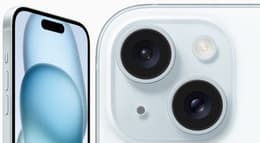
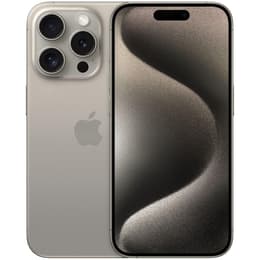
  • Rear Camera Systems: The iPhone 15 Pro features a versatile triple-camera setup, including a 48MP main sensor, a 12MP ultra-wide lens, and a 12MP telephoto lens capable of 3x optical zoom. This system excels in capturing detailed images with accurate color reproduction and offers advanced features like Cinematic mode and ProRes video recording. The Pixel 9 comes with a dual-camera system, featuring a 50MP main sensor and a 48MP ultrawide camera with autofocus, which is a significant upgrade from its predecessor. The Pixel's camera system is heavily reliant on computational photography and AI, enhancing image quality and offering unique editing tools.
  • Photography Performance: The iPhone 15 Pro delivers strong performance in various lighting conditions, with improved Night mode and features like Apple ProRAW for professional-grade editing. Its main camera can capture photos at 24MP or 48MP resolutions. The Pixel 9's upgraded lenses and AI processing contribute to sharper images, particularly in low light, and its ultrawide lens gathers more light for clearer shots. The Pixel also introduces AI-powered features such as 'Add Me' for group selfies and 'Zoom Enhance'.
  • Video and Front Camera: Both devices offer high-quality video recording capabilities, including 4K resolution at various frame rates. The iPhone 15 Pro supports Spatial video recording and Log video for advanced post-production. The Pixel 9 also provides high-quality video and features a 10.5MP front-facing camera with autofocus, an improvement for clearer selfies. The iPhone 15 Pro has a 12MP TrueDepth front camera with autofocus.

Main camera

50 megapixels

48 megapixels

Front camera

10.5 megapixels

12 megapixels

Miscellaneous

Beyond core performance and camera capabilities, several practical elements contribute to the overall user experience of a smartphone. Both the Google Pixel 9 and iPhone 15 Pro offer a range of connectivity, security, and design features.

  • Connectivity and Ports: Both devices support 5G connectivity, along with modern Wi-Fi standards and Bluetooth for wireless connections. The iPhone 15 Pro features a USB-C port, offering faster data transfer speeds compared to the standard USB 2.0 speeds found on some other models. The Pixel 9 also utilizes a USB-C port for charging and data transfer.
  • Security and Biometrics: The iPhone 15 Pro relies on Face ID for secure facial recognition, providing a convenient and robust method for unlocking the device and authenticating payments. The Pixel 9 incorporates an ultrasonic fingerprint sensor embedded in the display, offering a fast and reliable biometric authentication method.
  • Design and Durability: The iPhone 15 Pro features a durable titanium frame, contributing to its premium feel and structural integrity, along with Ceramic Shield front cover for enhanced drop protection. It also carries an IP68 rating for dust and water resistance. The Pixel 9 adopts a design with flat edges, similar to the iPhone, and features a redesigned, lozenge-shaped camera module. It also boasts an IP68 rating for dust and water resistance. The iPhone 15 Pro also introduced a customizable Action Button, allowing users to quickly access various functions. The Pixel 9 includes Emergency Satellite SOS capabilities.

Weight

198 g

187 g

Screen size (in)

6.3

6.1

Network

5G

5G

SIM card

Physical SIM + eSIM

Physical SIM + eSIM

Carrier compatibility

Unlocked

Unlocked

Connector

USB-C

USB-C

What the community thinks

User sentiment for the iPhone 15 Pro often highlights its consistent performance, the reliability of the iOS ecosystem, and its high-quality camera system, particularly for video recording and its telephoto capabilities. Users frequently praise the seamless integration with other Apple devices and the long-term software support. Some common criticisms, however, include the incremental nature of upgrades compared to previous generations and the continued reliance on Face ID as the sole biometric option.

For the Google Pixel 9, user feedback often centers on its advanced AI features, the strength of its computational photography, and the clean Android experience. The extended software update commitment and the improved battery life are also frequently noted as significant advantages. Potential concerns might revolve around the newer processor's raw performance compared to some competitors, though its AI optimizations are a strong counterpoint.

Users prioritizing a highly integrated ecosystem, robust raw performance, and a proven track record of software stability may find the iPhone 15 Pro well-suited to their needs. Conversely, individuals who value cutting-edge artificial intelligence, a clean Android experience, and a longer guaranteed software support window may lean towards the Google Pixel 9. Both devices offer excellent camera capabilities, with the Pixel 9 emphasizing AI enhancements and the iPhone 15 Pro providing a versatile and reliable system. For those seeking an eco-friendly and quality-assured alternative, considering refurbished options for either model can be a sustainable choice.