
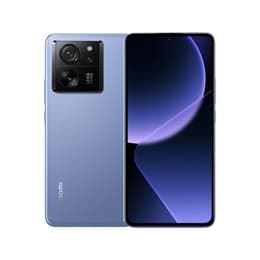


Google Pixel 9 Pro Vs Xiaomi 13T

Google Pixel 9 Pro
Google Pixel 9 Pro
Starting at

Refurbished price:484.00

Versus €1,099.00 new

See options
Xiaomi 13T
Xiaomi 13T
Starting at

Refurbished price:183.00

Versus €630.00 new

See options

Ratings

The Google Pixel 9 Pro, released in late 2024, and the Xiaomi 13T, launched in late 2023, are both advanced smartphones offering distinct user experiences. While the Pixel 9 Pro emphasizes computational photography and extended software support, the Xiaomi 13T focuses on a high-refresh-rate display and Leica-tuned camera system. Both devices operate on the Android platform, providing a wide array of applications and customization options.

Scores

Durability

When considering the long-term usability of these devices, their release timelines and software commitments are key factors.

  • Release Timeline: The Google Pixel 9 Pro was released in September 2024, making it a newer device compared to the Xiaomi 13T, which launched in September 2023. This difference in release date inherently provides the Pixel 9 Pro with a longer potential lifespan for receiving updates.
  • Software Longevity: Google commits to an extensive seven years of operating system updates for the Pixel 9 Pro, ensuring it remains current with the latest Android features and security patches for a considerable period. The Xiaomi 13T offers four generations of Android OS upgrades and five years of security patches, which is also a substantial commitment.
  • Durability Features: The Pixel 9 Pro incorporates Gorilla Glass Victus 2 for screen protection and boasts an IP68 rating for dust and water resistance. Its design also features improvements for repairability, including a dual-entry design for easier access to internal components. The Xiaomi 13T also features an IP68 rating for dust and water resistance and uses Gorilla Glass 5 on its front display.

Year of Release

2024

2023

Compatible with latest Update

Yes

Yes

OS

Android

Android

Foldable

No

No

Performance

Both smartphones are equipped with capable internal components designed to handle daily tasks and more demanding applications efficiently.

  • Processing Power: The Google Pixel 9 Pro is powered by Google's Tensor G4, a chip engineered for advanced on-device artificial intelligence and efficient multitasking, providing a smooth experience across various applications. The Xiaomi 13T utilizes the MediaTek Dimensity 8200-Ultra, which delivers robust performance for gaming and general usage, ensuring applications launch quickly and run without significant delays.
  • Memory and Storage: The Pixel 9 Pro comes with 16GB of RAM, supporting extensive multitasking and ensuring responsiveness even with numerous applications open simultaneously. It offers storage options up to 1TB. The Xiaomi 13T is available with 8GB or 12GB of RAM and typically comes with 256GB of internal storage.
  • Battery Behavior: The Pixel 9 Pro features a 4700 mAh battery, and users frequently report excellent real-world battery life, often extending beyond a full day of moderate to heavy use. The Xiaomi 13T is equipped with a larger 5000 mAh battery, which generally provides sufficient power for a full day of use, with some users noting 10-12 hours of screen-on time.

Memory (GB)

16 GB

8 GB

Screen quality

The visual experience on both devices is delivered through high-quality displays, though with some differences in specifications.

  • Display Technology and Resolution: The Google Pixel 9 Pro features a 6.3-inch Super Actua OLED display with a resolution of 2856 x 1280 pixels, resulting in a high pixel density for sharp and detailed visuals. The Xiaomi 13T sports a slightly larger 6.67-inch AMOLED display with a resolution of 2712 x 1220 pixels, offering clear and vibrant imagery.
  • Brightness and Refresh Rate: The Pixel 9 Pro's display can reach a peak brightness of 3000 nits, making it highly visible even in bright outdoor conditions, and features an adaptive refresh rate that ranges from 1Hz to 120Hz for smooth scrolling and power efficiency. The Xiaomi 13T also offers a bright display with a peak brightness of 2600 nits and an adaptive refresh rate of up to 144Hz, providing a fluid visual experience.
  • Viewing Experience: Both phones offer vibrant colors and deep blacks characteristic of OLED technology. The Pixel 9 Pro's higher pixel density contributes to slightly finer detail, while the Xiaomi 13T's larger screen provides a more expansive viewing area for media consumption.

Resolution

1280 x 2856

1220 x 2712

Screen type

LTPO OLED

AMOLED

Audiovisual

Both smartphones offer advanced camera systems, each with its own approach to photography and videography.

  • Rear Camera System: The Google Pixel 9 Pro is equipped with a versatile triple-camera setup, including a 50MP main sensor, a 48MP ultrawide lens with macro autofocus, and a 48MP telephoto lens capable of 5x optical zoom. The Xiaomi 13T also features a triple-camera system co-engineered with Leica, comprising a 50MP main sensor, a 50MP telephoto lens with 2x optical zoom, and a 12MP ultrawide lens.
  • Photography Features: The Pixel 9 Pro leverages Google's computational photography, offering features like Night Sight, Astrophotography, Portrait Mode, and advanced AI-driven tools such as Video Boost for 8K upscaling and 'Add Me' for group photos. The Xiaomi 13T provides distinct Leica Authentic and Leica Vibrant color modes, allowing users to choose between natural and more vivid color profiles.
  • Video Recording and Audio: The Pixel 9 Pro supports 4K video recording at 60fps and offers 8K video upscaling via its cloud-based Video Boost feature. The Xiaomi 13T can record 4K video at 30fps with its main camera. Both devices include dual stereo speakers for an immersive audio experience.

Main camera

50 megapixels

50 megapixels

Front camera

42 megapixels

20 megapixels

Miscellaneous

Beyond the core specifications, several practical elements contribute to the overall user experience of these devices.

  • Connectivity and Ports: Both the Pixel 9 Pro and Xiaomi 13T support 5G connectivity, ensuring fast mobile data speeds. They also feature modern Wi-Fi standards and Bluetooth for wireless connections. The Pixel 9 Pro uses a USB-C port, which is designed for easier replacement. The Xiaomi 13T also utilizes a USB-C port.
  • Biometric Security: Both smartphones incorporate in-display fingerprint sensors for secure and convenient unlocking. The Pixel 9 Pro also includes face recognition.
  • Design and Handling: The Pixel 9 Pro has dimensions of 152.8 x 72 x 8.5 mm. The Xiaomi 13T measures 162.2mm x 75.7mm x 8.49mm (glass back) and weighs 193g (PU back), making it slightly larger and potentially heavier depending on the variant. The Pixel 9 Pro's build quality is often described as premium.

Weight

199 g

193 g

Screen size (in)

6.3

6.67

Network

5G

5G

SIM card

Physical SIM + eSIM

Dual Physical SIM

Carrier compatibility

Unlocked

Unlocked

Connector

USB-C

USB-C

The Google Pixel 9 Pro and Xiaomi 13T cater to users with slightly different priorities, offering distinct strengths in their respective designs and feature sets.

Users frequently praise the Pixel 9 Pro for its exceptional camera capabilities, particularly its AI-driven features and consistent image quality, even in challenging conditions. Its extended software support is also a significant advantage for those seeking long-term device relevance. Some users have noted that while performance is strong for everyday use, it might not always match the absolute peak benchmarks of some competitors, though this rarely impacts real-world usage. The battery life is consistently highlighted as a strong point, often exceeding a full day of use.

The Xiaomi 13T receives commendation for its vibrant and smooth display, with its 144Hz refresh rate providing a fluid visual experience. Its Leica-tuned camera system is often praised for producing aesthetically pleasing photos with unique color profiles. While its battery capacity is generous, some user feedback suggests that its real-world endurance, especially under heavy gaming, might be considered average compared to some other devices in its category.

Users prioritizing a compact form factor, cutting-edge computational photography with extensive AI features, and the longest possible software support will find the Google Pixel 9 Pro well-suited to their needs. Conversely, individuals who value a larger, high-refresh-rate display, a camera system with distinct color science, and a robust overall performance for a slightly more recent release will likely lean towards the Xiaomi 13T. Both devices represent quality-assured options, and considering a refurbished model can be an eco-friendly alternative for either choice.


See all articles

Our recent comparisons