
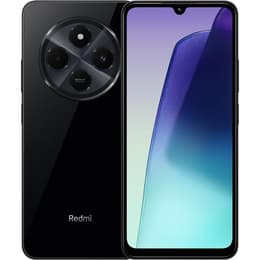


Google Pixel 9 Pro XL Vs Xiaomi Redmi 14C

Google Pixel 9 Pro XL
Starting at

Refurbished price:456.00

Versus €1,298.07 new

See options
Xiaomi Redmi 14C
Xiaomi Redmi 14C
Starting at

Refurbished price:107.00

Versus €189.00 new

See options

Ratings

The Google Pixel 9 Pro XL, released in August 2024, represents a high-end offering in the smartphone market, emphasizing advanced computational photography and a long software support commitment. In contrast, the Xiaomi Redmi 14C, launched around the same period in late 2024, positions itself as an accessible device designed for everyday functionality. These two Android smartphones cater to distinct user needs, with the Pixel focusing on premium features and the Redmi prioritizing core smartphone capabilities.

Scores

Durability

When considering the long-term usability of these devices, their release timelines and software support policies present a clear distinction.

  • Software Longevity: The Google Pixel 9 Pro XL offers an extended software support period, promising seven years of operating system updates, ensuring it remains current until Android 22. This commitment provides a longer practical lifespan for users who prioritize up-to-date features and security.
  • Update Frequency: The Xiaomi Redmi 14C, while running on Android 14 with HyperOS, typically receives a shorter duration of major OS updates, often around two years, with security updates extending to about four years. This means its software will likely reach its end-of-life sooner compared to the Pixel.
  • Physical Durability: The Pixel 9 Pro XL features Gorilla Glass Victus 2 for display protection, contributing to its resilience against drops and scratches. The Redmi 14C generally uses a glass front with a plastic frame and a glass or eco-leather back, offering a more utilitarian build.

Year of Release

2024

2024

Compatible with latest Update

Yes

Yes

OS

Android

Android

Foldable

No

No

Performance

The performance capabilities of the Google Pixel 9 Pro XL and the Xiaomi Redmi 14C are tailored to different usage demands, reflecting their respective market segments.

  • Processing Power: The Pixel 9 Pro XL is equipped with a high-performance processor designed to handle demanding applications, complex multitasking, and advanced AI features smoothly. This results in rapid app loading and fluid navigation even under heavy use. The Redmi 14C, powered by a processor aimed at efficiency, capably manages daily tasks such as browsing, social media, and light gaming, though it may exhibit minor stutters with intensive multitasking.
  • Memory and Storage: The Pixel 9 Pro XL typically comes with a substantial 16GB of RAM, facilitating seamless transitions between numerous open applications and robust performance for memory-intensive tasks. It also offers various storage options up to 1TB. The Redmi 14C offers configurations with 4GB, 6GB, or 8GB of RAM and storage options up to 256GB, with the added flexibility of expandable storage via a microSD card.
  • Battery Behavior: Both devices feature large battery capacities, with the Pixel 9 Pro XL housing a 5060 mAh battery and the Redmi 14C a 5160 mAh battery. The Pixel's optimized software and efficient processor contribute to reliable power management, while the Redmi's less demanding hardware often translates to extended usage times for typical daily activities.

Memory (GB)

16 GB

4 GB

Screen quality

The visual experience offered by these two smartphones differs significantly due to their display technologies and specifications.

  • Display Technology and Clarity: The Google Pixel 9 Pro XL features a 6.8-inch QHD+ LTPO OLED display, providing exceptional clarity, deep blacks, and vibrant colors. This technology allows for a superior viewing experience, especially for high-resolution content. The Xiaomi Redmi 14C utilizes a 6.88-inch HD+ LCD panel, which offers adequate visuals for everyday use but does not match the contrast or color depth of an OLED screen.
  • Brightness and Refresh Rate: The Pixel 9 Pro XL's display can reach a peak brightness of 3,000 nits, ensuring excellent visibility even in bright outdoor conditions, and supports an adaptive refresh rate from 1Hz to 120Hz for smooth scrolling and power efficiency. The Redmi 14C offers a 120Hz refresh rate for fluid motion and a peak brightness of 600 nits, which is suitable for indoor use but may struggle under direct sunlight.
  • Viewing Experience: Users prioritizing a premium, immersive visual experience for media consumption, detailed work, or gaming will find the Pixel 9 Pro XL's display more suitable. The Redmi 14C provides a large screen area that is functional for general browsing and casual media viewing.

Resolution

1344 x 2992

720 x 1640

Screen type

LTPO OLED

IPS LCD

Audiovisual

The camera systems of the Google Pixel 9 Pro XL and the Xiaomi Redmi 14C are designed with different photographic priorities and capabilities.

  • Rear Camera System: The Pixel 9 Pro XL boasts a versatile triple-camera setup, including a 50-megapixel main sensor, a 48-megapixel ultrawide lens, and a 48-megapixel telephoto lens with 5x optical zoom and up to 30x digital zoom. This configuration excels in capturing detailed images across various scenarios, including low-light conditions, and offers advanced video recording capabilities up to 8K at 30 frames per second. The Redmi 14C features a 50-megapixel main camera, often accompanied by an auxiliary lens, providing competent performance for everyday photography in well-lit environments.
  • Front Camera and Audio: For selfies and video calls, the Pixel 9 Pro XL includes a 42-megapixel front camera with autofocus, delivering high-resolution and clear self-portraits. The Redmi 14C is equipped with a 13-megapixel front camera, suitable for standard video calls and casual selfies. The Pixel also features dual stereo speakers for a richer audio experience, while the Redmi provides a standard speaker output.
  • Computational Photography: The Pixel's advanced processor and integrated AI features significantly enhance its photographic output, offering sophisticated image processing and editing tools. The Redmi relies on its sensor and basic software optimizations for image quality.

Main camera

50 megapixels

50 megapixels

Front camera

42 megapixels

13 megapixels

Miscellaneous

Beyond core performance and display, several practical elements differentiate the user experience between these two devices.

  • Connectivity Standards: The Google Pixel 9 Pro XL supports the latest connectivity standards, including 5G for high-speed mobile data, advanced Wi-Fi protocols, and modern Bluetooth versions, ensuring fast and reliable wireless connections. The Xiaomi Redmi 14C offers 4G connectivity, Wi-Fi, and Bluetooth v5.4, which are sufficient for most daily wireless needs, with some variants supporting 5G.
  • Physical Design and Handling: The Pixel 9 Pro XL features a premium build with Gorilla Glass Victus 2 on the front and a refined design, measuring 162.8 x 76.6 x 8.5mm. The Redmi 14C has a slightly larger footprint at 171.88 x 77.80 x 8.22mm and a weight between 204-211 grams, utilizing a glass front with a plastic frame and various back finishes. The Pixel incorporates an ultrasonic under-display fingerprint sensor, while the Redmi typically uses a side-mounted fingerprint sensor.
  • Portability and Sensors: Both devices feature USB-C ports for charging and data transfer. The Pixel includes a comprehensive suite of sensors for advanced functionalities, whereas the Redmi provides essential sensors like an accelerometer, proximity sensor, and compass.

Weight

221 g

207 g

Screen size (in)

6.8

6.88

Network

5G

4G

SIM card

Physical SIM + eSIM

Dual Physical SIM

Carrier compatibility

Unlocked

Unlocked

Connector

USB-C

USB-C

The Google Pixel 9 Pro XL and the Xiaomi Redmi 14C cater to distinct user expectations, reflecting their positions in the smartphone market. Users often praise the Pixel 9 Pro XL for its exceptional camera capabilities, particularly its computational photography features that deliver consistently high-quality images and videos. Its long-term software support is also a significant advantage, ensuring the device remains secure and up-to-date for many years. Some users, however, might find its advanced features more than they require for basic daily use.

The Xiaomi Redmi 14C is frequently lauded for providing a solid smartphone experience for essential tasks. Its large display and substantial battery capacity are often highlighted as strong points for users seeking practicality without extensive advanced features. Criticisms, when they arise, typically relate to its less powerful processor for demanding applications and the display's resolution not matching higher-end devices.

Users prioritizing cutting-edge camera technology, a premium display, and an extended period of software updates will find the Google Pixel 9 Pro XL well-suited to their needs. This device is ideal for photography enthusiasts, power users, and those who value long-term device relevance. Conversely, individuals seeking a reliable device for everyday communication, social media, and casual content consumption, who also appreciate a larger screen and robust battery life, may lean toward the Xiaomi Redmi 14C. It serves as a practical choice for students or users who need core smartphone functions without the added complexities of a flagship device.

For those considering either of these models, exploring quality-assured refurbished options can provide an eco-friendly alternative, offering access to these devices while supporting sustainable consumption.


See all articles

Our recent comparisons