
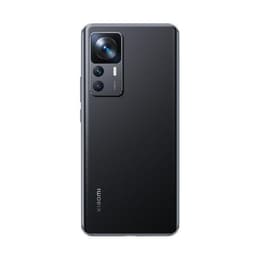


Google Pixel 9 Pro XL Vs Xiaomi 12T

Google Pixel 9 Pro XL
Starting at

Refurbished price:475.00

Versus €1,298.07 new

See options
Xiaomi 12T
Xiaomi 12T
Starting at

Refurbished price:131.00

Versus €649.00 new

See options

Ratings

The Google Pixel 9 Pro XL, released in August 2024, and the Xiaomi 12T, launched in October 2022, represent distinct approaches to the modern smartphone experience. While both devices operate on the Android platform, they cater to different user priorities through their hardware and software philosophies. The Pixel 9 Pro XL emphasizes advanced computational photography and long-term software support, whereas the Xiaomi 12T focuses on high-resolution imaging and rapid charging capabilities.

Scores

Durability

The longevity of a smartphone is influenced by its release timeline, software support, and physical durability. These factors determine how long a device remains functional and secure for daily use.

  • Release Timeline and Age: The Google Pixel 9 Pro XL, launched in August 2024, is a significantly newer device compared to the Xiaomi 12T, which was released in October 2022. This difference in age directly impacts their expected practical lifespan and software support.
  • OS Support Duration: Google offers an extensive seven years of software updates for the Pixel 9 Pro XL, ensuring it will receive updates until Android 22. In contrast, the Xiaomi 12T was promised three major Android OS updates, with Android 15 being its final software version, and four years of security patches. As of March 2026, software support for the Xiaomi 12 series has ended. This means the Pixel 9 Pro XL will benefit from a much longer period of official software and security updates.
  • Physical Durability: The Pixel 9 Pro XL features Corning Gorilla Glass Victus 2 on both its front and back, along with a polished metal frame and an IP68 rating for dust and water resistance. It also incorporates a dual-entry design, which Google claims makes it twice as durable as its predecessor and aids in easier repairs like battery or display replacement. The Xiaomi 12T utilizes Corning Gorilla Glass 5 for its display, a plastic frame, and a glass back, offering an IP53 rating for splash resistance.

Year of Release

2024

2022

Compatible with latest Update

Yes

Yes

OS

Android

Android

Foldable

No

No

Performance

Performance in a smartphone is about more than just raw processing power; it encompasses how smoothly the device handles daily tasks, manages applications, and sustains operation throughout the day.

  • Processor Capabilities: The Google Pixel 9 Pro XL is powered by Google's Tensor G4 processor, designed to optimize AI-driven features and provide responsive performance for demanding applications and multitasking. The Xiaomi 12T features a MediaTek Dimensity 8100-Ultra processor, which delivers efficient performance for everyday use and gaming. Users of the Xiaomi 12T have reported smooth UI and strong performance even with demanding tasks like console emulation.
  • RAM and Storage: The Pixel 9 Pro XL comes with 16GB of RAM, providing substantial capacity for extensive multitasking and future-proofing. It offers storage options ranging from 128GB up to 1TB. The Xiaomi 12T is equipped with 8GB of LPDDR5 RAM and offers 128GB or 256GB of UFS 3.1 internal storage, without support for expandable storage.
  • Battery Behavior: The Pixel 9 Pro XL houses a 5060mAh battery with 37W fast charging support. The Xiaomi 12T features a 5000mAh battery and supports exceptionally fast 120W charging, allowing for very rapid recharges. Users have praised the Xiaomi 12T's battery life, often lasting a full day or more with moderate use.

Memory (GB)

16 GB

8 GB

Screen quality

The display is a primary interface for smartphone interaction, and its quality significantly impacts the user experience, from casual browsing to media consumption.

  • Display Technology and Clarity: The Google Pixel 9 Pro XL features a 6.8-inch LTPO OLED display with a QHD+ resolution (1344 x 2992 pixels), offering sharp visuals and vibrant colors. The Xiaomi 12T has a 6.67-inch AMOLED display with a 1220x2712 (FHD+) resolution, providing clear and colorful visuals. Both displays offer deep blacks characteristic of OLED technology.
  • Brightness and Refresh Rate: The Pixel 9 Pro XL's display can reach a peak brightness of 3000 nits, ensuring excellent visibility even in bright outdoor conditions, and features an adaptive refresh rate from 1Hz to 120Hz for smooth scrolling and power efficiency. The Xiaomi 12T's display has a typical brightness of 500 nits and a 120Hz refresh rate, providing a smooth viewing experience.
  • Viewing Experience: Both devices offer HDR support, enhancing contrast and color for compatible content. The Pixel 9 Pro XL's larger screen and higher resolution contribute to an immersive viewing experience, while the Xiaomi 12T's display is also noted for its vibrant colors and smooth animations.

Resolution

1344 x 2992

1220 x 2712

Screen type

LTPO OLED

AMOLED

Audiovisual

Camera capabilities are a key differentiator for modern smartphones, with both hardware and software playing crucial roles in image and video quality.

  • Rear Camera Systems: The Google Pixel 9 Pro XL features a versatile triple-camera setup, including a 50MP main sensor with optical image stabilization (OIS), a 48MP ultrawide lens with autofocus for macro shots, and a 48MP telephoto lens offering 5x optical zoom. The Xiaomi 12T also has a triple-camera system, led by a 108MP main sensor with OIS, an 8MP ultrawide lens, and a 2MP macro lens.
  • Photography Performance: The Pixel 9 Pro XL is known for its computational photography, delivering high-contrast and vibrant images, with features like Super Res Zoom up to 30x and advanced AI capabilities such as Night Sight and Astrophotography. Users have noted the Pixel's strong performance in decent lighting, though the selfie camera may struggle in low light. The Xiaomi 12T's 108MP main camera performs well in good lighting conditions, but its ultrawide and macro lenses are considered more modest in performance.
  • Video Recording and Features: The Pixel 9 Pro XL supports video recording up to 8K with its Video Boost feature, and 4K as standard, alongside features like Cinematic blur and Audio Magic Eraser. The Xiaomi 12T can record 4K video at 30 frames per second with its main camera. Some users have reported video recording autofocus issues and a shaking effect when walking with the Xiaomi 12T.

Main camera

50 megapixels

108 megapixels

Front camera

42 megapixels

20 megapixels

Miscellaneous

Beyond core performance and display, various practical elements contribute to the overall user experience and device utility.

  • Connectivity and Ports: The Google Pixel 9 Pro XL supports the latest Wi-Fi 7 standard, Bluetooth 5.3, 5G connectivity, and features a USB-C 3.2 port. The Xiaomi 12T offers Wi-Fi 6, Bluetooth 5.3, 5G connectivity, an infrared blaster, and a USB-C 2.0 port.
  • Biometric Security: Both devices include an in-display fingerprint sensor for secure unlocking. The Xiaomi 12T also offers face unlock, which is noted for its speed and effectiveness even in low light.
  • Design and Handling: The Pixel 9 Pro XL has dimensions of 162.8 x 76.6 x 8.5 mm and weighs 221g, featuring a redesigned, boxier shape with flat edges and a matte finish back. The Xiaomi 12T measures 163.1 x 75.9 x 8.6 mm and weighs 202g, with a sleek matte finish on its glass back. Some users find the Xiaomi 12T to be a bit large for one-handed use.

Weight

221 g

220 g

Screen size (in)

6.8

6.67

Network

5G

5G

SIM card

Physical SIM + eSIM

Dual Physical SIM

Carrier compatibility

Unlocked

Unlocked

Connector

USB-C

USB-C

The Google Pixel 9 Pro XL and the Xiaomi 12T offer distinct strengths, appealing to different user needs and preferences. The Pixel 9 Pro XL is frequently praised for its cutting-edge camera capabilities, particularly its advanced AI photography features like Video Boost and Night Sight, which enhance image and video quality significantly. Users also value its extended software support, promising seven years of updates, which contributes to a longer usable lifespan. However, some initial user feedback noted concerns regarding the flat edges and polished metal frame design.

The Xiaomi 12T, on the other hand, receives consistent acclaim for its smooth display, robust performance in daily tasks, and exceptionally fast 120W charging, which allows for very quick battery top-ups. Its battery life is generally considered dependable, often lasting a full day for many users. Criticisms often revolve around its software experience, with some users reporting aggressive background app management and occasional bugs in MIUI. The ultrawide and macro cameras are also sometimes described as modest in performance compared to the main sensor. Additionally, its software support has ended as of March 2026.

Users prioritizing a device with the latest computational photography, long-term software longevity, and a premium build will find the Google Pixel 9 Pro XL well-suited to their needs. Its advanced AI features and extended update policy make it a compelling choice for those seeking a future-proof smartphone experience. Conversely, users who value rapid charging, a vibrant display, and solid everyday performance for a device that has been on the market for a while may lean toward the Xiaomi 12T. It remains a capable device for general use, media consumption, and quick power-ups.

For those considering either of these devices, exploring quality-assured refurbished options can provide an eco-friendly alternative, extending the life cycle of these electronics.


See all articles

Our recent comparisons