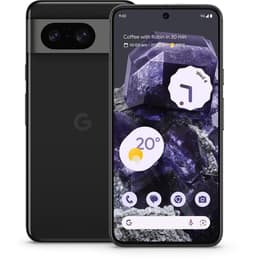


Google Pixel 8a Vs Xiaomi Redmi Note 14 4G

Google Pixel 8a
Google Pixel 8a
Starting at

Refurbished price:232.00

Versus €549.00 new

See options
Xiaomi Redmi Note 14 4G
Starting at

Refurbished price:162.00

Versus €229.99 new

See options

Ratings

The Google Pixel 8A, released in May 2024, and the Xiaomi Redmi Note 14 4G, launched in late 2024 or early 2025, are both contemporary smartphones designed for different user priorities. While the Pixel 8A emphasizes advanced computational photography and extended software longevity, the Redmi Note 14 4G focuses on a larger display, substantial battery capacity, and a high-megapixel main camera. Both devices operate on the Android platform, offering distinct user experiences tailored to their respective ecosystems.

Scores

Durability

The longevity of a smartphone is influenced by its release timeline, software support, and physical durability. These two devices offer different commitments in terms of software updates and physical resilience.

  • Software Support: The Google Pixel 8A offers a notable commitment of seven years of OS and security updates, ensuring the device remains current and secure until at least May 2031. In contrast, the Xiaomi Redmi Note 14 4G is slated to receive four major Android upgrades and six years of security updates, extending its support until 2031. This means the Pixel 8A will likely receive more Android version updates over its lifespan.
  • Physical Durability: The Pixel 8A features Corning Gorilla Glass 3 for screen protection and carries an IP67 rating for dust and water resistance, indicating it can withstand immersion in up to 1 meter of water for 30 minutes. The Redmi Note 14 4G, on the other hand, is equipped with the more recent Corning Gorilla Glass 5 for its display and has an IP54 rating, offering protection against dust and splashes.
  • Expected Practical Lifespan: Users prioritizing the absolute latest Android features for the longest period may find the Pixel 8A's update policy more appealing. For those who value enhanced screen protection against drops, the Redmi Note 14 4G's Gorilla Glass 5 offers a slight advantage.

Year of Release

2024

2025

OS

Android

Android

Foldable

No

No

Performance

Performance in daily use, from app handling to multitasking, is a key consideration, and these devices approach it with different hardware foundations.

  • Processor Capabilities: The Google Pixel 8A is powered by a current-generation processor that enables smooth operation for demanding applications and efficient multitasking. This processor also enhances the device's artificial intelligence features. The Xiaomi Redmi Note 14 4G utilizes a processor that handles everyday tasks and moderate gaming effectively. However, some users have reported occasional lag or stuttering when running very heavy applications or after certain software updates.
  • System Responsiveness and Multitasking: Both devices offer sufficient RAM for competent multitasking. The Pixel 8A, with its optimized software and powerful processor, generally maintains consistent responsiveness even under heavier loads. The Redmi Note 14 4G, while capable, may experience slight performance dips during intensive use or with numerous applications open simultaneously.
  • Storage Options: The Pixel 8A is available with 128GB or 256GB of internal storage. The Redmi Note 14 4G offers 128GB or 256GB storage options and includes the flexibility of expandable storage via a microSDXC card, utilizing a hybrid SIM slot.

Memory (GB)

8 GB

6 GB

Screen quality

The visual experience is central to smartphone interaction, and both models offer vibrant displays with distinct characteristics.

  • Display Technology and Resolution: Both the Google Pixel 8A and the Xiaomi Redmi Note 14 4G feature OLED displays, known for deep blacks and vibrant colors. Both offer a Full HD+ resolution (2400x1080 pixels), providing clear and detailed visuals for typical viewing.
  • Brightness and Refresh Rate: The Pixel 8A's 6.1-inch display boasts a 120Hz refresh rate for smooth scrolling and animations, with a peak brightness of up to 2000 nits, ensuring good visibility outdoors. The Redmi Note 14 4G features a larger 6.67-inch display, also with a 120Hz refresh rate, and a peak brightness of up to 1800 nits (some sources indicate 2100 nits), which also contributes to good outdoor readability.
  • Viewing Experience: The Pixel 8A offers a more compact screen size, which can be beneficial for one-handed use. The Redmi Note 14 4G provides a larger screen, enhancing the immersive experience for media consumption and gaming.

Resolution

1080 x 2400

1080x2400

Audiovisual

Camera capabilities are a significant factor for many users, and these devices offer different approaches to photography and videography.

  • Camera System Configuration: The Google Pixel 8A features a dual-camera system on the rear, comprising a 64-megapixel main sensor with optical image stabilization (OIS) and a 13-megapixel ultrawide lens. It also has a 13-megapixel ultrawide front camera. The Xiaomi Redmi Note 14 4G comes with a triple-camera setup, including a 108-megapixel main sensor with OIS and 3x in-sensor zoom, alongside 2-megapixel macro and 2-megapixel depth sensors. It features a 20-megapixel front camera.
  • Photography Performance: The Pixel 8A is recognized for its computational photography, delivering consistent and natural-looking images across various lighting conditions, including good low-light performance. The Redmi Note 14 4G's 108-megapixel main camera captures sharp and detailed images in good lighting, but its performance in low-light conditions is noted to be less consistent, with some noise. The Redmi Note 14 4G does not include an ultrawide camera.
  • Video and Audio Quality: The Pixel 8A supports 4K video recording at 30 or 60 frames per second. The Redmi Note 14 4G offers decent video quality in good lighting, but some reviews mention a lack of stabilization can lead to shaky footage. Both devices offer stereo speakers, with the Redmi Note 14 4G featuring Dolby Atmos for an enhanced audio experience.

Miscellaneous

Beyond core specifications, several practical features contribute to the overall user experience and daily utility of a smartphone.

  • Connectivity and Ports: The Google Pixel 8A supports 5G connectivity, offering faster mobile data speeds where available. It uses a USB-C port for charging and data transfer. The Xiaomi Redmi Note 14 4G is a 4G-only device, meaning it does not support 5G networks. It also features a USB-C port, a 3.5mm headphone jack, and an infrared (IR) blaster, which allows it to function as a universal remote.
  • Biometrics and Design: Both phones incorporate modern biometric security. The Pixel 8A includes an in-display fingerprint sensor and face recognition. The Redmi Note 14 4G also features an in-display fingerprint sensor and AI Face Unlock. In terms of design, the Pixel 8A has a more compact form factor, weighing 188g, with a matte finish on the back. The Redmi Note 14 4G is larger and slightly heavier at 196.5g, with a design that includes flat edges and a matte back.
  • Additional Features: The Pixel 8A includes wireless charging capabilities, a feature not always present in its segment. The Redmi Note 14 4G offers expandable storage via a hybrid SIM slot, providing flexibility for users who need more space for media and applications.

Weight

188 g

196 g

Screen size (in)

6.1

6.67

Network

5G

4G

SIM card

Physical SIM + eSIM

Physical SIM + eSIM

Carrier compatibility

Unlocked

Unlocked

The Google Pixel 8A and the Xiaomi Redmi Note 14 4G cater to different user needs, each excelling in specific areas. User sentiment for the Pixel 8A often highlights its exceptional camera performance, consistent software experience, and the long-term commitment to updates. Some users note its slower charging speeds as a point of criticism. The Redmi Note 14 4G receives praise for its large, vibrant display, impressive battery life, and the inclusion of features like a headphone jack and expandable storage. However, some users express concerns about its performance under heavy loads, the absence of an ultrawide camera, and its 4G-only connectivity.

Users prioritizing a compact device with a leading camera system, robust software support, and advanced AI features will find the Google Pixel 8A well-suited to their needs. Its extended update policy makes it a strong choice for those who plan to keep their device for many years. Conversely, individuals who value a larger display for media consumption, extended battery life, and the flexibility of expandable storage and a headphone jack may lean towards the Xiaomi Redmi Note 14 4G. Its strong display and battery make it a practical option for everyday use, especially for those who do not require 5G connectivity or advanced photography features.

For those considering either of these devices, exploring quality-assured refurbished options can provide an eco-friendly alternative, offering a sustainable choice without compromising on functionality.
See all articles

Our recent comparisons