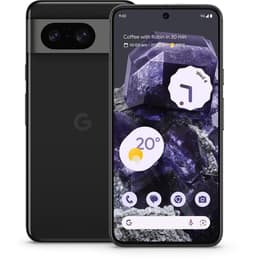
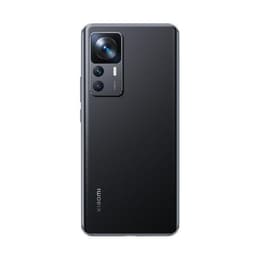


Google Pixel 8a Vs Xiaomi 12T

Google Pixel 8a
Google Pixel 8a
Starting at

Refurbished price:229.00

Versus €489.75 new

See options
Xiaomi 12T
Xiaomi 12T
Starting at

Refurbished price:138.00

Versus €649.00 new

See options

Ratings

The Google Pixel 8A, released in May 2024, and the Xiaomi 12T, launched in October 2022, represent distinct approaches to the smartphone experience. While both operate on the Android platform, they cater to different user priorities through their hardware and software philosophies. The Pixel 8A emphasizes a streamlined Android experience with advanced computational photography and extended software support, whereas the Xiaomi 12T focuses on robust specifications, a larger display, and rapid charging capabilities.

Scores

Durability

The longevity of a smartphone is influenced by its release timeline, software support, and physical resilience. These two devices offer differing outlooks on their practical lifespan.

  • Release Timeline and Software Support: The Google Pixel 8A benefits from a significantly longer software commitment, promising seven years of OS and security updates from its May 2024 release, extending its relevance until at least May 2031. In contrast, the Xiaomi 12T, released in October 2022, was promised three major Android OS updates and four years of security patches, with Android 15 being its final OS version. Recent reports indicate that the Xiaomi 12 series has reached its end-of-life for software support, meaning it will no longer receive HyperOS updates or security patches. This difference means the Pixel 8A will receive updates for several years longer than the Xiaomi 12T.
  • Physical Durability: The Pixel 8A features Corning Gorilla Glass 3 for screen protection and an IP67 rating for dust and water resistance, indicating it can withstand submersion in up to 1 meter of water for 30 minutes. The Xiaomi 12T utilizes Corning Gorilla Glass 5 on its front for enhanced scratch resistance but lacks an official IP rating, suggesting less protection against water and dust ingress.
  • Repairability: The Google Pixel 8A has a repairability score of approximately 4.5 out of 10, with some components like the charging port being challenging to replace due to soldering. While a specific repairability score for the Xiaomi 12T was not readily available, the Xiaomi 12T Pro, a closely related model, received a score of 7.6 out of 10, indicating a comparatively better ease of repair for certain components.

Year of Release

2024

2022

Compatible with latest Update

Yes

Yes

OS

Android

Android

Foldable

No

No

Performance

Both devices are equipped with capable processors designed to handle daily tasks and more demanding applications, though their approaches to performance differ.

  • Processing Power: The Google Pixel 8A is powered by Google's Tensor G3, the same processor found in its higher-end Pixel 8 series. This allows for smooth operation across applications, efficient multitasking, and robust performance in gaming, with users reporting solid performance even during extended use. The Xiaomi 12T features the MediaTek Dimensity 8100-Ultra, which provides strong performance for everyday use and can handle graphically intensive games at high settings, though some users note occasional app stutters.
  • Multitasking and Storage: Both smartphones typically come with 8GB of RAM, enabling efficient multitasking and app switching. The Pixel 8A offers 128GB or 256GB of internal storage, utilizing UFS 3.1 standards. The Xiaomi 12T also provides 128GB or 256GB storage options, using UFS 3.1, ensuring quick app loading and data transfer speeds.
  • Battery Behavior: The Pixel 8A houses a 4492 mAh battery, which generally provides a full day of use for most users, even with moderate to heavy usage. It supports fast wired charging and wireless charging. The Xiaomi 12T is equipped with a larger 5000 mAh battery and is notable for its 120W fast charging capability, allowing for a full charge in a short period. However, some users have reported that despite the large capacity, the battery life can be underwhelming in practice, sometimes only just lasting a full day.

Memory (GB)

8 GB

8 GB

Screen quality

The visual experience on both devices is delivered through high-quality displays, each with specific characteristics that cater to different preferences.

  • Display Technology and Size: The Google Pixel 8A features a 6.1-inch OLED display, known for its deep blacks and vibrant colors. The Xiaomi 12T offers a larger 6.67-inch AMOLED display, also providing rich colors and excellent contrast. The larger screen on the Xiaomi 12T provides a more expansive viewing area for media consumption and gaming.
  • Resolution and Clarity: Both phones offer a Full HD+ resolution, with the Pixel 8A at 1080x2400 pixels and the Xiaomi 12T at 1220x2712 pixels. This results in sharp and clear visuals for everyday tasks, browsing, and media.
  • Brightness and Refresh Rate: The Pixel 8A's OLED panel boasts a peak brightness of 2000 nits, making it highly visible even in bright outdoor conditions. It also features a 120Hz refresh rate for smooth scrolling and animations. The Xiaomi 12T's AMOLED display reaches a peak brightness of 900 nits and also supports a 120Hz refresh rate, providing a fluid visual experience, though its outdoor visibility may not match the Pixel 8A's.

Resolution

1080 x 2400

1220 x 2712

Screen type

OLED

AMOLED

Audiovisual

Both smartphones offer capable camera systems, leveraging their hardware and software to produce quality images and videos.

  • Rear Camera System: The Google Pixel 8A is equipped with a dual-camera setup, featuring a 64MP main sensor with optical image stabilization (OIS) and a 13MP ultrawide lens. Users generally praise the Pixel 8A's camera for its color science and overall image quality, often comparing it favorably to higher-end Pixel models for everyday shots. The Xiaomi 12T features a triple-camera system, led by a 108MP main sensor with OIS, an 8MP ultrawide, and a 2MP macro lens. The 108MP sensor is capable of capturing detailed images, and the camera performs well in various conditions.
  • Photography Performance: The Pixel 8A excels in computational photography, offering features like Best Take, Magic Editor, and Audio Magic Eraser, which enhance photos and videos. It performs well in low-light conditions, producing decent night photos. The Xiaomi 12T also includes a night mode and is noted for producing vibrant and detailed stills with solid dynamic range, though some users find it requires multiple shots to achieve desired results.
  • Video Recording and Front Camera: Both devices support 4K video recording. The Pixel 8A has a 13MP front camera, suitable for high-quality selfies and video calls. The Xiaomi 12T features a 20MP front camera, offering detailed self-portraits.

Main camera

64 megapixels

108 megapixels

Front camera

13 megapixels

20 megapixels

Miscellaneous

Beyond core features, several practical elements contribute to the overall user experience of these devices.

  • Connectivity: Both the Google Pixel 8A and Xiaomi 12T support 5G connectivity for fast mobile data. The Pixel 8A includes Wi-Fi 6E and Bluetooth 5.3. The Xiaomi 12T supports Wi-Fi 6 and Bluetooth 5.3.
  • Ports and Biometrics: Both phones utilize a USB-C port for charging and data transfer. For security, both feature an in-display fingerprint sensor. The Pixel 8A also includes Face Unlock. Neither device includes a traditional 3.5mm headphone jack.
  • Design and Handling: The Pixel 8A has a compact form factor, measuring 152.1 x 72.7 x 8.9mm and weighing 188g, making it comfortable for one-handed use. It features a matte plastic back and slightly more rounded corners. The Xiaomi 12T is larger at 163.1 x 75.9 x 8.6mm and weighs 202g, offering a more substantial feel. It has a glass back with a frosted matte finish and plastic sides.
  • Audio: The Xiaomi 12T is noted for its punchy dual stereo speakers with Dolby Atmos audio, providing a good media consumption experience. Information regarding the Pixel 8A's speaker quality is less prominent in general reviews, but Pixel phones typically offer decent stereo sound.

Weight

188 g

220 g

Screen size (in)

6.1

6.67

Network

5G

5G

SIM card

Physical SIM + eSIM

Dual Physical SIM

Carrier compatibility

Unlocked

Unlocked

The Google Pixel 8A and Xiaomi 12T cater to different user needs, reflecting their respective design philosophies and release timelines. The Pixel 8A is frequently praised for its exceptional camera performance, often delivering results comparable to more premium Pixel devices, and its clean, intuitive Android experience. Users also appreciate its compact size and the industry-leading seven years of software updates, ensuring long-term relevance and security. Some common criticisms include its repairability score being lower than some competitors and its battery life, while generally good, not always standing out against larger-capacity rivals.

The Xiaomi 12T, on the other hand, receives commendation for its large, vibrant display, very fast 120W charging, and solid overall performance for its segment. Its 108MP main camera is also a strong point, capturing detailed images. However, user concerns often revolve around its software update policy, which has now concluded, potentially impacting long-term security and feature access. Some users also report that despite the large battery, real-world endurance can be inconsistent, and its secondary cameras are less impressive than the main sensor.

Users prioritizing a compact device with a class-leading camera, a pure Android experience, and the longest possible software support will find the Google Pixel 8A well-suited to their needs. Those who value a larger display, extremely rapid charging, and robust performance for demanding tasks may lean toward the Xiaomi 12T. Both devices offer compelling features, and considering a quality-assured refurbished option for either model can be a sustainable choice for consumers.


See all articles

Our recent comparisons


