

Google Pixel 8a Vs iPhone 13 mini

Google Pixel 8a
Google Pixel 8a
Starting at

Refurbished price:232.00

Versus €549.00 new

See options
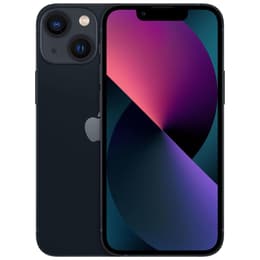
iPhone 13 mini
iPhone 13 mini
Starting at

Refurbished price:214.00

Versus €829.00 new

See options

Ratings

The Google Pixel 8a, released in May 2024, and the iPhone 13 Mini, launched in September 2021, represent distinct approaches to smartphone design and user experience. While the Pixel 8a offers a modern Android experience with a focus on AI-driven features and extended software support, the iPhone 13 Mini provides a compact iOS experience, prioritizing a small form factor and Apple's ecosystem. Both devices cater to users seeking capable smartphones, but they differ significantly in their operating systems, physical dimensions, and core functionalities.

Scores

Durability

When considering the long-term usability of these devices, their release timelines and software support policies are key factors.

  • Software Longevity: The Google Pixel 8a stands out with an impressive commitment to seven years of OS and security updates, extending its support until at least 2031. In contrast, the iPhone 13 Mini, released earlier, typically receives major iOS updates for about five to six years, with security updates continuing for a few more years, likely until 2030 or 2031 for security patches. [2, 22, 28, 33, 34, 38, 40]
  • Repairability: The repairability of both devices presents challenges. The Pixel 8a has been noted for a relatively low repairability score, partly due to the use of strong adhesives and a charging port soldered to the main board, making certain repairs complex. [11] Similarly, the iPhone 13 Mini's repairability is considered low, involving adhesives, specific tools, and potential difficulties with screen replacements. [13]
  • Practical Lifespan: Given the Pixel 8a's extended software support, it is designed to remain current with the latest features and security for a longer period. The iPhone 13 Mini, while still receiving updates, will reach its end-of-life for major iOS versions sooner, though it will continue to function and receive security patches for several more years. [22, 28, 33, 34, 38, 40]

Year of Release

2024

2021

Compatible with latest Update

Yes

Yes

OS

Android

iOS

Foldable

No

No

Performance

Both smartphones offer capable performance for daily tasks, though they achieve this through different hardware and software optimizations.

  • Processing Power: The Google Pixel 8a is equipped with a current-generation processor, enabling smooth handling of demanding applications, efficient multitasking, and advanced on-device AI features. [5, 21] The iPhone 13 Mini features a powerful chip from its release year, providing a highly responsive user experience across iOS applications and games. [2, 17]
  • Multitasking and Storage: The Pixel 8a typically comes with 8GB of RAM, which contributes to fluid multitasking and app management. [5, 21] The iPhone 13 Mini, with 4GB of RAM, is optimized by iOS to manage applications effectively, offering a smooth experience despite the lower numerical specification. [3, 24, 26] Both devices offer various storage options, with the Pixel 8a available in 128GB and 256GB, and the iPhone 13 Mini offering 128GB, 256GB, and 512GB variants. [3, 5, 9, 17, 19, 24, 26]
  • Battery Behavior: The Pixel 8a houses a larger battery capacity, generally translating to longer usage times for many users. [8, 15, 21] The iPhone 13 Mini, due to its compact size, has a smaller battery, which means heavy users may find themselves needing to charge more frequently, though it offers improved battery life compared to its direct predecessor. [3, 19, 24, 27, 36]

Memory (GB)

8 GB

4 GB

Screen quality

The visual experience on both devices is vibrant, though they differ in size and display characteristics.

  • Display Technology and Clarity: Both the Google Pixel 8a and the iPhone 13 Mini feature OLED displays, which deliver deep blacks and high contrast. The Pixel 8a has a 6.1-inch OLED screen with a 2400x1080 pixel resolution, resulting in sharp images. [4, 5, 9, 16, 25] The iPhone 13 Mini offers a more compact 5.4-inch Super Retina XDR OLED display with a 2340x1080 pixel resolution and a higher pixel density, providing excellent clarity in a smaller form factor. [1, 2, 7, 14, 23, 24]
  • Brightness and Refresh Rate: The Pixel 8a boasts a 120Hz refresh rate, contributing to smoother scrolling and more fluid animations. It also offers a high peak brightness, making it suitable for outdoor visibility. [4, 9, 16, 18, 25] The iPhone 13 Mini features a standard 60Hz refresh rate, which is still smooth for most everyday interactions. Its display also achieves high brightness levels, particularly for HDR content, ensuring good visibility in various lighting conditions. [1, 2, 7, 10, 14, 24]
  • Viewing Experience: The Pixel 8a's larger screen provides a more expansive canvas for media consumption and productivity. The iPhone 13 Mini's smaller display is ideal for one-handed use and those who prefer a highly pocketable device, though some users might find it less immersive for video or gaming. [23, 30]

Resolution

1080 x 2400

1080 x 2340

Screen type

OLED

Super Retina XDR OLED

Audiovisual

Both smartphones offer capable camera systems, each with distinct strengths in capturing photos and videos.

  • Rear Camera Systems: The Google Pixel 8a features a dual-camera setup on the rear, including a 64MP wide-angle primary camera and a 13MP ultrawide camera. [5, 9, 21] The iPhone 13 Mini also has a dual 12MP camera system, comprising a wide lens with sensor-shift optical image stabilization and an ultrawide lens. [7, 14, 19, 24]
  • Photography Performance: The Pixel 8a leverages its computational photography capabilities for detailed images, strong low-light performance, and various AI-enhanced editing features. [9, 18] The iPhone 13 Mini is known for its consistent image quality, accurate color reproduction, and improved low-light performance compared to its predecessors, with the wide camera letting in more light. [10, 19]
  • Video Recording and Audio: The Pixel 8a supports 4K video recording at 30 frames per second. [5] The iPhone 13 Mini offers 4K video recording at up to 60 frames per second and includes Cinematic mode, which provides a shallow depth of field effect. [14, 24, 27] Both devices provide clear audio recording and offer stereo speakers for media playback. [25, 35]

Main camera

64 megapixels

12 megapixels

Front camera

13 megapixels

12 megapixels

Miscellaneous

Beyond core performance, several practical elements differentiate these two devices in daily use.

  • Connectivity and Ports: The Google Pixel 8a supports 5G connectivity, Wi-Fi 6e, and Bluetooth 5.3, utilizing a USB-C 3.2 port for charging and data transfer. [12, 25] The iPhone 13 Mini also supports 5G and Wi-Fi 6, but uses Bluetooth 5.0 and Apple's proprietary Lightning port. [6, 17, 24]
  • Biometrics and Sensors: The Pixel 8a incorporates an under-display optical fingerprint scanner for secure unlocking. [25] The iPhone 13 Mini relies on Face ID, Apple's facial recognition system, for biometric authentication. [3, 24] Both devices include standard sensors like accelerometers, gyroscopes, and ambient light sensors. [24, 25]
  • Design and Handling: The Pixel 8a measures 152.1 x 72.7 x 8.9mm and weighs 188g, featuring a plastic back, aluminum frame, and Gorilla Glass 3 on the front. [9, 25] The iPhone 13 Mini is significantly smaller and lighter at 131.5 x 64.2 x 7.65 mm and 141g, with a Ceramic Shield front, glass back, and aluminum frame, making it exceptionally easy for one-handed use and pocketability. [1, 3, 6, 10, 23, 24, 26]

Weight

188 g

140 g

Screen size (in)

6.1

5.4

Network

5G

5G

SIM card

Physical SIM + eSIM

Physical SIM + eSIM

Carrier compatibility

Unlocked

Unlocked

The Google Pixel 8a and iPhone 13 Mini cater to different user preferences, each excelling in specific areas. Users often praise the Pixel 8a for its advanced camera capabilities, extended software support, and the integration of Google's AI features, which enhance various aspects of the user experience. [18, 22] Some common criticisms might revolve around its design, which, while refined, may not feel as premium as higher-end devices, and its repairability score. [11, 25]

The iPhone 13 Mini is frequently lauded for its exceptionally compact size, making it ideal for one-handed operation and easy portability. Its consistent performance, vibrant OLED display, and capable camera system are also strong points. [19, 30] However, users sometimes note its smaller battery capacity as a limitation for heavy usage and the 60Hz refresh rate as a potential drawback compared to newer devices. [27, 35, 36]

Users prioritizing a long-supported Android device with a focus on computational photography and AI features will find the Google Pixel 8a well-suited to their needs. Its larger screen and higher refresh rate also offer a more modern visual experience. Conversely, users who value a truly compact smartphone with the seamless iOS ecosystem, strong build quality, and reliable performance in a small form factor may prefer the iPhone 13 Mini. Both devices offer a quality-assured refurbished option, providing an eco-friendly alternative for consumers.


See all articles

Our recent comparisons