

Google Pixel 8 Vs iPhone 13 mini

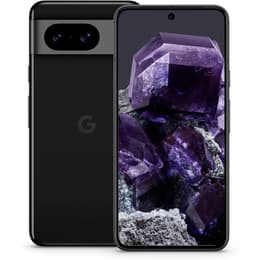
Google Pixel 8
Google Pixel 8
Starting at

Refurbished price:235.00

Versus €999.00 new

See options
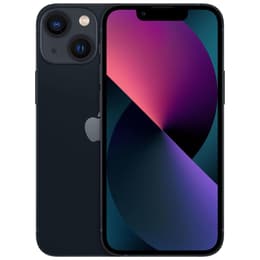
iPhone 13 mini
iPhone 13 mini
Starting at

Refurbished price:228.00

Versus €829.00 new

See options

Ratings

The Google Pixel 8, released in October 2023, and the iPhone 13 Mini, launched in September 2021, represent distinct approaches to smartphone design and user experience. While the Pixel 8 offers a modern Android experience with advanced computational photography and extended software support, the iPhone 13 Mini provides a compact iOS device known for its powerful performance in a smaller form factor. These devices cater to different preferences, particularly concerning operating system, device size, and long-term software commitment.

Scores

Durability

When considering the long-term usability of these devices, their release timelines and software support policies are key differentiators.

  • Release Timeline and OS Support: The Google Pixel 8, being a more recent device from late 2023, benefits from Google's commitment to providing seven years of OS upgrades, security updates, and Feature Drops, extending its support until 2030. This is a significant commitment in the Android ecosystem. In contrast, the iPhone 13 Mini, released in late 2021, typically receives major iOS updates for about five to six years from its launch, with security updates potentially continuing for longer. This means the iPhone 13 Mini is expected to receive major OS updates until around 2026 or 2027.
  • Practical Lifespan and Repairability: Both devices are built with durable materials, with the Pixel 8 featuring Gorilla Glass Victus 2 on the front and Gorilla Glass Victus on the back, alongside an aluminum frame. The iPhone 13 Mini uses Apple's Ceramic Shield on the front and a glass back, also with an aluminum frame. While both offer a degree of physical resilience, the Pixel 8's extended software support suggests a longer period of receiving new features and security patches, which can contribute to a longer practical lifespan for users who prioritize up-to-date software.

Year of Release

2023

2021

Compatible with latest Update

Yes

Yes

OS

Android

iOS

Foldable

No

No

Performance

The performance of a smartphone is crucial for daily tasks, and both the Pixel 8 and iPhone 13 Mini deliver capable experiences, though with different underlying architectures.

  • Processor Capabilities and Responsiveness: The Google Pixel 8 is equipped with a current-generation processor designed by Google, which handles demanding applications and multitasking smoothly, often leveraging advanced AI capabilities for tasks like photo editing and voice commands. Users generally report solid performance for everyday tasks and gaming. The iPhone 13 Mini, powered by a robust chip from its release year, offers strong performance for its compact size, ensuring apps load quickly and the system remains responsive, even with intensive use.
  • Battery Behavior and Storage: The Pixel 8 houses a 4575 mAh battery, which generally provides all-day power for many users, though heavy usage, especially with 5G, can lead to more frequent charging. The iPhone 13 Mini, with its smaller 2438 mAh battery, is noted for its compact size but also for requiring more frequent charging for heavy users due to its capacity. Both devices offer various storage options, typically starting at 128GB, providing ample space for apps, photos, and media.

Memory (GB)

8 GB

4 GB

Screen quality

The visual experience is a significant factor for many users, and these two phones offer distinct display characteristics.

  • Display Technology and Clarity: The Google Pixel 8 features a 6.2-inch Actua OLED display, providing vibrant colors, deep blacks, and a resolution of 1080 x 2400 pixels. The iPhone 13 Mini comes with a 5.4-inch Super Retina XDR OLED display, offering a sharp 1080 x 2340 pixel resolution and excellent clarity in a smaller form factor.
  • Brightness and Refresh Rate: The Pixel 8's display boasts a variable refresh rate of 60-120Hz, contributing to smoother scrolling and a more fluid visual experience, and can reach a peak brightness of up to 2000 nits, making it highly visible in bright outdoor conditions. The iPhone 13 Mini has a standard 60Hz refresh rate, which is less fluid than higher refresh rate displays, and offers a peak brightness of up to 1200 nits, which is still bright enough for most outdoor viewing.

Resolution

1080 x 2400

1080 x 2340

Screen type

OLED

Super Retina XDR OLED

Audiovisual

Both devices are known for their camera capabilities, offering different strengths in photography and videography.

  • Camera System Capabilities: The Google Pixel 8 features a dual-camera system with a 50 MP main sensor (f/1.68) and a 12 MP ultrawide sensor (f/2.2). It is highly praised for its computational photography, delivering impressive photos, especially in low-light conditions, and includes advanced AI features for photo enhancement. The iPhone 13 Mini also has a dual 12 MP camera system, with a main f/1.6 lens and an ultrawide f/2.4 lens, known for capturing high-quality, realistic-color photos and good low-light performance.
  • Video Recording and Audio: Both phones offer strong video recording capabilities. The Pixel 8 supports 4K video recording at various frame rates. The iPhone 13 Mini also records 4K video and includes features like Cinematic mode for depth-of-field effects. For audio, both devices provide clear microphone quality for calls and recording, and offer stereo speaker output for media consumption.

Main camera

50 megapixels

12 megapixels

Front camera

10.5 megapixels

12 megapixels

Miscellaneous

Beyond core features, several practical elements contribute to the overall user experience and differentiate these two smartphones.

  • Connectivity and Ports: The Google Pixel 8 supports modern connectivity standards, including 5G, Wi-Fi 7, and Bluetooth 5.3, and uses a USB-C 3.2 port for charging and data transfer. The iPhone 13 Mini also supports 5G but features Wi-Fi 6 and Bluetooth 5.0, and utilizes Apple's proprietary Lightning port.
  • Physical Design and Sensors: The Pixel 8 measures 150.5 x 70.8 x 8.9 mm and weighs 187 g, offering a comfortable and manageable form factor. It includes an under-display fingerprint scanner and Face Unlock for security. The iPhone 13 Mini is significantly more compact and lighter at 131.5 x 64.2 x 7.65 mm and 141 g, making it one of the smallest full-featured smartphones available. It relies on Face ID for biometric authentication.

Weight

187 g

140 g

Screen size (in)

6,2

5.4

Network

5G

5G

SIM card

Physical SIM + eSIM

Physical SIM + eSIM

Carrier compatibility

Unlocked

Unlocked

Connector

USB-C

Lightning

The Google Pixel 8 and iPhone 13 Mini cater to distinct user preferences, each excelling in different areas. Users frequently praise the Pixel 8 for its exceptional camera system, clean Android experience, and Google's industry-leading commitment to seven years of software updates. Some users note that its battery life can be a concern with heavy usage, and the device may occasionally get warm.

Conversely, the iPhone 13 Mini is widely lauded for its unique compact size, powerful performance within that small footprint, and its capable camera system. Common criticisms often revolve around its smaller battery capacity, which necessitates more frequent charging for active users, and its 60Hz display refresh rate.

Users prioritizing a long-supported Android device with advanced computational photography and a modern, smooth display will find the Google Pixel 8 well-suited to their needs. Its extended software longevity makes it a compelling choice for those who keep their phones for many years. On the other hand, users who value a highly portable, powerful smartphone with the iOS ecosystem and a premium build, and who prefer a device that is easy to use with one hand, may lean towards the iPhone 13 Mini. Its compact design remains a significant draw for a specific segment of the market.

For those considering either of these devices, exploring quality-assured refurbished options can provide an eco-friendly alternative, extending the life cycle of these capable smartphones.
See all articles

Our recent comparisons