
Samsung

Compare models
Differences at a glance
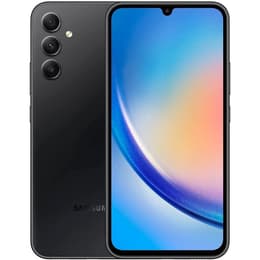
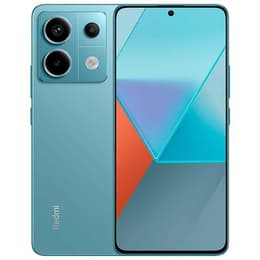
The Samsung Galaxy A34, released in March 2023, and the Xiaomi Redmi Note 13 Pro, launched in January 2024, are both Android smartphones designed for the mid-range market. While both offer robust features for everyday use, they differentiate themselves primarily through their display technology, camera capabilities, and charging speeds. Both devices run on the Android operating system, providing a familiar user experience with their respective custom interfaces.
Colour
Storage
When considering the long-term usability of a smartphone, factors like software support, physical resilience, and ease of repair play a significant role.
Year of Release
Compatible with latest Update
OS
Foldable
Both devices are equipped to handle daily tasks and multitasking efficiently, though they utilize different internal components that influence their overall responsiveness.
The visual experience on both smartphones is a highlight, with both featuring vibrant displays, but they differ in resolution and peak brightness.
Resolution
Screen type
Both smartphones offer capable camera systems, but they approach photography with different sensor configurations and features.
Main camera
Front camera
Beyond core performance, several practical features and design elements contribute to the overall user experience of these smartphones.
Weight
Screen size (in)
Network
SIM card
Carrier compatibility
User feedback for the Samsung Galaxy A34 frequently highlights its excellent battery life, vibrant 120Hz AMOLED display, and Samsung's commitment to long-term software updates as significant advantages. Users also appreciate its IP67 water and dust resistance and capable main camera. Common criticisms include slower charging speeds, the absence of a charger in the box, and a fingerprint reader that some find less responsive.
The Xiaomi Redmi Note 13 Pro is often praised for its higher-resolution 1.5K AMOLED display with impressive peak brightness, its 200-megapixel main camera, and very fast 67W charging, with a charger included. Its design and build quality also receive positive remarks. However, some users note that the auxiliary cameras (ultrawide and macro) do not match the quality of the main sensor, and the device does not offer 4K video recording at 60fps. Concerns about bloatware and the consistency of software updates have also been mentioned.
Users prioritizing extended software support, superior water resistance, and a consistently good overall camera experience may find the Samsung Galaxy A34 well-suited to their needs. Its robust battery life and repairability score also contribute to a practical, long-lasting device. Conversely, users who value a sharper, brighter display, a high-resolution main camera, and significantly faster charging with an included charger might lean towards the Xiaomi Redmi Note 13 Pro. Its more premium build materials and the inclusion of a headphone jack are also notable benefits.
Ultimately, the choice between these two devices depends on individual priorities. Both offer compelling features within the mid-range segment, and considering a quality-assured refurbished option for either model can provide an eco-friendly alternative for consumers.










