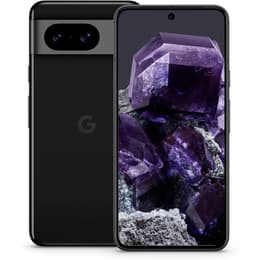
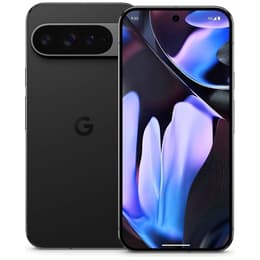


Google Pixel 8 Vs Google Pixel 9 Pro XL

Google Pixel 8
Google Pixel 8
Starting at

Refurbished price:244.00

Versus €819.97 new

See options
Google Pixel 9 Pro XL
Starting at

Refurbished price:423.00

Versus €1,298.07 new

See options

Ratings

The Google Pixel 8, released in October 2023, and the Google Pixel 9 Pro XL, launched in August 2024, represent consecutive generations of Google's flagship smartphone offerings. While both devices operate on the Android platform and share Google's signature software experience, the Pixel 9 Pro XL introduces advancements in display technology, camera capabilities, and overall performance, building upon the foundation set by its predecessor.

Scores

Durability

When considering the longevity of these devices, both the Pixel 8 and Pixel 9 Pro XL benefit from Google's extended software support policy, offering a substantial period of updates.

  • Release Timeline: The Pixel 8 was released in October 2023, while the Pixel 9 Pro XL followed in August 2024, making the latter a newer device with a slightly longer potential lifespan from its initial purchase date.
  • Software Support: Both models are committed to receiving seven years of Android OS upgrades, security updates, and Feature Drops. This means the Pixel 8 will be supported until at least October 2030, and the Pixel 9 Pro XL until at least August 2031, providing extensive software longevity for users.
  • Repairability: The Pixel 8 has received repairability scores ranging from 5.5 to 7 out of 10, indicating moderate ease of repair for some components, though battery removal can be tricky. The Pixel 9 Pro XL features a dual-entry design and a mid-plate for structural rigidity, intended to improve durability and repairability. However, repairability scores for the Pixel 9 Pro XL vary, with some assessments giving it a 3.5 or 5 out of 10, while others suggest an 8.6 out of 10, noting that screen removal can still be delicate.

Year of Release

2023

2024

Compatible with latest Update

Yes

Yes

OS

Android

Android

Foldable

No

No

Performance

Both Pixel devices are powered by Google's custom-designed processors, optimized for the Android experience and AI-driven features, though the newer model offers an expected generational leap in capability.

  • Processing Power: The Pixel 8 utilizes the Google Tensor G3, providing smooth performance for everyday applications and multitasking. The Pixel 9 Pro XL features the Google Tensor G4, which offers enhanced processing capabilities, contributing to a more responsive user experience and improved handling of demanding tasks and advanced AI features.
  • Multitasking and Storage: The Pixel 8 comes with 8GB of RAM and storage options of 128GB or 256GB. The Pixel 9 Pro XL doubles the RAM to 16GB, allowing for more seamless multitasking and future-proofing, with storage options including 128GB, 256GB, and 512GB.
  • Battery Behavior: The Pixel 8 is equipped with a 4575 mAh battery, offering decent battery life for typical daily use, though some users report it as average, with performance improving as adaptive battery features learn usage patterns. The Pixel 9 Pro XL houses a larger 5060 mAh battery, and user reviews frequently highlight its significantly improved battery life, with many reporting multi-day usage for moderate users.

Memory (GB)

8 GB

16 GB

Screen quality

The visual experience on both smartphones is delivered through vibrant OLED displays, though the Pixel 9 Pro XL offers a larger and more advanced panel.

  • Display Technology and Size: The Pixel 8 features a 6.2-inch OLED display with a resolution of 2400x1080 pixels, providing clear visuals. The Pixel 9 Pro XL boasts a larger 6.8-inch LTPO OLED display with a higher resolution of 2992x1344 pixels, offering a more expansive and detailed viewing area.
  • Brightness and Clarity: The Pixel 8's display reaches up to 1400 nits for HDR content and a peak brightness of 2000 nits, ensuring good visibility in various lighting conditions. The Pixel 9 Pro XL further enhances this with a peak brightness of 3000 nits, making it exceptionally bright and easy to view even in direct sunlight.
  • Refresh Rate and Smoothness: The Pixel 8 offers a variable refresh rate between 60Hz and 120Hz, contributing to smooth scrolling and animations. The Pixel 9 Pro XL features an LTPO panel with a variable refresh rate that can scale from 1Hz to 120Hz, providing even smoother motion and potentially better power efficiency by adjusting the refresh rate dynamically.

Resolution

1080 x 2400

1344 x 2992

Screen type

OLED

LTPO OLED

Audiovisual

Google Pixel phones are known for their computational photography, and both models deliver strong camera performance, with the Pixel 9 Pro XL introducing a more versatile hardware setup.

  • Rear Camera System: The Pixel 8 includes a dual-camera setup with a 50MP main wide-angle lens and a 12MP ultrawide lens, capable of capturing detailed photos in various conditions. The Pixel 9 Pro XL upgrades to a triple-camera system, featuring a 50MP main lens, a 48MP ultrawide lens with macro autofocus, and a 48MP telephoto lens offering 5x optical zoom, providing greater flexibility for different photographic scenarios.
  • Low-Light and Video: Both devices excel in low-light photography, leveraging Google's software processing to produce clear and well-exposed images. The Pixel 8 supports 4K video recording at up to 60fps. The Pixel 9 Pro XL enhances video capabilities with support for 8K video recording at 30fps, utilizing cloud-based upscaling, and offers strong stabilization.
  • Front Camera and Audio: The Pixel 8 features a 10.5MP ultrawide front camera. The Pixel 9 Pro XL significantly upgrades the front camera to 42MP with autofocus, providing higher detail for selfies and video calls. Both phones offer good microphone quality for calls and recording, and stereo speakers for media consumption.

Main camera

50 megapixels

50 megapixels

Front camera

10.5 megapixels

42 megapixels

Miscellaneous

Beyond core specifications, several practical elements contribute to the overall user experience and differentiate these two Pixel smartphones.

  • Connectivity and Ports: Both devices support 5G connectivity, Wi-Fi 7 (in most markets), Bluetooth 5.3, and NFC for contactless payments. They both utilize a USB-C port for charging and data transfer, and neither includes a traditional 3.5mm headphone jack.
  • Biometric Security: Both the Pixel 8 and Pixel 9 Pro XL feature an under-display optical fingerprint sensor for secure unlocking. They also offer face recognition for convenient access.
  • Design and Build: The Pixel 8 has dimensions of 150.5 x 70.8 x 8.9 mm and weighs 187g, featuring a glass front and back (Gorilla Glass Victus) with an aluminum frame. The Pixel 9 Pro XL is larger and heavier at 162.8 x 76.6 x 8.5 mm and 221g, also with a premium glass and aluminum build, and Gorilla Glass Victus 2 for enhanced screen durability. Both are IP68 rated for dust and water resistance.

Weight

187 g

221 g

Screen size (in)

6.2

6.8

Network

5G

5G

SIM card

Physical SIM + eSIM

Physical SIM + eSIM

Carrier compatibility

Unlocked

Unlocked

User feedback for the Google Pixel 8 often praises its compact design, smooth software experience, and consistent camera performance, particularly in day-to-day photography. Common criticisms sometimes point to its battery life being merely average for heavy users, and some instances of the device getting warm during intensive tasks.

The Google Pixel 9 Pro XL, on the other hand, receives significant acclaim for its camera system, with users highlighting its versatility and excellent image quality across all lenses. Its battery life is frequently cited as a major improvement, often lasting multiple days for moderate use. While its performance is considered solid and responsive, some users note that its charging speed, while improved, doesn't always reach its advertised maximum, and its larger size and weight can be a consideration for some.

Users prioritizing a more compact form factor and a reliable, well-rounded smartphone experience with excellent software support may find the Google Pixel 8 well-suited to their needs. Those who prioritize a larger, more advanced display, a highly versatile camera system with dedicated telephoto capabilities, and significantly extended battery life will likely lean towards the Google Pixel 9 Pro XL. Both devices offer a long software support window, making them viable choices for extended use. For those seeking an eco-friendly alternative, quality-assured refurbished options for both models can provide a sustainable choice.


See all articles

Our recent comparisons