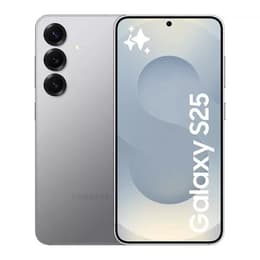
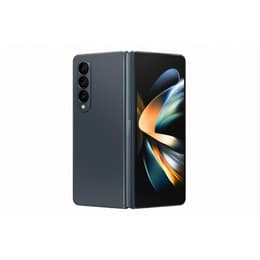


Galaxy S25 Vs Galaxy Z Fold4

Galaxy S25
Galaxy S25
Starting at

Refurbished price:482.00

Versus €910.00 new

See options
Galaxy Z Fold4
Galaxy Z Fold4
Starting at

Refurbished price:433.00

Versus €1,889.00 new

See options

Ratings

The Samsung Galaxy S25, released in early 2025, represents the latest iteration of Samsung's traditional flagship smartphone line, offering a conventional form factor with cutting-edge internal components. In contrast, the Samsung Galaxy Z Fold4, launched in August 2022, stands out with its innovative foldable design, transforming from a compact smartphone into a tablet-sized display. The primary distinction lies in their form factors, with the S25 providing a familiar, streamlined experience and the Z Fold4 offering a versatile, expansive screen for enhanced productivity and media consumption.

Scores

Durability

When considering the long-term usability of these devices, their release timelines and software support are key factors.

  • Release Timeline: The Galaxy S25 was released in February 2025, making it a newer device compared to the Galaxy Z Fold4, which launched in August 2022. This difference in release dates impacts their respective software support cycles.
  • Software Longevity: The Galaxy S25 is expected to receive up to seven years of Android operating system updates, extending its software lifespan significantly further into the future. The Galaxy Z Fold4, having been released earlier, is promised four major Android OS upgrades (up to Android 16) and five years of security updates, with support expected to continue until 2027.
  • Physical Durability: The Galaxy S25 features an aluminum frame and is rated IP68 for dust and water resistance, offering robust protection against environmental elements. The Galaxy Z Fold4, while featuring an Armor Aluminum frame and Gorilla Glass Victus+ on its cover screen and back, has an IPX8 water resistance rating but no official dust resistance due to its folding mechanism. Its inner foldable display, made of Ultra-Thin Glass, is more susceptible to scratches than a traditional glass screen.

Year of Release

2025

2022

OS

Android

Android

Foldable

No

Yes

Performance

The performance capabilities of these two devices are largely influenced by their respective processors and RAM configurations, affecting how smoothly they handle daily tasks and demanding applications.

  • Processing Power: The Galaxy S25 is equipped with a newer generation flagship processor, specifically a customized version of the Qualcomm Snapdragon 8 Elite for Galaxy. This provides enhanced speed and efficiency for running complex applications, high-fidelity games, and intensive multitasking. The Galaxy Z Fold4 utilizes the Qualcomm Snapdragon 8+ Gen 1 processor, which delivers smooth performance for most tasks, but represents an older generation of mobile silicon.
  • Multitasking and Responsiveness: Both devices come with 12GB of RAM, allowing for efficient app switching and background process management. However, the S25's newer processor contributes to an overall snappier and more responsive user experience, particularly in scenarios requiring significant computational power.
  • Battery Behavior: The Galaxy S25 houses a 4000 mAh battery, while the Galaxy Z Fold4 features a 4400 mAh battery. Despite the Z Fold4's larger capacity, its expansive main display can consume more power. Users of the Z Fold4 generally report that the device can last a full day with typical usage, sometimes extending into a second day with moderate use. The S25's newer, more efficient processor and potentially optimized software could lead to comparable or improved real-world battery endurance despite a slightly smaller capacity.

Memory (GB)

12 GB

12 GB

Screen quality

The display experience is a major differentiating factor, with the Galaxy S25 offering a single, high-quality screen and the Galaxy Z Fold4 providing a dual-screen, foldable setup.

  • Display Technology and Clarity: The Galaxy S25 features a 6.2-inch Dynamic AMOLED 2X display with an FHD+ resolution (1080 x 2340 pixels), offering clear and vibrant visuals. The Galaxy Z Fold4 boasts two Dynamic AMOLED 2X displays: a 6.2-inch cover screen (2316 x 904 pixels) and a large 7.6-inch main foldable screen (2176 x 1812 pixels). The main screen of the Z Fold4 provides a tablet-like viewing area, which is beneficial for productivity and media.
  • Brightness and Refresh Rate: Both devices offer adaptive refresh rates up to 120Hz for smooth scrolling and animations. The S25's display can reach a peak brightness of 2600 nits, ensuring good visibility in bright outdoor conditions. The Z Fold4's main display has a peak brightness of 1200 nits, which is still bright for most environments, and its adaptive refresh rate can scale down to 1Hz for power efficiency.
  • Viewing Experience: The S25 provides a traditional, immersive full-screen experience. The Z Fold4's large inner display offers a unique, expansive canvas for multitasking, reading, and watching videos, though the crease in the middle of the foldable screen is still visible, particularly at certain angles.

Resolution

1080x2340

1812 x 2176

Screen type

Dynamic LTPO AMOLED 2X

Foldable Dynamic AMOLED 2X

Audiovisual

Both smartphones offer capable camera systems, but their configurations and potential for user experience differ due to their form factors and generational advancements.

  • Rear Camera Systems: The Galaxy S25 features a triple-camera setup with a 50MP main sensor, a 12MP ultrawide lens, and a 10MP telephoto lens with 3x optical zoom. The Galaxy Z Fold4 also has a triple-camera array, including a 50MP wide-angle camera, a 12MP ultra-wide camera, and a 10MP telephoto camera with 3x optical zoom. The Z Fold4's main camera sensor was an upgrade from its predecessor, offering improved light gathering capabilities.
  • Front-Facing Cameras: The S25 includes a 12MP front camera for selfies and video calls. The Z Fold4 offers a 10MP camera on its cover display and a 4MP under-display camera on its main foldable screen. The under-display camera is designed to be less intrusive but offers lower resolution. A unique feature of the Z Fold4 is the ability to use its high-quality rear cameras for selfies by using the cover screen as a viewfinder.
  • Photography and Video Quality: The S25 benefits from newer computational photography algorithms and potentially minor sensor refinements, which can enhance image processing and low-light performance. The Z Fold4's camera system was noted for its significant improvements over previous Fold models, delivering vibrant and detailed photos, particularly in good lighting. Both devices support high-resolution video recording, with the Z Fold4 capable of 8K at 24fps.

Miscellaneous

Beyond core specifications, several practical elements contribute to the overall user experience and differentiate these two Samsung smartphones.

  • Connectivity and Ports: The Galaxy S25 is expected to support Wi-Fi 7, offering faster and more reliable wireless connections, alongside 5G capabilities. The Galaxy Z Fold4 supports Wi-Fi 6 (ax) and 5G, providing robust connectivity. Both devices feature a USB Type-C port for charging and data transfer.
  • Biometric Security: The S25 likely includes an in-display fingerprint sensor, a common feature in modern flagships. The Z Fold4 integrates a side-mounted fingerprint sensor for secure unlocking. Both also support face recognition.
  • Physical Design and Handling: The Galaxy S25, as a traditional smartphone, is designed for comfortable one-handed use and portability, with dimensions of 146.9 x 70.4 x 7.2 mm. The Galaxy Z Fold4 has a more substantial build due to its folding mechanism, weighing 263g. When folded, it measures 155.1 x 67.1 x 14.2-15.8 mm, and when unfolded, it expands to 155.1 x 130.1 x 6.3 mm, offering a larger screen but requiring two hands for comfortable operation.
  • Stylus Support: The Galaxy Z Fold4 supports the S Pen (Fold Edition or S Pen Pro), which is an optional accessory, enhancing its productivity features for note-taking and drawing on the large inner display. The standard Galaxy S25 does not typically offer S Pen support.

Weight

162 g

263 g

Screen size (in)

6.2

7.6

Network

5G

5G

SIM card

Physical SIM + eSIM

Dual Physical SIM + eSIM

Carrier compatibility

Unlocked

Unlocked

The Samsung Galaxy S25 and Galaxy Z Fold4 cater to different user priorities, each excelling in distinct areas. User sentiment for the Galaxy Z Fold4 often praises its innovative foldable design, which provides a tablet-like experience for multitasking and media consumption. Many users appreciate the enhanced productivity features, such as the ability to run multiple apps simultaneously on the large inner screen. Its improved camera system over previous foldable generations also receives positive remarks for delivering quality photos. However, some common criticisms include the visible crease on the main display and its bulkier, heavier form factor compared to traditional smartphones. Battery life, while generally considered good for a foldable, can be a concern for heavy users due to the large display.

For the Galaxy S25, user praise typically centers on its refined flagship experience, including a powerful and efficient processor, a vibrant display, and a highly capable camera system with the latest computational photography advancements. Its extended software support of up to seven years is a significant advantage for users seeking long-term device longevity. As a newer device, it benefits from the latest technological refinements in a conventional, pocket-friendly design.

Users prioritizing a compact, traditional smartphone experience with the latest performance and extended software support may find the Galaxy S25 well-suited to their needs. Its robust durability rating and streamlined design make it a reliable daily driver. Conversely, users who value an expansive screen for productivity, creative tasks, or immersive media viewing, and are willing to embrace a larger, foldable form factor, may lean toward the Galaxy Z Fold4. It offers a unique blend of smartphone portability and tablet functionality. Both devices, whether new or as quality-assured refurbished options, provide distinct advantages depending on individual preferences and usage patterns.


See all articles

Our recent comparisons