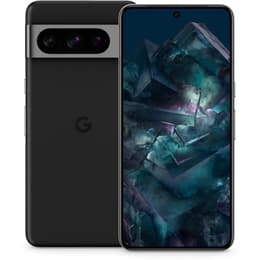
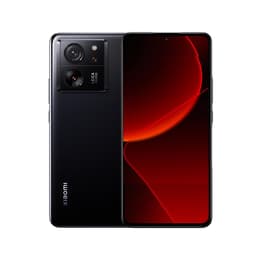


Google Pixel 8 Pro Vs Xiaomi 13T Pro

Google Pixel 8 Pro
Google Pixel 8 Pro
Starting at

Refurbished price:293.00

Versus €1,099.00 new

See options
Xiaomi 13T Pro
Xiaomi 13T Pro
Starting at

Refurbished price:241.00

Versus €900.00 new

See options

Ratings

The Google Pixel 8 Pro (released October 2023) and the Xiaomi 13T Pro (released September 2023) are contemporary Android smartphones that offer distinct approaches to the premium mobile experience. While both devices run on the Android operating system, they differentiate themselves through their camera philosophies, software support commitments, and overall hardware priorities.

Scores

Durability

When considering the long-term usability of a smartphone, factors like software support, physical resilience, and ease of maintenance play a significant role.

  • Software Longevity: The Google Pixel 8 Pro stands out with an extensive commitment to software updates, promising seven years of operating system and security updates from its release. The Xiaomi 13T Pro offers four major Android updates and five years of security patches, providing a solid, though shorter, support period.
  • Physical Durability: Both devices feature an IP68 rating for dust and water resistance, indicating a high level of protection against environmental elements. The Pixel 8 Pro uses Corning Gorilla Glass Victus 2 for screen protection, while the Xiaomi 13T Pro features Corning Gorilla Glass 5.
  • Repairability Considerations: The Google Pixel 8 Pro has been noted to have a repairability score of 4.0 out of 10, with challenges identified in battery and screen replacement, and a soldered charging port. Modern smartphones, including the Xiaomi 13T Pro, often present similar challenges due to intricate designs and the use of strong adhesives, making professional repair generally recommended.

Year of Release

2023

2023

Compatible with latest Update

Yes

Yes

Foldable

No

No

Performance

Both the Google Pixel 8 Pro and the Xiaomi 13T Pro are equipped with powerful internal components designed to handle demanding applications and multitasking.

  • Processing Power: The Pixel 8 Pro features a current-generation processor that delivers a snappy and fluid user interface, capable of handling most daily tasks and demanding applications smoothly. The Xiaomi 13T Pro is powered by a high-performance processor that ensures quick app launches and a responsive experience, even with graphically intensive games, though some users report potential throttling during extended heavy use.
  • Memory and Storage: The Pixel 8 Pro typically comes with 12GB of RAM, providing ample capacity for multitasking. Storage options range from 128GB up to 1TB. The Xiaomi 13T Pro offers configurations with 12GB or 16GB of RAM, paired with storage options from 256GB up to 1TB, utilizing fast UFS 4.0 storage.
  • Battery Performance: The Pixel 8 Pro includes a 5050 mAh battery, which generally provides a full day of use for average users, though heavy usage may necessitate daily charging. The Xiaomi 13T Pro houses a 5000 mAh battery, with user experiences suggesting it offers above-average endurance. A notable difference is the Xiaomi 13T Pro's 120W wired fast charging, capable of fully charging the device in approximately 19 minutes, while the Pixel 8 Pro supports 30W wired charging.

Memory (GB)

12 GB

12 GB

Screen quality

The visual experience on both devices is delivered through high-quality displays, each offering vibrant colors and smooth interactions.

  • Display Technology and Resolution: The Google Pixel 8 Pro features a 6.7-inch LTPO OLED display with a QHD+ resolution (2992x1344 pixels), resulting in a sharp and detailed image. The Xiaomi 13T Pro sports a 6.67-inch AMOLED display with a 1.5K resolution (2712x1220 pixels), also providing a clear viewing experience.
  • Brightness and Clarity: Both phones offer impressive brightness levels, with the Pixel 8 Pro reaching a peak brightness of 2400 nits and the Xiaomi 13T Pro achieving 2600 nits. This high brightness ensures good visibility even in bright outdoor conditions. Both displays support HDR content, enhancing contrast and color depth.
  • Refresh Rate and Smoothness: The Pixel 8 Pro's display has an adaptive refresh rate that can scale from 1Hz to 120Hz, optimizing power consumption while providing smooth scrolling and animations. The Xiaomi 13T Pro offers a slightly higher maximum refresh rate of 144Hz, contributing to an exceptionally fluid visual experience.

Resolution

1344 x 2992

1220 x 2712

Screen type

LTPO OLED

AMOLED

Audiovisual

Both smartphones offer advanced camera systems, but they approach photography with different strengths and features.

  • Rear Camera Systems: The Google Pixel 8 Pro is equipped with a versatile triple camera setup, including a 50 MP main sensor with optical image stabilization (OIS), a 48 MP telephoto lens offering 5x optical zoom with OIS, and a 48 MP ultrawide lens with OIS and autofocus. The Xiaomi 13T Pro features a Leica-tuned triple camera system, comprising a 50 MP main sensor with OIS, a 50 MP telephoto lens with 2x optical zoom, and a 12 MP ultrawide lens.
  • Photography Performance: The Pixel 8 Pro is widely praised for its detailed photos, excellent night mode capabilities, and strong dynamic range, often leveraging its computational photography. The Xiaomi 13T Pro delivers sharp photos with good dynamic range and offers various Leica-tuned color profiles, providing a versatile shooting experience. Some users have noted that the Xiaomi's camera software may not always fully utilize the hardware's potential, and autofocus can occasionally be inconsistent.
  • Video and Front Camera: The Pixel 8 Pro supports 4K video recording at up to 60 frames per second and features a 10.5 MP front camera with autofocus. The Xiaomi 13T Pro can record 8K video at 24 frames per second and 4K at up to 60 frames per second, and it includes a 20 MP front camera. Both devices offer stereo speakers for media consumption, with the Xiaomi 13T Pro's speakers noted for their powerful output.

Main camera

50 megapixels

50 megapixels

Front camera

10.5 megapixels

20 megapixels

Miscellaneous

Beyond core performance, several practical features and design elements contribute to the overall user experience of these devices.

  • Connectivity and Ports: Both phones support 5G connectivity for fast mobile data. The Xiaomi 13T Pro includes support for the newer Wi-Fi 7 standard and Bluetooth 5.4, while the Pixel 8 Pro supports current Wi-Fi standards (likely Wi-Fi 6/6E) and Bluetooth. Both devices use a USB-C port for charging and data transfer. The Xiaomi 13T Pro also features an infrared (IR) blaster, allowing it to function as a universal remote control.
  • Biometrics and Sensors: Both smartphones incorporate in-screen fingerprint sensors for secure unlocking. The Pixel 8 Pro also offers advanced face recognition. A unique feature on the Pixel 8 Pro is a temperature sensor, though its practical utility has been questioned by some users.
  • Design and Build: The Pixel 8 Pro measures 162.6 x 76.5 x 8.8 mm and weighs 213 grams, featuring a matte back glass that resists smudges. The Xiaomi 13T Pro has dimensions of 162.2 x 75.7 x 8.49 mm (glass) or 8.62 mm (vegan leather) and weighs 200g or 206g, offering a choice of glass or a grippy vegan leather finish. Both devices have an IP68 rating for dust and water resistance.

Weight

213 g

200 g

Screen size (in)

6.7

6.67

Network

5G

5G

SIM card

Physical SIM + eSIM

Physical SIM + eSIM

Carrier compatibility

Unlocked

Unlocked

The Google Pixel 8 Pro and the Xiaomi 13T Pro each present a compelling package for different user priorities. Users often praise the Pixel 8 Pro for its exceptional camera capabilities, particularly its computational photography, and its commitment to an extended period of software updates. Its clean Android experience and AI-driven features are also frequently highlighted as strong points. However, some users have noted that its battery life, while adequate, is not class-leading, and some have experienced modem performance issues or occasional app lag.

The Xiaomi 13T Pro receives commendation for its vibrant and smooth display, remarkably fast wired charging, and robust overall performance. Its Leica-tuned camera system is appreciated for its versatility and sharp output, though some feedback suggests the software processing could be further refined. Common criticisms include the absence of wireless charging and potentially aggressive battery optimizations.

Users prioritizing a long-term software commitment, a highly refined camera experience with advanced computational photography, and a clean Android interface may find the Google Pixel 8 Pro well-suited to their needs. Conversely, individuals who value ultra-fast charging, a high refresh rate display, and strong raw performance for gaming and demanding tasks might lean towards the Xiaomi 13T Pro. Both devices offer a quality-assured refurbished option, providing a sustainable choice for consumers.


See all articles

Our recent comparisons