

Google Pixel 8 Pro Vs Xiaomi 12T

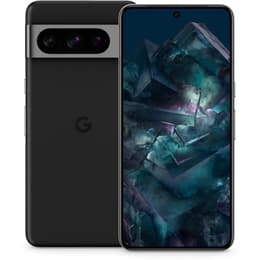
Google Pixel 8 Pro
Google Pixel 8 Pro
Starting at

Refurbished price:293.00

Versus €1,099.00 new

See options
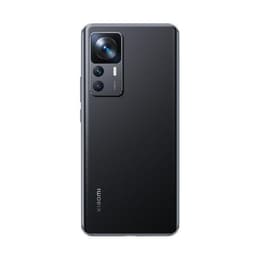
Xiaomi 12T
Xiaomi 12T
Starting at

Refurbished price:138.00

Versus €649.00 new

See options

Ratings

The Google Pixel 8 Pro, released in October 2023, and the Xiaomi 12T, launched in October 2022, are both Android smartphones offering distinct user experiences. While the Pixel 8 Pro emphasizes advanced computational photography and long-term software support, the Xiaomi 12T focuses on rapid charging capabilities and a high-resolution main camera. Both devices operate on the Android platform, with the Pixel 8 Pro launching with Android 14 and the Xiaomi 12T initially running Android 12 with MIUI 13.

Scores

Durability

When considering the longevity of these devices, their release timelines and software support policies are key factors. The Pixel 8 Pro, being a more recent release, benefits from an extended support window, while the Xiaomi 12T, released a year prior, has a shorter guaranteed update period.

  • Software Longevity: The Google Pixel 8 Pro is notable for its commitment to seven years of OS updates, security updates, and feature drops, offering a significantly longer software lifespan. In contrast, the Xiaomi 12T typically receives three years of OS updates and four years of security updates.
  • Repairability: The Pixel 8 Pro has a moderate repairability score, with some teardowns indicating a score of 4.0 out of 10 due to strong adhesives and soldered components, though Google's provision of parts and manuals contributes to a higher overall Pixel line repairability rating of 6 out of 10. The Xiaomi 12T's repairability is not as widely documented, but its construction with a Gorilla Glass 5 front, glass back, and plastic frame suggests a standard approach to modern smartphone assembly.
  • Physical Durability: The Pixel 8 Pro features IP68 water and dust resistance and Gorilla Glass Victus 2 on the back, indicating a high level of protection against environmental elements and drops. The Xiaomi 12T offers IP53 dust and splash resistance and Gorilla Glass 5 on the front, providing a more basic level of protection.

Year of Release

2023

2022

Compatible with latest Update

Yes

Yes

Foldable

No

No

Performance

The performance of both smartphones is influenced by their internal components, impacting how smoothly they handle daily tasks and demanding applications. While both offer capable performance, their approaches to processing power and battery management differ.

  • System Responsiveness: The Google Pixel 8 Pro delivers a very quick and smooth experience for everyday processes, with users reporting rare slowdowns or bogged-down performance. The Xiaomi 12T, powered by its current-generation processor, provides superb performance for its class, handling demanding applications and multitasking effectively.
  • Battery Behavior: The Pixel 8 Pro is equipped with a 5050 mAh battery, and many users report it provides all-day battery life, though heavy usage might require more frequent charging. The Xiaomi 12T features a 5000 mAh battery, which, despite its large capacity, some users have found to offer underwhelming battery life, especially with the high refresh rate display enabled.
  • Storage and RAM: The Pixel 8 Pro comes with 12GB of RAM and offers storage options up to 1TB in some regions, ensuring ample space and smooth multitasking. The Xiaomi 12T is available with 8GB of RAM and up to 256GB of internal storage, which is sufficient for most users but offers less headroom for extensive app usage or large media libraries.

Memory (GB)

12 GB

8 GB

Screen quality

The visual experience on both devices is a primary consideration, with each offering a high-quality display tailored for different viewing preferences and conditions.

  • Display Technology and Clarity: The Google Pixel 8 Pro features a 6.7-inch LTPO OLED display with a resolution of 2992x1344 pixels, offering deep blacks and vibrant colors. The Xiaomi 12T sports a 6.67-inch AMOLED display with a resolution of 2712x1220 pixels, which Xiaomi refers to as CrystalRes AMOLED, providing clear visuals.
  • Brightness and Outdoor Visibility: The Pixel 8 Pro's display can reach a peak brightness of up to 2400 nits, making it highly visible even in direct sunlight. The Xiaomi 12T has a peak brightness of 900 nits, which allows for good outdoor usability.
  • Refresh Rate and Smoothness: Both phones offer a 120Hz adaptive refresh rate for smooth scrolling and fluid animations. The Pixel 8 Pro's display can dynamically adjust from 1Hz to 120Hz, optimizing power consumption. The Xiaomi 12T's 120Hz refresh rate also adapts to content to conserve battery.

Resolution

1344 x 2992

1220 x 2712

Screen type

LTPO OLED

AMOLED

Audiovisual

Both smartphones offer advanced camera systems, but they approach photography with different strengths, catering to varied user needs and preferences.

  • Rear Camera System: The Google Pixel 8 Pro features a versatile triple camera setup including a 50MP main sensor, a 48MP ultrawide lens, and a 48MP telephoto lens with 5x optical zoom. This system is praised for its computational photography, producing natural colors and excellent dynamic range, especially in low light. The Xiaomi 12T comes with a 108MP main camera, an 8MP ultrawide, and a 2MP macro lens. Its main sensor delivers vibrant and detailed photos, particularly in good lighting.
  • Low-Light and Zoom Performance: The Pixel 8 Pro excels in low-light conditions with its Night Sight mode, maintaining detail and color accuracy. Its telephoto lens offers consistent results across its zoom range, with 5x optical zoom and up to 30x Super Res Zoom. The Xiaomi 12T's main camera also performs well in low light, aided by OIS, but its secondary ultrawide and macro lenses are less capable.
  • Video Recording and Front Camera: The Pixel 8 Pro supports 4K video recording at 60 frames per second on both its rear and front cameras, with improved stabilization and audio quality. Its front camera is 10.5MP with autofocus. The Xiaomi 12T records 4K video at 30 frames per second with its rear camera and 1080p at 60 frames per second with its 20MP front camera.

Main camera

50 megapixels

108 megapixels

Front camera

10.5 megapixels

20 megapixels

Miscellaneous

Beyond core performance and display, several practical features and design elements differentiate these two devices, influencing daily usability and overall experience.

  • Connectivity and Ports: The Google Pixel 8 Pro supports the latest Wi-Fi 7 standard, 5G connectivity, and Bluetooth 5.3, along with a USB 3.2 Type-C port. The Xiaomi 12T offers Wi-Fi 6, 5G, Bluetooth 5.3, NFC, and a USB-C port.
  • Biometric Security: Both phones feature an in-display fingerprint sensor for secure unlocking. The Pixel 8 Pro also includes Face Unlock, which meets the highest Android security level.
  • Design and Handling: The Pixel 8 Pro has dimensions of 162.6 x 76.5 x 8.8 mm and weighs 213g, featuring an aluminum frame and Gorilla Glass Victus 2 back. The Xiaomi 12T measures 163.1 x 75.9 x 8.6 mm and weighs 202g, with a glass back and a plastic frame. The Pixel 8 Pro's rounded corners contribute to a comfortable grip.

Weight

213 g

220 g

Screen size (in)

6.7

6.67

Network

5G

5G

SIM card

Physical SIM + eSIM

Dual Physical SIM

Carrier compatibility

Unlocked

Unlocked

User feedback for the Google Pixel 8 Pro frequently highlights its exceptional camera capabilities, particularly its computational photography and low-light performance. Users also appreciate its smooth software experience and convenient AI-driven features like call screening. However, some criticisms include reports of average battery life for heavy users, occasional overheating, and minor software bugs.

The Xiaomi 12T is often praised for its vibrant AMOLED display and its powerful main camera, which delivers detailed and colorful images. Its rapid 120W wired charging is a significant advantage, allowing for very quick power-ups. Conversely, common concerns include the less capable secondary cameras (ultrawide and macro), and some users find the battery life to be underwhelming despite the large capacity.

Users prioritizing a long-term software commitment, advanced photography features, and a premium build with high durability will find the Google Pixel 8 Pro well-suited to their needs. Those who value extremely fast charging, a high-resolution main camera, and a smooth display for media consumption may lean toward the Xiaomi 12T. Both devices offer a quality-assured refurbished option, providing an eco-friendly alternative for consumers seeking reliable technology. Ultimately, the choice depends on individual priorities regarding software longevity, camera versatility, and charging speed.


See all articles

Our recent comparisons