

Compare models
Google Pixel 8 Pro Vs iPhone 15 Plus
- 1-year minimum warranty
- Free delivery on all orders
- Free 30-day returns
Differences at a glance
The Google Pixel 8 Pro, released in October 2023, and the iPhone 15 Plus, launched in September 2023, are contemporary large-screen smartphones from their respective manufacturers. While both offer robust performance and advanced camera systems, they diverge significantly in their operating systems and approach to user experience. The Pixel 8 Pro runs on Android, emphasizing AI-driven features and extensive software support, whereas the iPhone 15 Plus operates on iOS, focusing on a refined ecosystem and integrated hardware-software experience.
Available Models
Colour
Storage (GB)
Scores
Durability
When considering the longevity of these devices, both the Google Pixel 8 Pro and the iPhone 15 Plus offer substantial software support and durable designs, though with different approaches.
- Software Longevity: The Google Pixel 8 Pro stands out with a commitment to seven years of operating system and security updates from its October 2023 release, providing an extended period of feature and security support. The iPhone 15 Plus, released in September 2023, typically receives iOS updates for approximately five to six years, ensuring a long but slightly shorter update cycle compared to the Pixel.
- Physical Durability: Both devices feature robust construction. The Pixel 8 Pro incorporates Gorilla Glass Victus 2 for screen protection and an aluminum frame with a matte glass back. The iPhone 15 Plus utilizes a Ceramic Shield front cover and an aluminum design with a color-infused glass back, offering strong resistance to everyday wear. Both are rated IP68 for dust and water resistance.
- Repairability: The Pixel 8 series generally receives higher repairability scores, with some assessments placing it around 7 out of 10, partly due to Google providing public service manuals and OEM replacement parts. The iPhone 15 Plus typically scores lower, around 4 out of 10, often attributed to Apple's parts pairing practices which can complicate independent repairs.
Year of Release
2023
2023
Compatible with latest Update
Yes
Yes
Foldable
No
No
Performance
Both the Google Pixel 8 Pro and the iPhone 15 Plus are designed to deliver smooth and efficient performance for daily tasks and demanding applications, though they achieve this through different hardware and software optimizations.
- Processing Power: The Pixel 8 Pro handles demanding apps and multitasking smoothly, leveraging its custom-designed processor with a focus on AI and machine learning capabilities for enhanced features. The iPhone 15 Plus provides a highly responsive user experience, efficiently managing complex operations and graphics-intensive tasks, benefiting from its integrated hardware and software design.
- Multitasking and Responsiveness: The Pixel 8 Pro comes with 12GB of RAM, contributing to fluid multitasking and quick app switching. The iPhone 15 Plus features 6GB of RAM, which, combined with iOS's memory management, ensures a consistently smooth and responsive interface for most users.
- Storage Options: The Pixel 8 Pro offers a range of internal storage from 128GB up to 1TB, with the 1TB option being region-specific. The iPhone 15 Plus is available with 128GB, 256GB, or 512GB of internal storage. Neither device supports expandable storage via microSD cards.
- Battery Behavior: The Pixel 8 Pro is equipped with a 5050 mAh battery, generally providing over 24 hours of use on a single charge. The iPhone 15 Plus features a 4383 mAh battery, known for its strong endurance that can comfortably last through a full day for many users.
Screen quality
Both smartphones offer large, vibrant displays that provide an immersive viewing experience, but they differ in their underlying technology and refresh rate capabilities.
- Display Technology and Clarity: The Google Pixel 8 Pro features a 6.7-inch LTPO OLED display with a resolution of 1344 x 2992 pixels, resulting in a sharp 489 pixels per inch. This display, marketed as Super Actua, offers deep blacks and rich colors. The iPhone 15 Plus also has a 6.7-inch Super Retina XDR OLED display, providing a resolution of 2796 x 1290 pixels at 460 pixels per inch, known for its vibrant colors and excellent contrast.
- Brightness and Outdoor Visibility: The Pixel 8 Pro's display can reach a peak brightness of up to 2400 nits, ensuring good visibility even in bright outdoor conditions. The iPhone 15 Plus offers a peak outdoor brightness of up to 2000 nits, also providing clear viewing under direct sunlight.
- Refresh Rate and Smoothness: A key difference lies in the refresh rate. The Pixel 8 Pro features an adaptive refresh rate that can vary from 1 Hz to 120 Hz, allowing for smoother scrolling and more fluid animations while conserving battery life. The iPhone 15 Plus maintains a standard 60 Hz refresh rate, which provides a consistent experience but does not offer the same level of visual fluidity as a higher refresh rate display.
Resolution
1344 x 2992
1290 x 2796
Screen type
LTPO OLED
Super Retina XDR OLED
Audiovisual
Both the Google Pixel 8 Pro and the iPhone 15 Plus are equipped with advanced camera systems designed to capture high-quality photos and videos, each with distinct strengths and computational photography features.
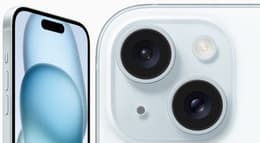
- Rear Camera Systems: The Pixel 8 Pro boasts a versatile triple-camera setup, including a 50 MP main sensor, a 48 MP ultrawide lens with macro capabilities, and a 48 MP telephoto lens offering 5x optical zoom. This system is noted for its enhanced light sensitivity and advanced computational photography. The iPhone 15 Plus features a dual-camera system with a 48 MP main sensor that defaults to 24 MP high-resolution photos and enables a 2x optical-quality telephoto zoom, alongside a 12 MP ultrawide lens.
- Photography Features: The Pixel 8 Pro offers extensive manual controls, including ISO, shutter speed, and manual focus, along with AI-powered tools like Magic Editor, Audio Magic Eraser, and Best Take. It also features Real Tone for accurate skin representation and Night Sight for improved low-light performance, including for video. The iPhone 15 Plus excels with features like Photonic Engine, Deep Fusion, and Smart HDR 5 for detailed and vibrant images. It also offers next-generation portraits with depth control, Night mode, Cinematic mode for video, and Action Mode for stabilized footage.
- Front Camera and Audio: The Pixel 8 Pro includes a 10.5 MP front camera with autofocus. The iPhone 15 Plus features a 12 MP TrueDepth front camera with autofocus and Focus Pixels. Both devices provide quality microphone performance for calls and recordings, and their stereo speakers offer a good media consumption experience.
Main camera
50 megapixels
48 megapixels
Front camera
10.5 megapixels
12 megapixels
Miscellaneous
Beyond core performance and camera capabilities, several practical elements differentiate the user experience of the Google Pixel 8 Pro and the iPhone 15 Plus.
- Connectivity and Ports: Both devices support 5G connectivity, including sub-6 GHz and mmWave bands, and feature Bluetooth 5.3. The Pixel 8 Pro supports Wi-Fi 6E, with some reports indicating Wi-Fi 7 support, while the iPhone 15 Plus uses Wi-Fi 6. A notable change for the iPhone 15 Plus is the adoption of a USB-C port, aligning it with the Pixel 8 Pro, which also uses USB-C. Neither device includes a 3.5mm headphone jack.
- Biometric Security and Sensors: The Pixel 8 Pro features an optical under-display fingerprint sensor for secure unlocking, along with a unique skin temperature thermometer. The iPhone 15 Plus relies on Face ID for facial recognition and secure authentication. Both phones include standard sensors like accelerometers, gyroscopes, and barometers.
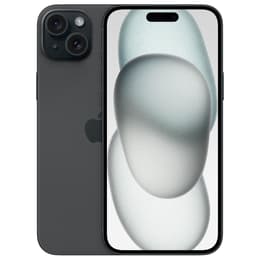
- Design and Handling: The Pixel 8 Pro measures 162.6 x 76.5 x 8.8 mm and weighs 213 g, featuring a polished aluminum frame and a matte glass back. The iPhone 15 Plus is slightly more compact and lighter at 160.9 x 77.8 x 7.8 mm and 201 g, with an aluminum design and a color-infused glass back. The iPhone 15 Plus also introduces the Dynamic Island, an interactive area around the front camera cutout for alerts and live activities.
Weight
213 g
201 g
Screen size (in)
6.7
6.7
Network
5G
5G
SIM card
Physical SIM + eSIM
Physical SIM + eSIM
Carrier compatibility
Unlocked
Unlocked
What the community thinks
The Google Pixel 8 Pro and the iPhone 15 Plus each offer compelling smartphone experiences, catering to different user preferences through their distinct ecosystems and feature sets. User feedback often praises the Pixel 8 Pro for its exceptional camera capabilities, particularly its advanced computational photography features and the long-term commitment to software updates. Its AI-driven functionalities and unique sensors, like the thermometer, are also frequently highlighted. However, some users have noted occasional cellular connectivity issues.
The iPhone 15 Plus is commonly lauded for its seamless integration within the Apple ecosystem, its robust and elegant design, and its consistently strong battery life. The introduction of the Dynamic Island and the shift to USB-C have been well-received upgrades. A frequent point of discussion, however, is its standard 60 Hz display refresh rate, which some users find less fluid compared to devices with higher refresh rates.
Users prioritizing an extensive software support timeline, advanced AI camera features, and a highly customizable Android experience may find the Google Pixel 8 Pro to be a well-suited choice. Conversely, individuals who value a highly integrated ecosystem, a consistent user interface, and a strong focus on video capabilities might lean towards the iPhone 15 Plus. Both devices represent quality-assured options, and considering a refurbished model can be an eco-friendly alternative for either choice.