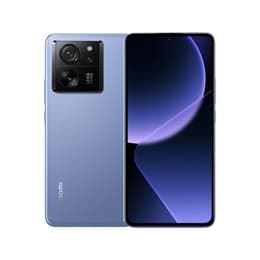


Google Pixel 7A Vs Xiaomi 13T

Google Pixel 7A
Google Pixel 7A
Starting at

Refurbished price:177.00

Versus €649.99 new

See options
Xiaomi 13T
Xiaomi 13T
Starting at

Refurbished price:183.00

Versus €630.00 new

See options

Ratings

The Google Pixel 7A, released in May 2023, and the Xiaomi 13T, launched in September 2023, are both Android smartphones offering distinct approaches to user experience. While the Pixel 7A emphasizes a streamlined software experience and computational photography, the Xiaomi 13T focuses on raw performance, a high-refresh-rate display, and versatile camera hardware. Both devices run on the Android operating system, providing access to a vast ecosystem of applications and services.

Scores

Durability

The practical lifespan of a smartphone is influenced by its physical resilience and the duration of software support.

  • Release Timeline and OS Support: The Google Pixel 7A, released in May 2023, is expected to receive five years of OS and security updates from its launch date, extending support until at least May 2028. The Xiaomi 13T, launched in September 2023, generally offers four years of major Android OS updates and five years of security patches, potentially providing a slightly longer period of major software enhancements for its core OS.
  • Physical Protection: The Pixel 7A features Gorilla Glass 3 on its front and an IP67 rating for dust and water resistance, meaning it can withstand submersion in up to 1 meter of water for 30 minutes. The Xiaomi 13T steps up with Gorilla Glass 5 for its display and an IP68 rating, allowing for submersion in up to 1.5 meters of water for the same duration, offering enhanced protection against environmental elements.
  • Repairability: Both devices are designed with modern smartphone construction, which can make user-level repairs challenging. However, official service centers and skilled technicians can address common issues, contributing to their overall practical lifespan.

Year of Release

2023

2023

Compatible with latest Update

Yes

Yes

OS

Android

Android

Foldable

No

No

Performance

The responsiveness and capability of a smartphone's internal components dictate its ability to handle daily tasks and demanding applications.

  • Everyday Responsiveness: The Google Pixel 7A provides a consistently smooth and fluid user experience, efficiently managing typical daily applications, web browsing, and social media. Its optimized software ensures quick app launches and seamless transitions.
  • Demanding Applications and Gaming: The Xiaomi 13T is equipped with a processor designed for more intensive tasks, offering robust performance for graphically demanding games and heavy multitasking. Users who frequently engage in mobile gaming or run multiple complex applications simultaneously will find its capabilities well-suited to their needs. Some users have reported the device getting warm during gaming.
  • Multitasking and Storage: Both devices offer sufficient RAM for effective multitasking, allowing users to switch between several applications without significant slowdowns. The Pixel 7A comes with 128GB of internal storage, while the Xiaomi 13T offers 256GB, providing more space for apps, photos, and videos.

Memory (GB)

8 GB

8 GB

Screen quality

The display is a primary interface for smartphone interaction, and its quality significantly impacts the user experience.

  • Display Technology and Clarity: Both the Pixel 7A and the Xiaomi 13T feature OLED/AMOLED displays, known for their deep blacks and vibrant colors. The Pixel 7A has a 6.1-inch screen with a resolution of 1080 x 2400 pixels, providing clear and sharp visuals for everyday content. The Xiaomi 13T offers a larger 6.67-inch display with a higher resolution of 1220 x 2712 pixels, resulting in a slightly crisper image, especially noticeable on larger text or detailed graphics.
  • Refresh Rate and Smoothness: The Pixel 7A features a 90Hz refresh rate, which contributes to smoother scrolling and a more responsive feel compared to standard 60Hz displays. The Xiaomi 13T elevates this with a 144Hz refresh rate, delivering an even more fluid visual experience, particularly beneficial for fast-paced content and gaming.
  • Brightness and Outdoor Visibility: The Xiaomi 13T's display can achieve significantly higher peak brightness levels, making it more comfortable to view content in bright outdoor conditions compared to the Pixel 7A. Some Pixel 7A users have noted that its brightness can be low in sunny conditions. Both support HDR content for enhanced contrast and color reproduction.

Resolution

1080 x 2400

1220 x 2712

Screen type

OLED

AMOLED

Audiovisual

The camera system and audio output are crucial for capturing memories and enjoying multimedia content.

  • Photography Capabilities: The Google Pixel 7A features a 64 MP main camera with optical image stabilization (OIS) and a 13 MP ultrawide lens. It excels in computational photography, consistently producing well-exposed and detailed images with natural colors, especially in varied lighting conditions. The Xiaomi 13T boasts a 50 MP main camera with OIS, a 50 MP telephoto lens with 2x optical zoom, and a 12 MP ultrawide lens, offering greater versatility with its dedicated zoom capabilities and Leica-tuned color science.
  • Low-Light Performance: Both devices perform well in low-light scenarios, utilizing their respective software and hardware to capture usable images. The Pixel 7A's software processing often enhances detail and reduces noise effectively. The Xiaomi 13T's larger sensors and optical zoom can also contribute to strong low-light results.
  • Video Recording and Audio: Both smartphones are capable of recording video up to 4K resolution at 60 frames per second, providing detailed and smooth footage. For audio, both offer stereo speakers for an immersive media consumption experience. The microphone quality on both devices is suitable for calls and basic audio recording.

Main camera

64 megapixels

50 megapixels

Front camera

13 megapixels

20 megapixels

Miscellaneous

Beyond core specifications, various practical features contribute to the overall user experience and daily convenience.

  • Connectivity Standards: Both the Pixel 7A and Xiaomi 13T support 5G connectivity for fast mobile data speeds. The Pixel 7A includes Wi-Fi 6E, offering access to the less congested 6GHz band for compatible networks, while the Xiaomi 13T supports Wi-Fi 6. Both feature modern Bluetooth versions for connecting accessories.
  • Physical Ports and Biometrics: The Pixel 7A uses a USB-C 3.2 port, which offers faster data transfer speeds compared to the Xiaomi 13T's USB-C 2.0 port. Both devices incorporate under-display fingerprint sensors for secure and convenient unlocking. Some Pixel 7A users have reported issues with the fingerprint sensor. Neither device includes a traditional 3.5mm headphone jack.
  • Design and Handling: The Pixel 7A is a more compact device, weighing 193.5g, which may appeal to users preferring a smaller form factor for one-handed use. The Xiaomi 13T is slightly larger and can weigh up to 197g depending on the back material, offering a more expansive screen experience. The Pixel 7A features a plastic back, while the Xiaomi 13T offers options for a glass or eco-leather back.

Weight

193 g

193 g

Screen size (in)

6.1

6.67

Network

5G

5G

SIM card

Physical SIM + eSIM

Dual Physical SIM

Carrier compatibility

Unlocked

Unlocked

Connector

USB-C

USB-C

User feedback for the Google Pixel 7A often highlights its exceptional camera performance, particularly its ability to produce consistent and high-quality photos with minimal effort. Users also appreciate its clean Android experience and timely software updates. Common criticisms sometimes point to its battery life being adequate rather than outstanding for heavy users, and its display brightness, while good, can be challenging in direct sunlight.

The Xiaomi 13T frequently receives praise for its powerful performance, making it a strong contender for gaming and demanding applications. Its vibrant, high-refresh-rate display and fast charging capabilities are also commonly cited as strong points. Some users note that while its camera system is versatile, the image processing might not always match the computational prowess of some competitors in every scenario, and the software experience, while feature-rich, can be more customized than a stock Android interface. Some users have also reported battery drain and heating issues after several months of use.

Users prioritizing a compact device with a focus on computational photography and a streamlined software experience may find the Google Pixel 7A well-suited to their needs. Its consistent camera output and guaranteed software longevity are key decision factors. Conversely, users who prioritize raw performance for gaming and demanding apps, a larger and smoother display, and faster charging capabilities may lean toward the Xiaomi 13T. Its versatile camera hardware and higher storage option also cater to specific user profiles. Both devices are available as quality-assured refurbished options, providing an eco-friendly alternative for consumers.


See all articles

Our recent comparisons


