
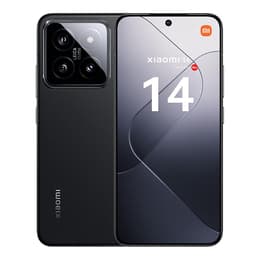


Google Pixel 7 Vs Xiaomi 14

Google Pixel 7
Google Pixel 7
Starting at

Refurbished price:160.00

Versus €756.00 new

See options
Xiaomi 14
Xiaomi 14
Starting at

Refurbished price:384.00

Versus €1,099.00 new

See options

Ratings

The Google Pixel 7, released in October 2022, and the Xiaomi 14, which saw its global launch in February 2024, represent distinct approaches to the modern smartphone experience. Both devices operate on the Android platform, offering users access to a vast ecosystem of applications and services. The Pixel 7 emphasizes a streamlined software experience with advanced computational photography, while the Xiaomi 14 focuses on cutting-edge hardware, particularly in its camera system and display technology. These differences cater to varying user priorities, from software integration to raw performance and photographic versatility.

Scores

Durability

When considering the longevity of a smartphone, several factors come into play, including release timeline, software support, and physical durability.

  • Release Timeline: The Google Pixel 7 was released in October 2022, making it an earlier model compared to the Xiaomi 14, which launched globally in February 2024. This difference in release dates means the Xiaomi 14 inherently has a longer potential lifespan for receiving the latest software updates.
  • Software Longevity: Google has committed to providing five years of OS and security updates for the Pixel 7 series from its release date, meaning it is expected to receive updates until Android 18. The Xiaomi 14, on the other hand, is promised four years of OS updates and five years of security updates from its launch. This indicates that both devices offer substantial software support, though the Xiaomi 14, being newer, will receive these updates for a longer calendar period.
  • Physical Durability: Both smartphones feature Corning Gorilla Glass Victus protection for their displays, offering a good level of resistance against scratches and drops. Additionally, both the Pixel 7 and Xiaomi 14 carry an IP68 rating, signifying robust dust and water resistance, capable of withstanding immersion in water.

Year of Release

2022

2023

Compatible with latest Update

Yes

Yes

OS

Android

Android

Foldable

No

No

Performance

The performance of a smartphone is crucial for daily tasks, from navigating applications to demanding gaming sessions. Both devices offer capable hardware for a smooth user experience.

  • Processing Power: The Google Pixel 7 is equipped with a processor designed by Google, which efficiently handles everyday applications, provides smooth multitasking, and powers advanced computational photography features. The Xiaomi 14 features a newer generation processor, which delivers enhanced speed and efficiency, making it well-suited for intensive gaming and complex applications.
  • Memory and Storage: The Pixel 7 typically comes with 8GB of RAM and offers storage options of 128GB or 256GB. The Xiaomi 14 provides more varied configurations, including 8GB, 12GB, or 16GB of RAM, alongside storage options of 256GB, 512GB, or 1TB, allowing for greater flexibility depending on user needs.
  • Battery Behavior: The Pixel 7 houses a 4355 mAh battery, which users report can last through a day of moderate use, though heavy usage may require more frequent charging. The Xiaomi 14 comes with a slightly larger 4610 mAh battery. User experiences with the Xiaomi 14's battery life vary, with some reporting solid performance for a full day, while others note it may require charging within 7-8 hours of heavy use.

Memory (GB)

8 GB

16 GB

Screen quality

The display is a primary interface for any smartphone, and both the Pixel 7 and Xiaomi 14 offer high-quality viewing experiences with distinct characteristics.

  • Display Technology and Resolution: The Google Pixel 7 features a 6.3-inch OLED display with a 2400x1080 (FHD+) resolution, resulting in a pixel density of 416 ppi. The Xiaomi 14 sports a slightly larger 6.36-inch LTPO AMOLED display with a higher 2670x1200 (1.5K) resolution and a pixel density of 460 ppi, offering a sharper visual experience.
  • Brightness and Color: Both displays support HDR10+ for enhanced contrast and color. The Pixel 7 can reach a peak brightness of 1400 nits, with a typical high brightness mode of 1000 nits. The Xiaomi 14 surpasses this with a peak brightness of 3000 nits and a high brightness mode of 1400 nits, making it exceptionally bright for outdoor visibility. The Xiaomi 14 also supports Dolby Vision and displays 68 billion colors, contributing to a richer and more accurate color reproduction.
  • Refresh Rate: The Pixel 7 offers a 90Hz refresh rate, providing smooth scrolling and responsiveness. The Xiaomi 14 features an adaptive LTPO display with a variable refresh rate ranging from 1Hz to 120Hz, which can dynamically adjust based on content to optimize power consumption and provide a fluid visual experience.

Resolution

1080 x 2400

1200 x 2670

Screen type

AMOLED

LTPO OLED

Audiovisual

Both smartphones offer advanced camera systems, each with its own strengths in capturing photos and videos.

  • Rear Camera System: The Google Pixel 7 features a dual-camera setup with a 50MP main wide lens (f/1.85, OIS) and a 12MP ultrawide lens (f/2.2, 114° FOV). The Xiaomi 14 boasts a versatile triple 50MP camera system co-engineered with Leica, including a 50MP main wide lens (f/1.6, OIS), a 50MP ultrawide lens (f/2.2, 115° FOV), and a 50MP telephoto lens (f/2.0, OIS) with 3.2x optical zoom and macro capabilities.
  • Photography Features: The Pixel 7 excels in computational photography, offering features like Super Res Zoom (up to 8x digital zoom), Magic Eraser for object removal, Photo Unblur, Cinematic Blur for video, and an enhanced Night Sight mode for low-light conditions. The Xiaomi 14 provides Leica photographic styles, a floating telephoto lens for close-up macro shots, and advanced video recording options including 8K resolution and 10-bit LOG video.
  • Front Camera and Video Quality: The Pixel 7 includes a 10.8MP front camera capable of 4K video recording. The Xiaomi 14 features a 32MP front camera. Both devices offer strong video stabilization, with the Pixel 7 supporting 4K at 30fps and the Xiaomi 14 capable of 8K at 24fps and 4K at 60fps.

Main camera

50 megapixels

50 megapixels

Front camera

10.8 megapixels

32 megapixels

Miscellaneous

Beyond core specifications, several practical elements contribute to the overall user experience of these smartphones.

  • Connectivity and Ports: Both devices support 5G connectivity for fast mobile data. The Xiaomi 14 offers more advanced Wi-Fi 7 (802.11be) and Bluetooth 5.4, while the Pixel 7 supports Wi-Fi 6E and Bluetooth 5.2. Both utilize a USB-C port for charging and data transfer. The Xiaomi 14 also includes an infrared blaster, a feature not present on the Pixel 7.
  • Biometric Security: The Pixel 7 offers both an under-display fingerprint sensor and face unlock for secure access. The Xiaomi 14 also features an under-display optical fingerprint sensor.
  • Design and Handling: The Pixel 7 measures 155.6 x 73.2 x 8.7 mm and weighs 197g. The Xiaomi 14 is slightly more compact and lighter, with dimensions of 152.8 x 71.5 x 8.2 mm and a weight of 193g for the glass version. Both phones feature an aluminum alloy frame and glass backs, contributing to a premium feel.

Weight

197 g

188 g

Screen size (in)

6.3

6.36

Network

5G

5G

SIM card

Physical SIM + eSIM

Dual Physical SIM

Carrier compatibility

Unlocked

Unlocked

The Google Pixel 7 and Xiaomi 14 cater to different user preferences, each excelling in specific areas. The Pixel 7 is often praised for its intuitive software experience, particularly its clean Android interface and advanced computational photography features that enhance everyday photos and videos. Users frequently highlight its consistent camera performance and useful AI-driven tools like Magic Eraser and Photo Unblur. Some common criticisms, however, include its battery life, which some users find to be less than a full day with heavy use, and its 90Hz display, which is considered less fluid than higher refresh rate panels.

The Xiaomi 14, on the other hand, receives acclaim for its powerful hardware, especially its vibrant and bright LTPO AMOLED display with a 120Hz adaptive refresh rate, and its versatile Leica-engineered triple camera system. Users appreciate the detailed and color-accurate photos, as well as the extensive camera features for creative control. While its performance is generally lauded, some users have reported mixed experiences with battery longevity, similar to the Pixel 7, depending on usage patterns.

Users prioritizing a seamless software experience, consistent point-and-shoot photography with smart AI enhancements, and a slightly more compact form factor may find the Google Pixel 7 to be a suitable choice. Conversely, those who value cutting-edge display technology, a highly versatile camera system with extensive manual controls, and top-tier processing power for demanding tasks might lean towards the Xiaomi 14. Both devices offer compelling features, and choosing between them often comes down to whether a user prioritizes software integration and computational photography or raw hardware performance and photographic versatility. For those seeking a more sustainable choice, considering a quality-assured refurbished option for either model can provide an excellent device while supporting environmental responsibility.
See all articles

Our recent comparisons