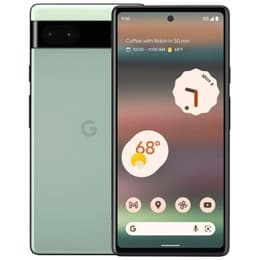
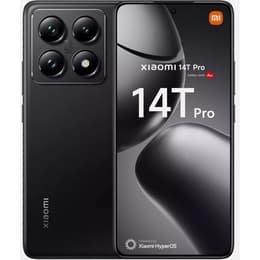


Google Pixel 6A Vs Xiaomi 14T Pro

Google Pixel 6A
Google Pixel 6A
Starting at

Refurbished price:143.00

Versus €459.00 new

See options
Xiaomi 14T Pro
Xiaomi 14T Pro
Starting at

Refurbished price:395.00

Versus €1,500.00 new

See options

Ratings

The Google Pixel 6A, released in July 2022, and the Xiaomi 14T Pro, launched in September 2024, represent different generations and approaches to smartphone design. While both operate on the Android platform, the Xiaomi 14T Pro introduces more recent advancements in display technology, processing power, and camera versatility. The Pixel 6A, on the other hand, focuses on a streamlined software experience and computational photography.

Scores

Durability

The longevity of a smartphone is influenced by its build, software support, and ease of repair. These two devices offer different timelines and considerations for long-term use.

  • Software Support: The Google Pixel 6A is slated to receive Android OS updates until at least July 2025 and security updates until at least July 2027, providing a clear and extended software lifespan. The Xiaomi 14T Pro, being a more recent release, is expected to receive several years of major Android updates and security patches, aligning with typical support cycles for premium Android devices, though specific end-of-life dates are not as far out as the Pixel's.
  • Repairability: The Pixel 6A has demonstrated a relatively good repairability score of 7 out of 10, with components like the battery being more accessible than some other models. Information regarding the specific repairability score for the Xiaomi 14T Pro is not readily available, but its construction with an aluminum alloy frame suggests a robust build.
  • Practical Lifespan: Given its newer release, the Xiaomi 14T Pro inherently offers a longer practical lifespan in terms of cutting-edge features and performance. However, the Pixel 6A's extended software support ensures it remains functional and secure for a considerable period, making it a viable option for users prioritizing software longevity.

Year of Release

2022

2024

Compatible with latest Update

Yes

Yes

OS

Android

Android

Foldable

No

No

Performance

Performance is a key aspect for daily smartphone use, impacting everything from app responsiveness to demanding tasks like gaming. These devices offer distinct performance profiles.

  • Processing Power: The Xiaomi 14T Pro is equipped with a current-generation processor, enabling it to handle demanding applications, intensive multitasking, and graphic-heavy games with fluidity. The Google Pixel 6A features the Google Tensor chip, which provides a smooth user experience for everyday tasks and excels in AI-driven features like computational photography and voice processing.
  • Multitasking and Storage: The Xiaomi 14T Pro offers higher RAM configurations, starting from 12GB, which contributes to seamless multitasking and app switching. It also provides ample storage options up to 1TB, utilizing faster UFS 4.0 technology. The Pixel 6A comes with 6GB of RAM and 128GB of internal storage, which is sufficient for most users but does not offer expansion via a microSD card.
  • Battery Behavior: The Xiaomi 14T Pro houses a larger 5,000mAh battery, often providing up to two days of moderate use and impressive screen-on time. It also supports exceptionally fast 120W wired charging and 50W wireless charging. The Pixel 6A, with its 4,410mAh battery, typically offers a full day of use for most users and supports 18W wired charging, but lacks wireless charging capabilities.

Memory (GB)

6 GB

12 GB

Screen quality

The display is the primary interface for interacting with a smartphone, and differences in screen technology and specifications can significantly impact the visual experience.

  • Display Technology and Size: The Xiaomi 14T Pro features a larger 6.67-inch AMOLED display, offering vibrant colors, deep blacks, and excellent contrast. The Google Pixel 6A has a more compact 6.1-inch OLED display, which also delivers rich colors and deep blacks, suitable for users preferring a smaller form factor.
  • Resolution and Brightness: The Xiaomi 14T Pro boasts a 1.5K resolution (2712 x 1220 pixels) and an impressive peak brightness of 4000 nits, ensuring clarity and excellent visibility even in bright outdoor conditions. The Pixel 6A offers an FHD+ resolution (2400 x 1080 pixels) and a vibrant display, providing a clear viewing experience for everyday content.
  • Refresh Rate: A key difference lies in the refresh rate; the Xiaomi 14T Pro features a high 144Hz refresh rate with LTPO technology, resulting in exceptionally smooth scrolling and responsive visuals. The Pixel 6A's display operates at a standard 60Hz refresh rate, which is adequate for general use but less fluid than higher refresh rate panels.

Resolution

1080 x 2400

1220 x 2712

Screen type

OLED

AMOLED

Audiovisual

Camera capabilities are often a deciding factor for many users, and both devices offer distinct photographic strengths, though with different hardware and software approaches.

  • Rear Camera System: The Xiaomi 14T Pro features a versatile triple-camera setup co-engineered with Leica, including a 50MP main sensor with optical image stabilization, a 50MP telephoto lens offering optical zoom, and a 12MP ultrawide lens. This configuration provides flexibility for various shooting scenarios, from wide landscapes to zoomed-in portraits. The Google Pixel 6A relies on a dual-camera system with a 12.2MP main sensor (with OIS) and a 12MP ultrawide lens.
  • Photography Performance: The Xiaomi 14T Pro's Leica tuning aims for specific color science and image characteristics, with its main camera capturing detailed and vibrant shots in good lighting. The Pixel 6A is renowned for its computational photography, delivering consistently good results with accurate exposure, white balance, and dynamic range, even with older hardware. Its Night Sight mode is particularly effective in low-light conditions.
  • Video and Front Camera: The Xiaomi 14T Pro supports video recording up to 8K at 30 frames per second and features a 32MP front camera for detailed selfies and video calls. The Pixel 6A records 4K video at up to 60 frames per second and includes an 8MP front camera, which performs well for its class.

Main camera

12.2 megapixels

50 megapixels

Front camera

8 megapixels

32 megapixels

Miscellaneous

Beyond the core features, several practical elements contribute to the overall user experience and daily convenience of a smartphone.

  • Connectivity and Ports: Both devices support 5G connectivity. The Xiaomi 14T Pro likely features newer Wi-Fi and Bluetooth standards given its later release, and includes an infrared (IR) blaster for controlling home electronics. Both utilize a USB-C port for charging and data transfer. The Pixel 6A supports Wi-Fi 6 and Bluetooth 5.2.
  • Biometric Security and Build: Both smartphones incorporate an in-display fingerprint sensor for secure unlocking. The Xiaomi 14T Pro features an aluminum alloy frame and is rated IP68 for dust and water resistance, indicating a high level of protection. The Pixel 6A has an IP67 rating for dust and water resistance, a Gorilla Glass 3 front, and a plastic back, offering a durable yet less premium feel compared to glass-backed devices.
  • Dimensions and Handling: The Xiaomi 14T Pro is a larger and slightly heavier device, with dimensions of 160.4 x 75.1 x 8.4mm and a weight of 209g. The Pixel 6A is more compact and lighter, measuring 152.2 x 71.8 x 8.9mm and weighing 178g, which may appeal to users preferring a smaller device for one-handed use.

Weight

178 g

209 g

Screen size (in)

6.1

6.67

Network

5G

5G

SIM card

Physical SIM + eSIM

Dual Physical SIM

Carrier compatibility

Unlocked

Unlocked

User feedback for the Google Pixel 6A often praises its consistent camera performance, particularly its computational photography capabilities, and its clean, intuitive Android experience. Users also appreciate its solid battery life for a compact device. Common criticisms sometimes point to the 60Hz display feeling less fluid compared to competitors and the lack of wireless charging.

The Xiaomi 14T Pro generally receives positive remarks for its powerful performance, vibrant and smooth 144Hz display, and exceptionally fast charging speeds. Its versatile Leica-tuned camera system is also a highlight for many. Some users have noted that while the battery capacity is large, real-world battery drain can vary, and the camera, while capable, might not always match the absolute best in certain specific scenarios.

Users prioritizing a compact device with a strong emphasis on computational photography and a guaranteed long software support timeline may find the Google Pixel 6A well-suited to their needs. Its consistent performance for everyday tasks and clean Android interface make it a reliable choice. Conversely, users seeking a larger, more modern display with a high refresh rate, top-tier processing power for demanding applications, and rapid charging capabilities will likely lean towards the Xiaomi 14T Pro. Its advanced camera hardware also offers more versatility for photography enthusiasts. Both devices offer compelling features for different user profiles, and considering a quality-assured refurbished option for either model can be an eco-friendly alternative.


See all articles

Our recent comparisons