

Compare models
Galaxy Z Fold6 Vs Xiaomi Redmi Note 13 4G
- 1-year minimum warranty
- Free delivery on all orders
- Free 30-day returns
Differences at a glance
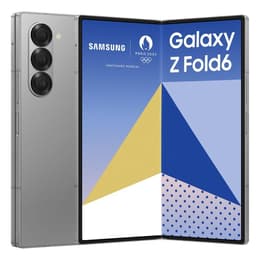
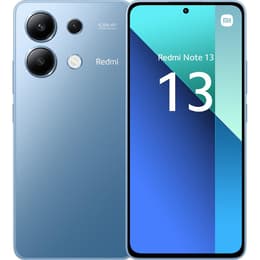
The Samsung Galaxy Z Fold6 (2024) and the Xiaomi Redmi Note 13 4G (2024) represent two entirely different concepts within the modern smartphone landscape. While the Galaxy Z Fold6 functions as a high-end foldable device designed to expand into a tablet-sized workspace, the Xiaomi Redmi Note 13 4G serves as a conventional, standard-form smartphone built for daily essentials without extra complexity. Both devices run on the Android operating system, though they deliver vastly different physical designs and user experiences tailored to distinct device categories.
Available Models
Colour
Storage (GB)
Scores
Durability
When examining longevity and hardware endurance, these two models approach long-term support and build durability from opposite directions based on their respective market positioning.
- Software longevity and updates: The Galaxy Z Fold6 offers an extended multi-year support window spanning numerous operating system upgrades, whereas the Xiaomi Redmi Note 13 4G provides a more standard, shorter software update schedule typical of everyday consumer devices.
- Hardware resilience and repairability: The Galaxy Z Fold6 incorporates advanced folding hinge engineering and specialized protective glass layers that require careful handling, while the Xiaomi Redmi Note 13 4G utilizes a rigid, traditional slab construction that follows conventional repair procedures.
- Expected practical lifespan: Users investing in the Galaxy Z Fold6 can anticipate long-term viability driven by high-tier internal components, while the Xiaomi Redmi Note 13 4G suits shorter upgrade cycles focused on immediate utility and reliable day-to-day functionality.
Year of Release
2024
2024
Compatible with latest Update
Yes
Yes
OS
Android
Android
Foldable
Yes
No
Performance
Daily operation and hardware execution differ significantly, reflecting the wide gap in internal component capability between a specialized folding flagship and a standard everyday device.
- Multitasking and demanding applications: The Galaxy Z Fold6 handles heavy workloads, intensive gaming, and simultaneous multi-window applications smoothly, whereas the Xiaomi Redmi Note 13 4G manages standard messaging, web browsing, and casual apps adequately without high-performance overhead.
- System responsiveness and storage: Users experience near-instantaneous app launching and ample space configurations on the Galaxy Z Fold6, while the Xiaomi Redmi Note 13 4G offers reliable baseline performance and expandable storage options via external memory cards.
- Battery behavior: The Galaxy Z Fold6 balances power delivery across dual screens for a standard daily cycle, while the Xiaomi Redmi Note 13 4G benefits from a single screen layout that typically sustains routine usage through a full day.
Screen quality
Display architecture is one of the most defining divergences between these two models, shaping how media and text are consumed on a daily basis.
- Display technology and layout: The Galaxy Z Fold6 features an innovative flexible inner panel that opens into a large viewing area alongside a functional outer cover screen, whereas the Xiaomi Redmi Note 13 4G utilizes a traditional flat panel with high refresh rate capabilities for smooth scrolling.
- Brightness and outdoor visibility: Both devices achieve high peak brightness levels to maintain legibility under bright sunlight, though the larger folding canvas of the Samsung model offers a more immersive visual workspace.
- Resolution and clarity: High pixel densities on both screens ensure sharp text rendering and clear image reproduction, whether viewing media on the expansive folding display or checking notifications on the conventional screen.
Resolution
1856 x 2160
1080 x 2400
Screen type
Foldable Dynamic LTPO AMOLED 2X
AMOLED
Audiovisual
Multimedia capture and audio output capabilities vary to match the intended design philosophy and user expectations of each individual smartphone category.
- Camera versatility: The Galaxy Z Fold6 includes a multi-lens array featuring ultra-wide and optical zoom capabilities for varied framing, while the Xiaomi Redmi Note 13 4G focuses primarily on a high-resolution main sensor for everyday snapshots.
- Low-light and video performance: Advanced image processing on the Galaxy Z Fold6 produces balanced exposures in challenging lighting conditions, whereas the Xiaomi Redmi Note 13 4G delivers dependable results for casual social sharing and basic video recording.
- Audio and media output: Stereo speaker configurations on both models provide clear sound for hands-free calls and media playback, though the larger physical footprint of the folding device allows for a more pronounced soundstage.
Main camera
50 megapixels
108 megapixels
Front camera
4 megapixels
16 megapixels
Miscellaneous
Physical handling, connectivity standards, and daily convenience features highlight the practical differences in how these smartphones integrate into a user's routine.
- Connectivity and ports: The Galaxy Z Fold6 supports modern 5G networks and advanced wireless standards, while the Xiaomi Redmi Note 13 4G is limited to 4G connectivity but retains a traditional physical headphone jack for wired audio accessories.
- Dimensions and handling: The Galaxy Z Fold6 features a heavier, dual-body folding profile that transforms from a compact phone into a wide tablet, whereas the Xiaomi Redmi Note 13 4G maintains a lightweight, slim, and conventional slab shape that rests easily in one hand.
- Security and authentication: Both devices incorporate rapid biometric verification methods, utilizing side-mounted fingerprint sensors or facial recognition to secure personal data.
Weight
239 g
188 g
Screen size (in)
7.6
6.67
Network
5G
4G
SIM card
Dual Physical SIM + eSIM
Dual Physical SIM
Carrier compatibility
Unlocked
Unlocked
What the community thinks
Community discussions and user feedback indicate that buyers appreciate the Galaxy Z Fold6 for its expansive workspace, multitasking efficiency, and innovative hardware design, though some users note the heavier weight and visible crease on the inner screen as common trade-offs. Conversely, owners of the Xiaomi Redmi Note 13 4G frequently praise its lightweight handling, reliable daily battery endurance, and straightforward operation, while noting that its performance is best suited for standard tasks rather than demanding applications.
Users prioritizing productivity, expansive screen real estate, and advanced multitasking will find the Galaxy Z Fold6 well-suited to their needs, while users prioritizing a lightweight traditional design, everyday simplicity, and reliable core functions may lean toward the Xiaomi Redmi Note 13 4G. Choosing a quality-assured refurbished option from platforms like Back Market provides an eco-friendly way to acquire either of these devices while supporting sustainable consumer choices.