

Galaxy Z Fold5 Vs iPhone 13 mini

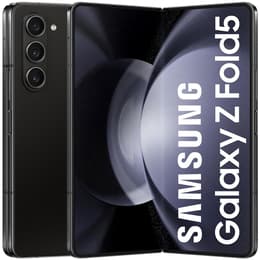
Galaxy Z Fold5
Galaxy Z Fold5
Starting at

Refurbished price:568.00

Versus €1,899.00 new

See options
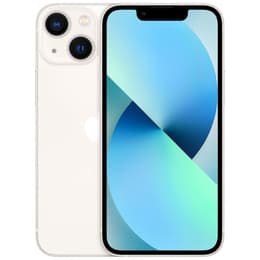
iPhone 13 mini
iPhone 13 mini
Starting at

Refurbished price:228.00

Versus €829.00 new

See options

Ratings

The Samsung Galaxy Z Fold5 (2023) and the iPhone 13 Mini (2021) represent distinct approaches to smartphone design and user experience. While the Z Fold5 offers a unique foldable form factor that transforms from a traditional smartphone into a larger tablet-like display, the iPhone 13 Mini prioritizes a compact and pocket-friendly design. These devices operate on different ecosystems, with the Z Fold5 running on Android and the iPhone 13 Mini on iOS, each offering a unique software environment and app ecosystem.

Scores

Durability

The expected practical lifespan of these devices varies, influenced by their release timelines and software support policies.

  • Software Support: The Galaxy Z Fold5, released in August 2023, is expected to receive four major Android OS upgrades and five years of security updates from its launch. The iPhone 13 Mini, launched in September 2021, runs on iOS and is upgradeable to future iOS versions, with users generally expecting several years of software support, potentially extending to 2026 or 2027 for OS updates and 2028 for app compatibility.
  • Physical Durability: The Z Fold5 features an outer display protected by Gorilla Glass Victus 2 and an aluminum frame and hinge, designed to withstand bending when both closed and open. However, its inner foldable display has a plastic protection layer, which some users have reported can develop issues over time, such as a black line along the fold. The iPhone 13 Mini incorporates a Ceramic Shield front cover and an aerospace-grade aluminum frame, contributing to its overall resilience. It also boasts an IP68 rating for water and dust resistance, offering protection against submersion in water up to 6 meters for 30 minutes. Users often note the iPhone 13 Mini's compact size contributes to its perceived durability, as it is less prone to impact damage from drops.
  • Repairability: While specific repairability scores can fluctuate, both devices are designed with components that can be serviced. The Z Fold5's complex folding mechanism and dual-screen setup may present unique repair challenges compared to a traditional slab phone. The iPhone 13 Mini, while compact, benefits from a more conventional internal layout.

Year of Release

2023

2021

Compatible with latest Update

Yes

Yes

OS

Android

iOS

Foldable

Yes

No

Performance

Both devices offer capable performance for their respective form factors, though they cater to different usage patterns.

  • Processing Power: The Galaxy Z Fold5 is equipped with a current-generation octa-core processor, paired with 12GB of RAM, enabling it to handle demanding applications and extensive multitasking smoothly across its dual displays. The iPhone 13 Mini features a powerful six-core processor and 4GB of RAM, providing a responsive and fluid experience for everyday tasks, gaming, and app usage within its compact design.
  • Storage Options: The Z Fold5 offers generous internal storage configurations, including 256GB, 512GB, and 1TB, accommodating a large volume of apps, media, and files. The iPhone 13 Mini comes with 128GB, 256GB, or 512GB storage options, providing ample space for most users' needs.
  • Battery Behavior: The Galaxy Z Fold5 houses a 4400mAh battery, which generally provides a full day of moderate use and around 10 hours of heavy usage. Some users have reported significant improvements in battery longevity compared to previous foldable models, achieving 5-6 hours of screen-on time with ease. The iPhone 13 Mini, with its 2406mAh battery, is designed to last a full day for typical usage, with many users experiencing 5 or more hours of screen-on time. Its battery life is an improvement over its direct predecessor.

Memory (GB)

12 GB

4 GB

Screen quality

The display experience on these two smartphones is a primary differentiator, offering distinct visual and interactive qualities.

  • Display Technology and Size: The Galaxy Z Fold5 features a versatile dual-screen setup. Its main, foldable display is a 7.6-inch Dynamic AMOLED 2X panel with a resolution of 2176x1812 pixels, offering a large canvas for productivity and media consumption. When folded, it presents a 6.2-inch Dynamic AMOLED cover display with a resolution of 904x2316 pixels. The iPhone 13 Mini sports a single 5.4-inch Super Retina XDR OLED display, providing a compact viewing area with a resolution of 2340x1080 pixels at 476 pixels per inch.
  • Clarity and Brightness: Both devices offer vibrant visuals with deep blacks and rich colors due to their OLED technology. The Z Fold5's main screen is noted for its enhanced brightness, improving visibility in outdoor conditions. The iPhone 13 Mini's display also delivers excellent clarity and brightness for its size.
  • Refresh Rate: The Z Fold5's main and cover displays both feature a 120Hz refresh rate, contributing to smoother scrolling and more fluid animations. The iPhone 13 Mini has a standard refresh rate, providing a consistent visual experience for everyday interactions.

Resolution

1812 x 2176

1080 x 2340

Screen type

Foldable Dynamic AMOLED 2X

Super Retina XDR OLED

Audiovisual

Both smartphones offer capable camera systems, though their configurations and strengths cater to different photographic preferences.

  • Rear Camera Systems: The Galaxy Z Fold5 is equipped with a triple rear camera array, including a 50MP wide-angle lens (f/1.8), a 12MP ultra-wide-angle lens (f/2.2), and a 10MP telephoto lens (f/2.4) with 3x optical zoom. Its main camera utilizes pixel binning to produce detailed 12MP images. The iPhone 13 Mini features a dual rear camera system, comprising a 12MP wide-angle lens (f/1.6) with sensor-shift optical image stabilization and a 12MP ultra-wide-angle lens (f/2.4).
  • Photography Performance: The Z Fold5 delivers good color reproduction, detail, and dynamic range in well-lit conditions, with excellent low-light performance. The iPhone 13 Mini captures clear photos with true-to-life colors and shows improved low-light capabilities compared to its predecessor. Some users note that the iPhone 13 Mini's camera can struggle with zoom and low-light video.
  • Video and Front Cameras: The Z Fold5 supports video recording up to 8K at 30 frames per second. It has two front-facing cameras: a 10MP camera on the cover screen and a 4MP under-display camera on the main screen, with the latter being more suitable for video calls due to its lower quality. The iPhone 13 Mini records video up to 4K at 60 frames per second and includes a Cinematic mode for creating videos with shallow depth of field. Its 12MP front-facing camera also supports portrait and cinematic modes.

Main camera

50 megapixels

12 megapixels

Front camera

4 megapixels

12 megapixels

Miscellaneous

Beyond core features, several practical elements distinguish these two devices in daily use.

  • Connectivity: Both smartphones offer advanced connectivity options. The Galaxy Z Fold5 supports 5G networks, Wi-Fi 802.11 a/b/g/n/ac/ax, and Bluetooth v5. The iPhone 13 Mini also provides 5G capabilities, along with Wi-Fi and Bluetooth for wireless connections.
  • Ports and Biometrics: The Z Fold5 utilizes a USB-C port for charging and data transfer and includes a fingerprint sensor for secure unlocking. The iPhone 13 Mini features Apple's proprietary Lightning connector and relies on Face ID for biometric authentication.
  • Physical Characteristics: The Z Fold5, when folded, measures 154.9mm in height, 67.1mm in width, and 13.4mm in depth, expanding to 154.9mm H x 130.1mm W x 6.1mm D when unfolded. It weighs 253 grams. The iPhone 13 Mini is significantly more compact, with dimensions of 131.5mm H x 64.2mm W x 7.7mm D and a weight of 141 grams. These differences in size and weight have significant implications for one-handed use and pocketability.

Weight

253 g

140 g

Screen size (in)

7.6

5.4

Network

5G

5G

SIM card

Physical SIM + eSIM

Physical SIM + eSIM

Carrier compatibility

Unlocked

Unlocked

Connector

USB-C

Lightning

The Samsung Galaxy Z Fold5 and the iPhone 13 Mini cater to distinct user needs, reflecting their fundamental design philosophies. User feedback for the Z Fold5 often highlights its innovative foldable display as a major advantage, providing a large screen for enhanced productivity and immersive media consumption. Common praise points include its powerful performance and the versatility of having both a phone and a tablet in one device. However, some users express concerns regarding the long-term durability of the inner folding screen and the quality of the under-display camera.

Conversely, the iPhone 13 Mini is frequently lauded for its exceptionally compact size, making it ideal for one-handed operation and easy pocketability. Users appreciate its capable camera system and the overall smooth performance of the iOS ecosystem. The most common criticism revolves around its battery life, which, while improved over its predecessor, may still require more frequent charging for heavy users compared to larger smartphones.

For individuals who prioritize a large, adaptable display for multitasking, content creation, or an expansive viewing experience, the Galaxy Z Fold5 is well-suited. Its ability to transform into a tablet offers a unique advantage for those who need more screen real estate on the go. On the other hand, users who value ultimate portability, comfortable one-handed use, and a device that disappears into a pocket will find the iPhone 13 Mini to be an excellent fit. It serves those who prefer a minimalist approach without compromising core smartphone functionalities.

When considering either of these devices, exploring quality-assured refurbished options can be a sustainable choice, offering a way to experience these distinct technologies while extending their lifecycle.

See all articles

Our recent comparisons