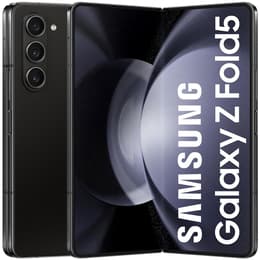


Galaxy Z Fold5 Vs Google Pixel 9

Galaxy Z Fold5
Galaxy Z Fold5
Starting at

Refurbished price:568.00

Versus €1,899.00 new

See options
Google Pixel 9
Google Pixel 9
Starting at

Refurbished price:386.00

Versus €1,066.71 new

See options

Ratings

The Samsung Galaxy Z Fold5 (2023) and the Google Pixel 9 (2024) represent distinct approaches to modern smartphone design. The Galaxy Z Fold5 offers a unique foldable form factor, transforming from a compact device into a larger tablet-like display, while the Pixel 9 maintains a traditional, unibody smartphone design. Both devices operate on the Android platform, but they cater to different user preferences through their core functionalities and design philosophies.

Scores

Durability

When considering the long-term usability of these devices, their release timelines and software support policies are key factors.

  • Release and Updates: The Galaxy Z Fold5 was released in August 2023, while the Google Pixel 9 followed in August 2024. The Pixel 9 offers a longer software support commitment, with Google promising seven years of OS and security updates, extending its support until at least August 2031. The Galaxy Z Fold5 receives four years of OS updates and five years of security updates from its release date.
  • Software Longevity: Users prioritizing extended software support and access to the latest Android features for a longer duration will find the Pixel 9's policy more advantageous. The Z Fold5 still provides substantial support, ensuring several years of current software and security.
  • Durability and Repairability: Both devices feature robust build materials. The Galaxy Z Fold5 incorporates Gorilla Glass Victus 2 on its cover screen and rear, an aluminum frame, and an IPX8 water resistance rating, indicating protection against submersion. Its hinge mechanism has also seen improvements for durability. The Pixel 9 also uses Corning Gorilla Glass Victus 2 for its front and back, an aluminum frame, and boasts an IP68 rating for dust and water resistance.

Year of Release

2023

2024

Compatible with latest Update

Yes

Yes

OS

Android

Android

Foldable

Yes

No

Performance

The performance of both the Galaxy Z Fold5 and the Google Pixel 9 is designed to handle demanding applications and multitasking, though they achieve this with different underlying hardware.

  • Processing Power: The Galaxy Z Fold5 is equipped with a processor optimized for its foldable design, enabling smooth operation across its dual displays and efficient handling of multiple applications simultaneously. The Pixel 9 features Google's Tensor G4 processor, which is engineered to deliver responsive performance for everyday tasks, gaming, and on-device artificial intelligence features.
  • Multitasking and Responsiveness: Both devices offer 12GB of RAM, contributing to fluid multitasking and quick app switching. The Z Fold5's larger unfolded screen naturally lends itself to more expansive multi-window layouts, while the Pixel 9 provides a consistently responsive experience in a traditional smartphone format.
  • Battery Behavior: The Galaxy Z Fold5 has a 4400 mAh battery, which, for a foldable device with two displays, provides a full day of moderate use. The Pixel 9, with its 4700 mAh battery, is noted for its improved endurance, often lasting over 24 hours with typical usage and offering extended life with battery-saving modes.

Memory (GB)

12 GB

12 GB

Screen quality

The display experience is a primary differentiator between these two smartphones, owing to the Galaxy Z Fold5's unique foldable design.

  • Display Technology and Size: The Galaxy Z Fold5 features a 7.6-inch Dynamic AMOLED 2X main foldable display and a 6.2-inch Dynamic AMOLED 2X cover screen. The Pixel 9 comes with a single 6.3-inch Actua OLED display. Both utilize OLED technology for deep blacks and vibrant colors.
  • Resolution and Clarity: The Z Fold5's main display offers a resolution of 2176 x 1812 pixels, providing a sharp viewing experience on its larger canvas, while its cover screen has a resolution of 2316 x 904 pixels. The Pixel 9's display has a resolution of 1080 x 2424 pixels, resulting in clear visuals on its standard-sized screen.
  • Brightness and Smoothness: Both devices feature adaptive refresh rates up to 120Hz for smooth scrolling and animations. The Z Fold5's main display can reach a peak brightness of 1750 nits. The Pixel 9's display offers higher peak brightness, reaching up to 2700 nits, which can enhance visibility in bright outdoor conditions.

Resolution

1812 x 2176

1080 x 2424

Screen type

Foldable Dynamic AMOLED 2X

OLED

Audiovisual

Both the Galaxy Z Fold5 and the Google Pixel 9 offer advanced camera systems, each with its own strengths in photography and videography.

  • Rear Camera Systems: The Galaxy Z Fold5 features a triple-camera setup on the rear, including a 50MP main sensor with optical image stabilization (OIS), a 12MP ultrawide lens, and a 10MP telephoto lens with 3x optical zoom and OIS. The Pixel 9 employs a dual-camera system, consisting of a 50MP wide-angle main camera with OIS and a 48MP ultrawide camera with autofocus and a wide field of view.
  • Photography Performance: The Z Fold5's camera system is praised for its color reproduction and detail in good lighting, with its telephoto lens providing versatility for zoomed shots. The Pixel 9's cameras are known for their computational photography, delivering consistent results with good dynamic range and detail, particularly in various lighting conditions.
  • Front Cameras and Video: For selfies, the Z Fold5 has a 10MP camera on its cover screen and a 4MP under-display camera on its main screen, with the latter offering lower quality. The Pixel 9 features a 10.5MP front-facing camera with autofocus. Both devices are capable of high-resolution video recording, with the Z Fold5 supporting up to 8K at 30fps from its rear cameras, and the Pixel 9 offering 4K video recording with OIS.

Main camera

50 megapixels

50 megapixels

Front camera

4 megapixels

10.5 megapixels

Miscellaneous

Beyond their core features, several practical elements distinguish the Galaxy Z Fold5 and the Google Pixel 9, impacting daily use and handling.

  • Connectivity and Ports: Both smartphones support 5G connectivity for fast mobile data. The Galaxy Z Fold5 includes Wi-Fi 6E and Bluetooth 5.3, while the Pixel 9 steps up to Wi-Fi 7 and Bluetooth 5.3, offering potentially faster wireless speeds. Both devices utilize a USB-C port for charging and data transfer.
  • Dimensions and Handling: The Galaxy Z Fold5, when folded, measures 154.9 x 67.1 x 13.4 mm and weighs 253g, offering a narrow profile for one-handed use. Unfolded, it expands to 154.9 x 129.9 x 6.1 mm, providing a larger display area. The Pixel 9 has dimensions of 152.8 x 72 x 8.5 mm and weighs 198g, making it a more compact and lighter traditional smartphone.
  • Security and Sensors: The Z Fold5 features a side-mounted fingerprint sensor for biometric authentication. The Pixel 9 incorporates an under-display ultrasonic fingerprint sensor and 2D face recognition for unlocking.

Weight

253 g

198 g

Screen size (in)

7.6

6.3

Network

5G

5G

SIM card

Physical SIM + eSIM

Physical SIM + eSIM

Carrier compatibility

Unlocked

Unlocked

Connector

USB-C

USB-C

The Samsung Galaxy Z Fold5 and the Google Pixel 9 cater to different user needs, primarily due to their fundamental design differences. The Galaxy Z Fold5 is often praised for its innovative foldable display, which offers a versatile experience for productivity and media consumption, effectively combining a smartphone and a small tablet into one device. Users appreciate its ability to multitask with multiple apps open on the large inner screen. Some common criticisms, however, include its weight and thickness when folded, and the visible crease on the main display, though it has been refined.

The Google Pixel 9, on the other hand, is lauded for its consistent camera performance, particularly its computational photography capabilities, and its commitment to long-term software updates. Users often highlight its clean Android experience and the integration of Google's AI features. While generally well-received, some users might find its design less innovative compared to foldables, and its charging speeds are not the fastest available.

Users prioritizing a large, adaptable screen for enhanced productivity and immersive media will find the Galaxy Z Fold5 well-suited to their needs. Its unique form factor allows for a distinct usage experience. Conversely, individuals who value a traditional, compact smartphone with a strong emphasis on camera quality, a streamlined software experience, and extended software longevity will likely lean towards the Google Pixel 9. Both devices offer compelling features, and considering a quality-assured refurbished option for either model can be an eco-friendly alternative to purchasing new.


See all articles

Our recent comparisons